

Medically Reviewed by: Dr. Ipshita Johri
MBBS, DDV | Skinfinity Derma Clinic
Read Time: 8 Minutes
A facial may temporarily make the skin feel smoother. However, it cannot diagnose why acne keeps returning. Similarly, a hair spa may improve softness but cannot identify the medical cause of hair loss.
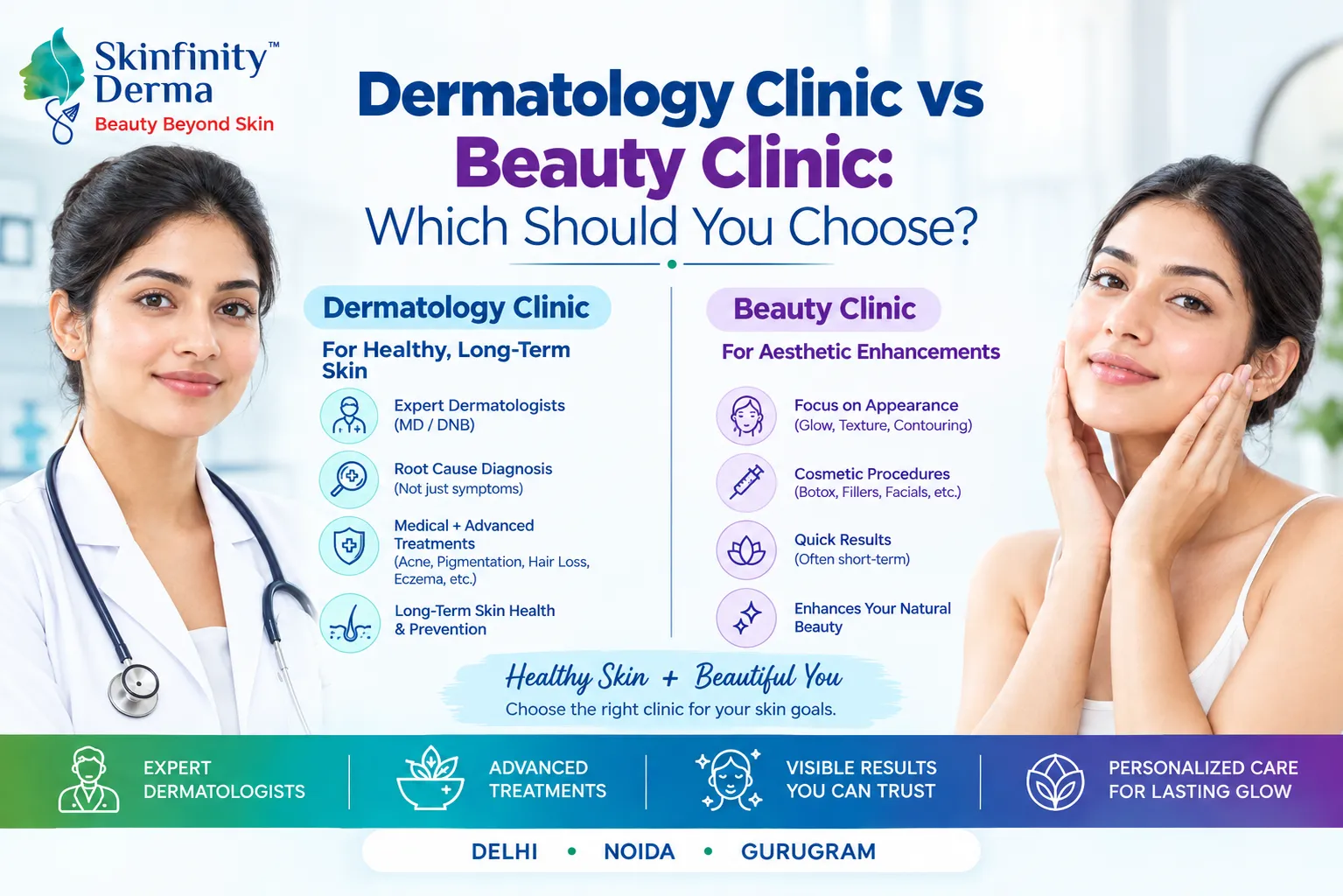
This is the central difference between a dermatology clinic and a beauty clinic. A dermatology clinic provides medical diagnosis and treatment for conditions affecting the skin, hair and nails. A beauty clinic generally focuses on grooming, appearance and non-medical cosmetic services.
The right choice depends on the concern. Healthy skin needing basic maintenance may benefit from a beauty service. Persistent acne, pigmentation, allergies or hair fall should be assessed by a dermatologist.
This guide explains the difference between dermatologist and beauty clinic services. It will also help patients decide when professional medical care becomes necessary.
What Is a Dermatology Clinic?
A dermatology clinic is a medical facility that diagnoses and treats conditions affecting the skin, hair and nails. It is led by qualified medical professionals with specialised dermatology training.
A dermatologist may assess and treat:
-
Acne
-
Acne scars
-
Melasma
-
Pigmentation
-
Eczema
-
Psoriasis
-
Rosacea
-
Skin allergies
-
Fungal infections
-
Bacterial infections
-
Viral warts
-
Vitiligo
-
Hair loss
-
Dandruff
-
Nail disorders
-
Suspicious moles
-
Signs of skin cancer
Dermatologists can take a detailed history and examine the affected area. They may order blood tests, perform dermoscopy or recommend a biopsy when required.
Treatment may include prescription medicines, medical skincare, minor surgery or an energy-based procedure. A dermatologist can also manage side effects and change the plan when the skin reacts unexpectedly.
A dermatologist is a medical doctor who specialises in conditions involving the skin, hair and nails.
What Is a Beauty Clinic?
A beauty clinic or salon generally focuses on improving appearance through grooming and non-medical cosmetic services.
Services may include:
-
Basic facials
-
Makeup
-
Waxing
-
Threading
-
Manicure
-
Pedicure
-
Hair styling
-
Hair spa
-
Superficial cleansing
-
Relaxation treatments
-
Temporary glow treatments
The training of beauty-clinic providers varies widely. Some complete short beauty or cosmetology courses. Others may have practical experience in salon services.
A beauty clinic may also employ a doctor or qualified dermatologist. The clinic’s name alone does not confirm who performs a procedure. Patients should check the qualifications of the person providing treatment.
A beautician can help maintain healthy skin through suitable non-medical services. However, a beautician without medical qualifications should not diagnose disease, prescribe medicine or independently perform medical procedures.
Dermatology Clinic vs Beauty Clinic: Key Differences
The skin clinic vs beauty clinic comparison becomes clearer when their roles are placed side by side.
Book An Appointment
|
Factor |
Dermatology Clinic |
Beauty Clinic |
|
Primary purpose |
Diagnose and treat skin, hair and nail concerns |
Improve appearance and provide grooming |
|
Provider |
Dermatologist or medical team |
Beautician, aesthetician or cosmetologist |
|
Medical diagnosis |
Yes |
No, unless a qualified doctor is present |
|
Prescription medicines |
Can be prescribed by an authorised doctor |
Cannot be prescribed by a non-medical provider |
|
Blood tests or biopsy |
May be recommended |
Not part of routine beauty care |
|
Acne treatment |
Treats the cause and severity |
May offer cleansing or facials |
|
Pigmentation care |
Identifies pigment type and medical triggers |
May provide temporary brightening services |
|
Hair-loss assessment |
Examines scalp and possible medical causes |
May offer hair spa or cosmetic care |
|
Skin allergy treatment |
Can diagnose and prescribe treatment |
Should refer the patient to a doctor |
|
Medical procedures |
Possible after proper assessment |
Not suitable without qualified medical supervision |
|
Side-effect management |
Can diagnose and treat complications |
Limited to non-medical support |
|
Follow-up |
Tracks clinical improvement and reactions |
Usually tracks cosmetic results |
Neither setting is automatically suitable for every concern. The patient should match the clinic with the service required.
When Should You Visit a Dermatologist?
A dermatologist should assess symptoms that are persistent, painful, spreading or repeatedly returning.
Book an appointment for:
-
Moderate or severe acne
-
Painful cysts or nodules
-
Acne that leaves scars
-
Persistent pigmentation
-
Melasma
-
Repeated skin allergies
-
Severe itching
-
Unexplained rashes
-
Eczema or psoriasis
-
Fungal infections
-
Sudden hair fall
-
Widening hair parting
-
Bald patches
-
Severe dandruff
-
Nail discolouration
-
Changing moles
-
Non-healing sores
-
Reactions after cosmetic treatments
A dermatologist should also evaluate a concern before chemical peels, medical lasers or injectable procedures.
Early diagnosis may prevent complications. For example, treating active acne can reduce the risk of permanent scarring. Identifying a fungal infection also prevents inappropriate use of steroid-based creams.
When Is a Beauty Clinic Appropriate?
A beauty clinic may be appropriate when the skin is healthy and the service is primarily cosmetic.
Suitable services may include:
-
Basic cleansing
-
Makeup application
-
Threading
-
Waxing
-
Manicure
-
Pedicure
-
Hair styling
-
Hair spa
-
Relaxation-focused facials
The client should still disclose sensitive skin, allergies and recent dermatological procedures.
Beauty treatments should be postponed when the skin has:
-
Active infection
-
Open wounds
-
Severe acne
-
Painful cysts
-
Unexplained redness
-
Active eczema
-
Allergic reactions
-
Sunburn
-
Blistering
-
Recent laser treatment
-
Recent deep chemical peel
A basic facial should not be used as a substitute for treating acne, melasma or dermatitis.
Can a Dermatology Clinic Also Provide Aesthetic Treatments?
Yes. Many dermatology clinics provide both medical care and aesthetic treatments.
Aesthetic dermatology may include:
-
Acne-scar treatment
-
Microneedling
-
Hydrafacial
-
Botulinum toxin
-
Anti-ageing treatments
-
Skin-tightening procedures
The advantage is that the skin can be assessed before treatment. The dermatologist can identify conditions that may increase the risk of infection, burns or pigmentation.
For example, a person requesting a brightening peel may actually have melasma. Another person seeking a hair spa may have alopecia areata or pattern hair loss.
A dermatology clinic can also manage medical and cosmetic concerns within one plan. Active acne can be controlled before acne-scar procedures begin.
Why Dermatologist-Led Treatment Can Matter for Skin Concerns
Skin concerns that look similar can have very different causes.
A red facial rash might represent acne, rosacea, contact dermatitis or a fungal infection. Treating each condition with the same facial or cream can worsen the problem.
Dermatologist-led treatment matters because it supports:
-
Accurate Diagnosis
The dermatologist identifies the condition before choosing a procedure. This reduces unnecessary trial and error.
-
Prescription-Based Care
Some skin conditions require prescription medicine. A facial or cosmetic serum cannot replace appropriate medical treatment.
-
Safe Procedure Selection
The doctor evaluates skin tone, sensitivity and medical history. This is especially important before lasers, peels and injectables.
-
Personalised Settings
Laser energy and peel strength should not be identical for every patient. Indian skin may develop pigmentation after excessive inflammation.
-
Side-Effect Management
Burns, allergies, infections and prolonged swelling require medical evaluation. A dermatologist can recognise and manage these complications.
-
Long-Term Planning
Chronic concerns such as acne, melasma and psoriasis may repeatedly return. A long-term plan addresses triggers and maintenance.
Dermatologist vs Beautician: What’s the Difference?
A dermatologist and beautician have different education, responsibilities and treatment limits.
1. Dermatologist
A dermatologist is a medical doctor trained to diagnose and treat skin, hair and nail conditions.
Depending on qualifications and training, a dermatologist may:
-
Diagnose medical conditions
-
Prescribe medicines
-
Order investigations
-
Perform biopsies
-
Conduct minor surgery
-
Use medical lasers
-
Perform aesthetic procedures
-
Manage complications
-
Treat infections and allergies
2. Beautician
A beautician is trained in beauty, grooming and cosmetic maintenance services.
A beautician may:
-
Perform basic facials
-
Apply makeup
-
Provide waxing or threading
-
Offer manicure and pedicure services
-
Provide hair and scalp grooming
-
Recommend general cosmetic products
The training and permitted services can vary. A beautician is not automatically qualified to provide medical diagnosis or prescription treatment.
National Medical Commission guidance identifies registered medical practitioners with specified qualifications and training for particular aesthetic surgical procedures.
Patients should verify the qualification of the person performing any invasive or energy-based procedure.
Which Clinic Should You Choose for Acne, Pigmentation or Hair Loss?
Acne, pigmentation and hair loss can involve underlying medical causes. A dermatology clinic is therefore the appropriate starting point.
1. Acne
A beauty clinic may offer cleansing or a facial. However, these services cannot treat every type of acne.
A dermatologist can identify:
-
Comedonal acne
-
Inflammatory acne
-
Hormonal acne
-
Nodular acne
-
Acne caused by products
-
Folliculitis mistaken for acne
Prescription treatment may be required when acne is painful, widespread or causing scars.
2. Pigmentation
Pigmentation may represent melasma, post-acne marks, sun damage or contact dermatitis. These conditions require different treatments.
A dermatologist can assess the pigment’s cause and depth before recommending creams, peels or lasers. Aggressive brightening facials may worsen pigmentation when they irritate Indian skin.
3. Hair Loss
Hair fall may develop because of stress, nutritional deficiency, thyroid dysfunction or hormonal changes. Pattern hair loss and alopecia areata are other possibilities.
A hair spa can make the strands feel softer. It cannot identify why follicles are shedding.
A dermatologist may examine the scalp through trichoscopy and recommend targeted blood tests.
How to Choose the Right Dermatology Clinic in Noida?
Finding the best dermatology clinic in Noida requires more than checking ratings or treatment prices.
1. Check the Doctor’s credentials
Ensure the treating professional is a qualified and recognised dermatologist. Be extra cautious of vague titles such as “aesthetic specialist” or “skin expert.”
2. Verify the person doing the procedure
Inquire if the treatment is done by or under the supervision of a dermatologist. This is crucial for lasers, peels, injectables and hair restoration treatments.
3. Look for Diagnosis Before Treatment.
A good clinic will assess the concern before recommending a treatment package. Acne, pigmentation and hair loss require different treatment approaches.
4. Review Hygiene and Safety
The clinic should adhere to proper sterilisation and infection control procedures. Laser procedures should be performed using protective equipment.
5. Expect Realistic Claims
Don’t go to clinics that claim to remove your melasma forever, cure your acne after a single facial or regrow your hair.
The medical and aesthetic outcomes are different from patient to patient.
6. Check Aftercare and Follow-Up
The clinic should educate the patient about possible side effects and recovery. Patients should also be aware of who to call if a reaction occurs.
7. Request Transparent Pricing
The quotation should clearly describe the treatment area, products used and expected number of sessions. The lowest price may not include consultation or follow-up care.
Why Choose Skinfinity Derma for Skin & Hair Concerns in Noida?
At SKINFINITY Derma, we combine medical dermatology with personalised aesthetic care. Our Noida clinic evaluates your skin, hair or nail concern before recommending treatment.
-
Dermatologist-Led Consultation
We begin by understanding your symptoms, medical history and previous treatments. Our dermatologists then examine the affected area and identify the likely cause.
Testing or further investigation may be recommended when the diagnosis requires it.
-
Medical and Aesthetic Services
We provide care for concerns including:
Our aesthetic services include laser hair reduction, chemical peels, Hydrafacial and selected skin-rejuvenation procedures. Treatment is chosen according to your skin’s needs rather than popularity.
-
Personalised Treatment Planning
We do not treat every acne breakout, dark patch or hair-loss pattern identically. The treatment plan depends on the diagnosis, severity and previous response.
Our approach focuses on accurate diagnosis, individualised treatment and patient education.
-
Advanced Technology With Medical Oversight
Our clinic offers laser and aesthetic procedures under professional supervision. The settings, products and treatment intervals are personalised for your skin type.
-
Care for Skin and Hair Concerns Together
Some concerns overlap. Hormonal changes may affect both acne and hair growth. Nutritional deficiencies may influence skin and hair health.
Our dermatologists can evaluate these connections and recommend a coordinated plan.
-
Premium Clinic Locations in Noida and Gurgaon
Our Noida clinic is located in Sector 36 near Logix Mall. Our Gurgaon clinic is located in Sector 28 on Golf Course Road. Both premium locations provide convenient access to medical dermatology, hair consultations and advanced aesthetic treatments under one roof.
If you need a dermatologist in Noida?, book a consultation with SKINFINITY Derma for an individualised assessment. You can also schedule an appointment? before visiting.
Should I Visit a Dermatologist or Beauty Clinic for Acne?
A dermatologist is the right choice for persistent, painful or recurring acne. Medical assessment becomes especially important when acne causes nodules, dark marks or scars.
A beautician may provide a gentle facial for otherwise healthy skin. However, extractions and harsh scrubbing can inflame active acne.
A dermatologist can determine whether the breakout represents acne, folliculitis, rosacea or contact irritation. The treatment may include prescription medicines, medical skincare or professional procedures.
Visit a dermatologist when:
-
Acne persists beyond several weeks
-
Breakouts are painful
-
Cysts or nodules develop
-
Dark marks remain
-
Scars begin forming
-
Over-the-counter products cause irritation
-
Acne occurs with irregular periods
-
Breakouts suddenly become severe
A beauty treatment can support grooming. It should not replace medical acne treatment.
Conclusion
The dermatology clinic vs beauty clinic decision depends on the concern. Beauty clinics are appropriate for grooming, relaxation and basic cosmetic maintenance. Dermatology clinics diagnose and treat medical conditions affecting the skin, hair and nails.
Persistent acne, pigmentation, allergies and hair loss require a dermatologist. Patients should also choose dermatologist-led care before invasive or energy-based aesthetic procedures. The safest clinic is one that begins with diagnosis and offers realistic treatment planning.
Frequently Asked Questions
Is a Dermatologist Better Than a Beautician for Pigmentation?
A dermatologist is more appropriate for persistent or unexplained pigmentation. The doctor can identify melasma, post-inflammatory pigmentation and other causes.
A beautician may provide a temporary brightening facial but cannot medically diagnose the pigmentation.
Can Dermatologists Perform Beauty Treatments?
Yes. Dermatologists may perform aesthetic treatments such as chemical peels, lasers, injectables and skin-rejuvenation procedures.
They can also determine whether the treatment is safe for the patient’s skin and medical history.
Should I See a Dermatologist for Hair Loss?
Yes. A dermatologist can identify whether hair loss is related to stress, nutrition, hormones or genetics.
Sudden shedding, bald patches and visible scalp thinning require professional assessment.
Can a Beauty Clinic Treat Skin Allergies?
A non-medical beauty clinic should not diagnose or prescribe treatment for a skin allergy. Facials and cosmetic products may worsen an active reaction.
A dermatologist can identify the trigger and prescribe appropriate treatment.
Can a Dermatologist Treat Both Medical and Cosmetic Skin Concerns?
Yes. Dermatologists treat medical conditions such as acne, eczema and infections. They may also provide cosmetic treatments for scars, pigmentation, unwanted hair and ageing concerns.
The treatment plan can combine medical control with suitable aesthetic procedures.

 Call Now
 WhatsApp