
Medically Reviewed by: Dr. Aanchal Bansal
MBBS, MD, DNB (Dermatology, Venereology, and Leprosy) | Skinfinity Derma Clinic
Read Time: 8 Minutes
Expected smoother skin after laser treatment but noticed little bumps instead? It is easy to assume they are ingrown hairs, especially when the area feels itchy or tender.
Those bumps can have different causes. Temporary swelling around the follicles is common after treatment, and some treated hairs remain visible before shedding naturally. An ingrown hair after laser hair removal is also possible, but it may need different care.
Read our blog to understand what could be causing the bumps, how to care for your skin safely and when to contact your dermatologist.
What Is Ingrown Hair?
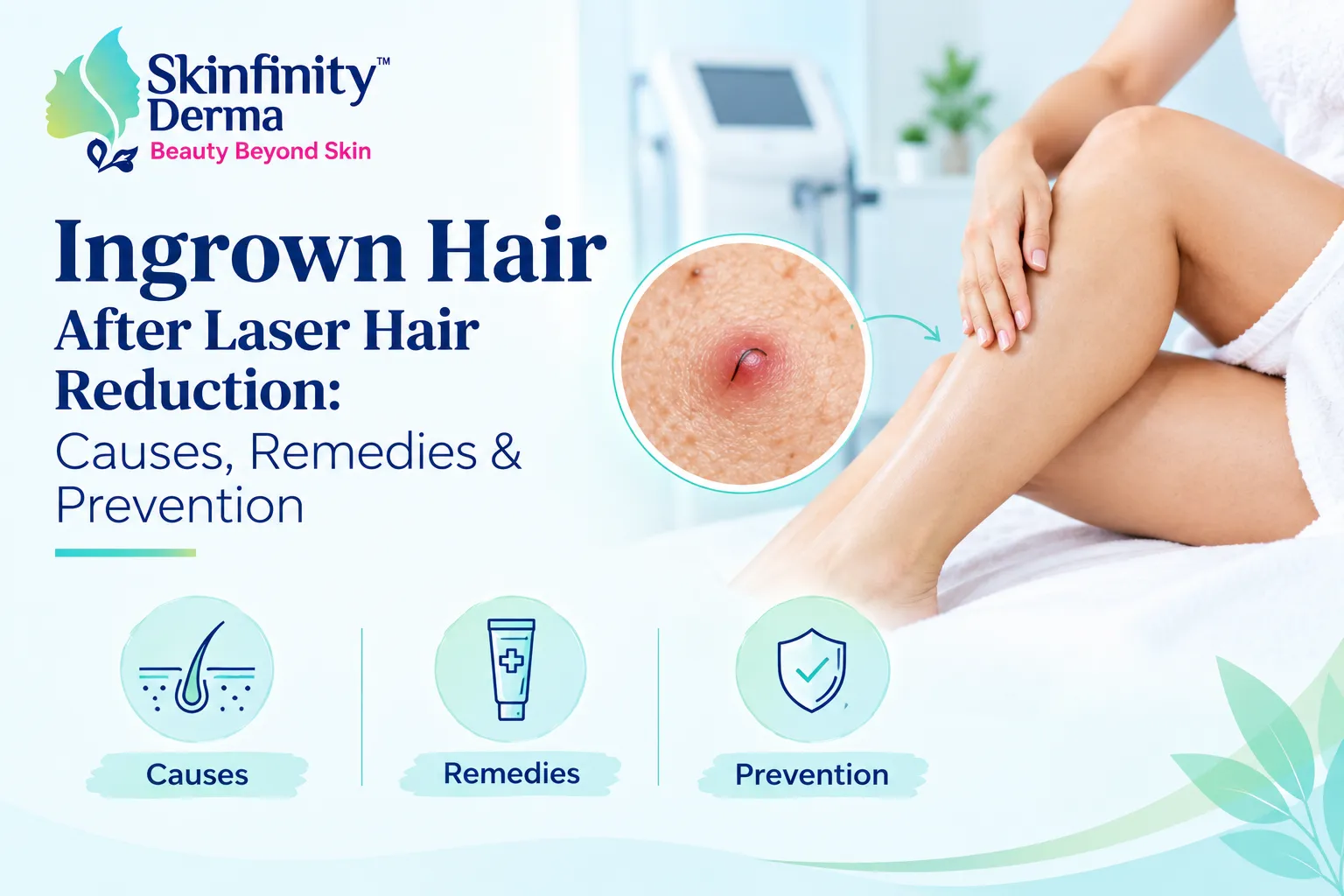
An ingrown hair develops when a strand grows back into the skin rather than emerging normally. It can produce a raised bump that feels itchy or tender.
Sometimes you can see a curved hair beneath the surface. Other bumps look similar to pimples, particularly when inflammation develops.
Common Signs
-
A Localised Bump: One or several raised spots appear around hair follicles.
-
Itching or Tenderness: The area may feel uncomfortable when clothing rubs against it.
-
A Visible Trapped Hair: A curved strand may sit beneath the skin.
-
A Lingering Mark: Inflammation can leave temporary discolouration after the bump settles.
Can Ingrown Hairs Occur After Laser Hair Reduction?
Yes, ingrown hairs can occur during a laser course. Treatment does not immediately eliminate every hair, so remaining growth can still become trapped.
Laser hair reduction may help reduce recurrent ingrown hairs over time by reducing suitable unwanted growth. That longer-term benefit does not mean every appointment will leave the skin completely bump-free.
Why Bumps Need a Closer Look
Small bumps immediately after treatment often represent perifollicular swelling, meaning temporary swelling around the follicles. This differs from a strand curling back into the skin.
Hairs preparing to shed can also look like short stubble. Pulling them out may irritate the area unnecessarily.
The pattern and timing provide clues, but appearance alone cannot always confirm the cause. Ask your clinic when bumps become painful or do not improve.
Common Causes of Bumps After Laser Treatment
Several conditions can create laser hair removal bumps. The right care depends on which one is present.
1. Normal Follicular Swelling
Laser energy heats suitable hair follicles, which can cause small raised areas around individual hairs shortly after treatment. The reaction is known as perifollicular swelling and can appear as small goose pimples all over the treated area.
Redness and swelling are usually gone in 1-3 days. A cool compress can help relieve discomfort during this time. The area should gradually feel calmer, so contact your clinic if swelling increases or pain develops.
2. Ingrown Hairs
A remaining hair may curve back into the skin as it grows, creating a localised bump. Some coarse or curly hair can make it more susceptible, especially if it is shaved close, leaving a short strand below the surface.
It may be visible, or not, but you will see a trapped hair. The bump may be itchy or still feel tender after the overall post-treatment redness has gone away. Don’t dig it out, as this may aggravate inflammation and create a dark scar.
3. Folliculitis
Folliculitis is an inflammation of the hair follicles. It may give rise to a cluster of itchy or tender pimple-like spots with pus at the centre of each spot.
These bumps can look like ingrown hairs but are not always ingrown hairs. Antibiotics are not always required, as not all cases are caused by bacteria. If spots cause a problem and get worse over time, have them checked by a dermatologist and treated based on what the cause is.
4. Shaving Irritation
Shaving too closely or making repeated razor passes can irritate the skin. This may happen during preparation or when shaving resumes before the treated area has recovered.
A blunt blade can drag against the skin and make the irritation worse. You may notice stinging or small bumps across the shaved area rather than one isolated spot. Pause shaving over inflamed skin and ask your clinic when it is appropriate to resume.
5. Product Reactions
Skin that has been treated recently may respond to products which it would generally accept. Burns and irritation may result from a strong exfoliant or lotion that is scented.
A product reaction can occur on a larger area than individual follicles. Identify if symptoms started after application of a new product or after restarting use of an active ingredient. If the reaction continues, stop the suspected product and seek the advice of your clinic. Do not use additional treatment to reverse the action without advice.
6. Burns or Other Treatment Complications
Blistering or worsening pain should not be dismissed as ordinary ingrown hairs. Crusting, weeping or sharply defined patches of discolouration also need prompt assessment.
These changes require different care from temporary follicular swelling. Contact your treating clinic and explain when the symptoms started. Avoid peeling away damaged skin or applying household remedies while awaiting advice. Seek urgent medical care if symptoms spread rapidly or you develop a fever.
How to Treat Ingrown Hairs Safely at Home
The first step in ingrown hair treatment at home is avoiding further injury. Freshly lasered skin needs different care from skin that has fully recovered.
1. Follow Your Clinic’s Aftercare Instructions
Your clinician knows the device and treatment settings used. Follow their instructions before applying an unfamiliar product.
Contact the clinic when you cannot tell whether the bump represents swelling or an ingrown hair.
2. Use Gentle Cooling for Fresh Irritation
A cool, damp cloth may ease mild warmth or tenderness immediately after treatment.
-
Use a Clean Cloth: Avoid anything rough against the skin.
-
Keep Contact Gentle: Rest the cloth without rubbing.
-
Avoid Direct Ice: Place a protective layer between a cold pack and your skin.
-
Stop Discomfort: Remove it if the skin becomes painful or numb.
Cooling provides symptom relief. It does not extract a trapped hair.
3. Keep Cleansing Simple
Cleanse according to your clinic’s instructions using lukewarm water. Avoid scrub brushes or vigorous towel drying.
Pat the skin dry and use only aftercare products your clinician considers suitable.
4. Pause Shaving Over Inflamed Bumps
Give irritated skin time to settle before shaving again. Running a blade across a tender spot can damage its surface.
Ask your clinic when shaving can safely resume.
5. Leave Trapped Hairs Alone
Do not squeeze the bump or dig beneath the skin with tweezers. A visible hair does not make home extraction safe.
Picking can increase inflammation and leave a dark mark or scar.
6. Wait Before Exfoliating
Do not apply salicylic acid or a scrub simply because a bump appears. Recently treated skin may react badly to exfoliation.
Your dermatologist may recommend a suitable product later, after recovery. There is no single restart day that suits every treatment response.
7. Avoid Self-Prescribing Medicated Creams
Antibiotics and steroid creams are not interchangeable remedies for post-laser bumps. The wrong product can mask symptoms or create further problems.
Ask for assessment when bumps persist instead of adding several treatments.
How to Prevent Ingrown Hairs Between Laser Sessions
These ingrown hair prevention tips focus on reducing avoidable irritation while allowing treatment to progress.
1. Shave Only After the Skin Recovers
Resume shaving when your skin feels comfortable and your clinic confirms it is appropriate. Avoid shaving directly over inflamed spots.
2. Review Your Shaving Technique
-
Use a Clean, Sharp Blade: Replace blades that drag against the skin.
-
Follow Hair Growth: Avoid repeatedly shaving against the grain.
-
Reduce Razor Passes: Repeated strokes increase friction.
-
Avoid Stretching the Skin: This can encourage an excessively close shave.
-
Discuss Frequent Irritation: An electric trimmer may suit some people better.
3. Avoid Waxing or Plucking During the Course
Root-removal methods can interfere with laser treatment planning. Follow your clinic’s guidance about grooming between sessions.
4. Reduce Friction During Recovery
Choose comfortable clothing that does not rub the treated area. Follow advice about temporarily avoiding heat or strenuous exercise.
5. Introduce Exfoliation Carefully
Gentle exfoliation may help selected people between appointments, but timing matters. Discuss the product and frequency with your dermatologist.
6. Report Repeated Bumps Before the Next Session
Do not wait until treatment begins to mention recurring irritation. Your clinician may need to reassess preparation or review whether another skin condition contributes.
Ingrown Hair vs. Normal Post-Laser Shedding
Treated hairs do not always disappear immediately. They can remain visible before shedding naturally, which may resemble continued growth.
Book An Appointment
|
Feature |
Normal Post-Laser Shedding |
Ingrown Hair |
Normal Follicular Swelling |
|
Main process |
Treated hair gradually leaves the follicle |
Hair grows back into the skin |
Follicle temporarily swells after treatment |
|
Appearance |
Short stubble or dark dots |
A distinct raised bump, sometimes with a visible hair |
Small bumps around multiple treated follicles |
|
Discomfort |
Usually limited |
May itch or feel tender |
Mild warmth or sensitivity |
|
Timing |
Develops during the days or weeks after treatment |
Can appear during regrowth |
Usually appears soon after treatment |
|
What to do |
Allow hairs to shed naturally |
Avoid picking and seek advice if persistent |
Follow aftercare and monitor improvement |
Shedding timelines vary. Do not tug at visible hairs to check whether treatment worked. NHS laser guidance advises allowing damaged hairs to fall out naturally.
When Should You Consult a Dermatologist?
Schedule an evaluation if bumps get more painful or do not get better. The redness following laser hair removal should subside, not worsen.
For any questions or concerns, please reach out to your clinic and get assistance if you are encountering any of the following signs:
-
Raising the pain or heat
-
Skipping the redness or swelling.
-
Pus-filled bumps
-
Openings or blisters
-
Crusting or weeping
-
Persistent pigment changes
-
Repeated bumps after every appointment
Seek prompt medical care if you develop fever or feel unwell alongside an increasingly painful area. Spreading redness can be harder to recognise on darker skin, so also pay attention to warmth and tenderness.
What Treatment Might Be Recommended?
Your dermatologist first identifies the cause. They may adjust aftercare or recommend medication for a diagnosed inflammatory condition.
An infected ingrown hair may need specific treatment. A clinician can release a trapped hair using sterile equipment when appropriate, rather than asking you to remove it at home.
Post-Laser Skin Care at SKINFINITY Derma
Unexpected bumps can leave you wondering whether your skin is healing normally. Our team encourages you to contact us about changes, particularly when discomfort increases or the area stops improving. We can help you understand the next step before you try products that might worsen irritation.
1. Assessment of Post-Treatment Bumps
Our dermatologists review when the bumps appeared and how they have changed since treatment. We ask about tenderness or itching and check for signs that need closer examination.
This helps us distinguish expected follicular swelling from ingrown hairs or another reaction. We also review shaving habits and recently applied products, as both can affect recovery.
2. Personalised Aftercare Guidance
Our advice considers the treated area and your skin’s current condition. We explain how to cleanse gently and which products to pause while irritation settles.
You also receive guidance on when to resume shaving. Exfoliation may suit some people between appointments, but we recommend it only when the skin has recovered sufficiently. Our team explains which symptoms you can monitor and which require a prompt review.
3. Review Before Further Sessions
Repeated irritation deserves attention before another appointment. We review your previous response and discuss any changes in medicines or skincare since treatment.
Our dermatologists may adjust the preparation or reconsider the timing of your next session. The aim is to allow appropriate recovery rather than continue automatically while your skin remains inflamed.
4. Support Throughout Your Treatment Course
Questions can arise several days after an appointment, especially as treated hairs begin shedding. Our team can explain what to expect and help you avoid unnecessary picking or scrubbing.
Contact SKINFINITY Derma if post-laser bumps persist or become uncomfortable. We can assess your recovery and guide you on suitable care before your next session.
Conclusion
Ingrown hairs can occur during laser hair reduction, but not every post-treatment bump is an ingrown hair. Temporary follicular swelling and normal shedding often explain what you see.
The safest approach is gentle aftercare without squeezing or early exfoliation. Contact your clinic when symptoms worsen or bumps persist. Understanding the cause helps you treat the problem without creating additional irritation.
Get Advice About Post-Laser Bumps
Connect with SKINFINITY Derma if you are unsure about your skin’s recovery. Our dermatologists can assess the area and guide you on suitable care before your next session.
Frequently Asked Questions
1. Is It Normal to Get Ingrown Hairs After Laser Hair Reduction?
Ingrown hairs are possible during a laser course, but they are not the explanation for every bump. Swelling around follicles is common shortly after treatment.
Ask your clinic about spots that remain tender or appear after the initial irritation settles.
2. How Long Do Bumps Last After Laser Hair Removal?
Normal follicular swelling often settles within a few hours to three days. Ingrown hairs or folliculitis can last longer.
Do not assume persistent bumps are harmless if pain increases or pus develops.
3. Can I Exfoliate After Laser Hair Reduction?
Avoid exfoliating freshly treated or irritated skin. Wait until recovery and follow your clinic’s instructions about restarting products.
There is no universal timeline that suits every person. Scrubs and strong acids can worsen irritation when introduced too early.
4. Should I Pop an Ingrown Hair After Laser Treatment?
No. Squeezing or digging can damage the skin and increase infection risk. It may also leave a dark mark or scar.
A dermatologist can assess whether the hair needs professional release.
5. When Should I See a Dermatologist for Post-Laser Bumps?
Arrange a review for worsening pain or bumps that do not settle. Contact the clinic promptly for blistering or weeping skin.
Fever with a painful, hot area requires urgent medical advice.

 Call Now
 WhatsApp