
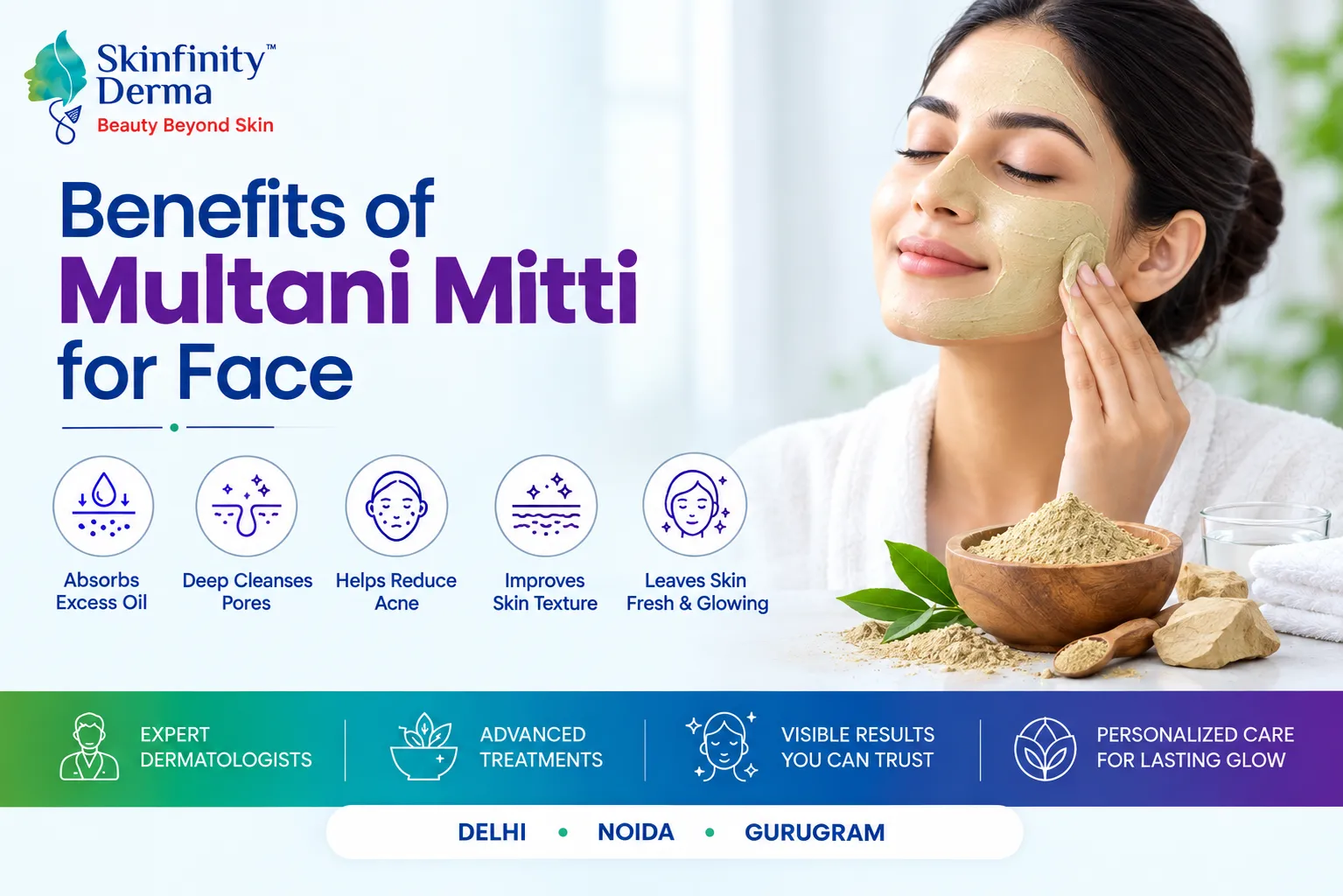
Multani Mitti has been part of Indian skincare routines for generations. It is commonly used to absorb excess oil, cleanse the skin and create a fresher appearance. Its cooling texture also makes it a popular ingredient in homemade face packs during summer.
However, natural does not always mean suitable for everyone. Multani Mitti can be helpful for oily and combination skin, but frequent use may leave dry or sensitive skin feeling tight and irritated. The results largely depend on your skin type, the ingredients mixed with it and how often it is applied.
This guide explores the major Multani Mitti benefits for face, its possible limitations and the safest ways to include it in your skincare routine.
What Is Multani Mitti?
Multani Mitti is a mineral-rich clay traditionally known as Fuller’s earth. Its name means “clay from Multan,” referring to the Multan region in present-day Pakistan. The clay usually contains minerals such as magnesium, silica, calcium and iron oxides.
Multani Mitti has a fine, absorbent texture. When mixed with water or another liquid, it forms a smooth paste that can be applied to the skin. As the paste dries, it absorbs surface oil, sweat and impurities.
The clay does not permanently change the skin or treat every concern. Its primary role is to absorb oil and provide temporary cleansing and mattifying effects.
Multani Mitti Benefits for Face
Multani Mitti is a face pack that provides various benefits to the face.
Due to its absorbing and cleansing properties, Multani Mitti has several benefits for the face. It is useful to eliminate excess oil, sweat and impurities on the surface of the skin that cause it to look greasy or dull. But its advantages depend on the type of skin, way of application and frequency of use.
1. Controls Excess Oil
Multani Mitti soaks up the skin’s excess sebum. This can help to minimise the shine and aid oily skin to look temporarily matte. It can be especially helpful in the summer months when skin is sweating more and is especially oily.
Oil tends to pool in the forehead, nose and chin area (T-zone). Using Multani Mitti on these areas can help get rid of the combination of surface debris, sebum and sweat. This can help to keep the face feeling fresh without the greasy feel of too much oil.
But Multani Mitti does not control the sebaceous glands, and it cannot permanently decrease the amount of oil produced. It has a limited duration of effectiveness in controlling oil. Overuse can strip the skin of its own oils that are important to the skin barrier. This can result in dryness, tightness, flaking or irritation.
If you have oily skin, you can start using it once a week. A light, non-comedogenic moisturiser after rinsing helps to keep skin hydrated without leaving a greasy residue.
2. Supports Acne-Prone Skin
Too much oil can combine with dead skin cells and cause clogged pores. Some of this surface oil is absorbed by Multani Mitti, and it gets rid of the impurities that have accumulated on the skin as it is being washed off. This can help with an oily and slightly acne-prone skincare regimen.
The clay can also help to eliminate the grease around the forehead, nose and chin. These areas need to be kept clean to enhance the overall appearance of congested skin. But Multani Mitti does not cater to all the factors that cause acne.
The causes of pimples include inflammation, clogged pores, bacteria, hormonal changes and an overproduction of sebum. Multani Mitti is not a substitute for effective acne treatments. For persistent acne, salicylic acid or benzoyl peroxide ingredients may be needed. For severe cases, a prescription treatment from a dermatologist may be necessary.
Do not apply the mask to open wounds, acne that is bleeding or recently picked. Do not let the clay dry thoroughly on inflamed areas, as this could make them more painful. The mask should also be moistened with water before it is removed from the face rather than scrubbed from the face.
3. Makes the Skin Look Brighter
Multani Mitti for glowing skin could help to make the face look cleaner, smoother and temporarily brighter. Too much oil, sweat and surface debris can cause a tired or dull complexion. Multani Mitti helps to eliminate part of this accumulation and rejuvenates the look of the skin.
The mask also gently buffs the skin during rinsing, as it is very fine. This can help to unclog dead surface cells, which cause unevenness and dullness. Gentle removal can thus help to make the skin smoother and glowing.
This glow is not about skin lightening. It is about clean and rejuvenated skin. Multani Mitti does not change the natural complexion and does not offer a permanent cure for pigmentation.
Adding water and a small amount of plain aloe vera gel to the clay can result in a softer face pack. Do not use undiluted lemon juice or baking soda. These ingredients can upset the natural pH of the skin and result in burning, redness or irritation.
Healthy-looking skin also needs to be well moisturised, well hydrated and protected from the sun regularly. A broad-spectrum morning sunscreen helps to maintain the brightness of the skin that can be obtained by using a well-balanced skincare regimen.
4. Improves the Appearance of Mild Tanning
Multani Mitti can help to make the skin look better and give a uniform colour to the skin in cases of mild surface tanning and uneven skin tone. The clay helps in the removal of any impurities and dead cells that have accumulated on the skin and cause it to look darker or uneven. It can be used to gently cleanse, which can help to give the skin a fresher look.
But when the skin is exposed to the sun’s ultraviolet rays, it will produce more melanin, which is the cause of tanning. Multani Mitti acts on the surface and is unable to penetrate the melanin layer. It will not even work on existing acne scars or melasma.
A face pack to remove the tan is not as important as taking preventive measures each day. Use a broad-spectrum sunscreen that has an SPF of at least 30 in the morning. Reapply when sweating or spending extended time outside. Wearing hats, sunglasses and protective clothing will offer extra protection.
Never mix Multani Mitti with lemon juice to get rid of the tan as quickly as possible. The lemon juice may irritate and sensitise the skin. If the pigmentation is persistent, it is advisable to have an evaluation by a dermatologist, as the treatment will vary depending on the type of pigmentation.
5. Cleanses the Skin and Pores
Multani Mitti is a natural absorbent cleansing mask. It exfoliates away surface oil, sweat and impurities that build up on the face throughout the day. This can be particularly helpful following exposure to environmental pollution, humidity and heat.
The clay can also help to clean up areas where the pores are clogged by removing the oil and debris around the pores. This can temporarily help to make greasy or enlarged pores look better. The face might also feel softer and lighter when the mask is washed off.
But pores do not open or close. Multani Mitti is not able to reduce the size of pores or remove blackheads that are deeply embedded. Long-term blackheads might be better treated with salicylic acid or dermatologist-recommended products.
Multani Mitti should not be used as a daily cleanser, but as an occasional face mask. Wash off make-up and sunscreen before using it. Follow the mask with a suitable moisturiser to replenish moisture and support the skin barrier.
How to Use Multani Mitti on Your Face
Follow these steps to use Multani Mitti safely:
1. Clean your face
Wash your face with a gentle cleanser. Remove makeup, sunscreen, sweat and visible dirt before applying the mask.
2. Prepare a smooth paste
Mix one or two teaspoons of Multani Mitti with water. You may add aloe vera gel or another gentle ingredient based on your skin type. The paste should spread easily without dripping.
3. Perform a patch test
Apply a small amount near the jawline or behind the ear. Wait for 24 hours before using it on the entire face, particularly if you have sensitive skin.
4. Apply a thin layer
Spread the mixture evenly across the face. Avoid the eyes, lips, nostrils and damaged areas.
5. Do not let it become excessively dry
Keep the mask on for approximately five to ten minutes. Remove it before it becomes completely cracked and uncomfortable.
6. Rinse gently
Use lukewarm water and gentle circular movements. Do not scrub aggressively or use a rough facial cloth.
7. Apply moisturiser
Pat the face dry and apply a moisturiser immediately. This helps support the skin barrier and reduce post-mask tightness.
Best Multani Mitti Face Packs for Different Skin Types
The ingredients mixed with Multani Mitti can affect how drying or soothing the mask feels.
Multani Mitti face pack for oily skin
Mix:
-
One tablespoon of Multani Mitti
-
Enough water to make a smooth paste
-
One teaspoon of plain aloe vera gel
Apply for five to ten minutes before rinsing. This combination helps absorb excess oil without adding harsh ingredients.
Multani Mitti face pack for dry skin
Mix:
-
One teaspoon of Multani Mitti
-
One teaspoon of plain yoghurt
-
A small amount of water
Use only if the skin tolerates clay well. Rinse the mixture before it dries completely and apply moisturiser immediately.
Multani Mitti face pack for sensitive skin
Sensitive skin may not tolerate Multani Mitti. If a dermatologist approves its use, mix a small quantity with water and fragrance-free aloe vera gel. Perform a patch test and keep the application time short.
Multani Mitti face pack for combination skin
Mix Multani Mitti with water and apply it only to oily areas such as the forehead, nose and chin. Avoid the cheeks if they are dry or easily irritated.
Multani Mitti face pack for dull skin
Combine Multani Mitti with water and a small amount of plain yoghurt. This can provide light cleansing and gentle surface exfoliation. Avoid this pack if fermented dairy products irritate your skin.
Multani Mitti for Oily, Dry, Sensitive and Combination Skin
Multani Mitti does not work the same way for every skin type.
Book An Appointment
|
Skin type |
Suitability |
Recommended approach |
|
Oily skin |
Generally suitable |
Use once weekly and moisturise afterward |
|
Dry skin |
May cause further dryness |
Use rarely with a hydrating base or avoid |
|
Sensitive skin |
May trigger irritation |
Patch test first and seek professional guidance |
|
Combination skin |
Suitable for targeted application |
Apply only to oily areas |
|
Acne-prone skin |
May absorb surface oil |
Avoid inflamed or broken skin |
|
Barrier-damaged skin |
Not recommended |
Repair the skin barrier before using clay masks |
Stop using the mask if you experience persistent redness, itching, burning or peeling.
How Often Should You Apply Multani Mitti?
The right frequency depends on your skin type and how it responds.
-
Oily skin: Once or twice a week
-
Combination skin: Once a week on oily areas
-
Normal skin: Once every seven to ten days
-
Dry skin: Once every two to four weeks, if tolerated
-
Sensitive skin: Only after professional guidance
Daily application is not recommended. Excessive use can remove protective surface oils and disrupt the skin barrier. This may cause dryness, irritation and increased sensitivity.
Side Effects and Precautions of Using Multani Mitti
Multani Mitti is generally used as a cosmetic clay, but it can still cause unwanted reactions. Possible side effects include:
-
Dryness and tightness
-
Redness or itching
-
Flaking and irritation
-
Increased sensitivity
-
Discomfort around active acne
-
Allergic or irritant contact dermatitis
-
Worsening of an already damaged skin barrier
Use clean Multani Mitti from a reliable source. Avoid products containing undisclosed fragrances, colours or other additives.
Do not inhale the dry powder while preparing the mask. Keep it away from the eyes and mouth. A patch test is essential when using a new product or mixture.
Do not combine Multani Mitti with lemon juice, baking soda, toothpaste, undiluted essential oils or other harsh household ingredients.
Who Should Avoid Multani Mitti?
Multani Mitti may not be suitable for people with:
-
Very dry or dehydrated skin
-
Eczema or atopic dermatitis
-
Rosacea
-
A damaged skin barrier
-
Sunburn
-
Open wounds or cuts
-
Recently picked or bleeding acne
-
Active skin infections
-
Known sensitivity to clay masks
People who have recently undergone a chemical peel, laser procedure, microneedling or another professional treatment should wait until the skin heals completely. Follow the dermatologist’s post-procedure instructions before resuming face masks.
Multani Mitti vs. Other Natural Face Masks
Different face masks serve different purposes. The best choice depends on the skin concern rather than the popularity of an ingredient.
|
Face mask |
Primary purpose |
Best suited for |
Main limitation |
|
Multani Mitti |
Oil absorption and cleansing |
Oily and combination skin |
Can be drying |
|
Kaolin clay |
Gentler oil absorption |
Normal to mildly oily skin |
May still irritate dry skin |
|
Bentonite clay |
Strong oil absorption |
Very oily skin |
Can feel excessively drying |
|
Aloe vera mask |
Cooling and hydration |
Mildly irritated or dehydrated skin |
Does not treat major skin conditions |
|
Oatmeal mask |
Soothing support |
Dry or sensitive skin |
May not control excess oil |
|
Plain yoghurt mask |
Mild exfoliation and hydration |
Normal or dull-looking skin |
May irritate sensitive skin |
Natural masks cannot replace evidence-based treatments for acne, pigmentation, eczema or other chronic skin conditions.
Dermatologist’s Tips for Using Multani Mitti Safely
A few simple precautions can make Multani Mitti safer for facial use:
-
Choose a clean product from a trustworthy source.
-
Patch-test every new mixture before applying it widely.
-
Use a thin layer instead of coating the face heavily.
-
Do not leave the mask on overnight.
-
Remove it before it becomes extremely dry and cracked.
-
Never scrub active pimples while rinsing.
-
Apply moisturiser immediately afterward.
-
Use sunscreen during the day.
-
Avoid layering strong exfoliating acids or retinoids on the same day.
-
Stop using it if the skin burns, swells or remains red.
A dermatologist can evaluate concerns that do not improve with a basic skincare routine. This is particularly important for painful acne, persistent pigmentation, frequent rashes or sudden changes in oil production.
Is Multani Mitti Good for Oily Skin?
Yes, Multani Mitti can be useful for oily skin because it absorbs excess surface sebum and reduces temporary shine. It can also help remove sweat and debris from areas that become greasy quickly.
It should still be used in moderation. Oily skin also needs moisture and a healthy skin barrier. Follow the mask with a lightweight, non-comedogenic moisturiser. If the skin feels tight after every application, reduce the frequency or stop using it.
Get Personalised Skincare Guidance at SKINFINITY
At SKINFINITY?, we understand that home remedies may not address every skin concern. Our dermatologists assess your skin and recommend care based on its specific needs.
-
Detailed Skin Assessment: We examine your skin type, current concerns and sensitivity before recommending a skincare plan.
-
Personalised Treatment Plan: Our recommendations are tailored to concerns such as acne, tanning, pigmentation and uneven skin texture.
-
Dermatologist-Guided Care: We help you understand which home remedies and skincare ingredients may be suitable for your skin.
-
Safe and Professional Approach: Our focus remains on treatments that support your skin while minimising unnecessary irritation.
Visit SKINFINITY Derma? to book a consultation with our dermatologists.
Final Thoughts
Multani Mitti can be a useful occasional face mask for people with oily or combination skin. Its absorbent properties help reduce surface oil and leave the face looking cleaner and fresher. It may also provide mild exfoliation that temporarily improves dullness and uneven texture.
However, Multani Mitti does not cure acne, permanently remove a tan or change the natural complexion. Using it daily or allowing it to become excessively dry can damage the skin barrier. Choose ingredients according to your skin type, moisturise after every application and use sunscreen consistently.
Consult a dermatologist if you have sensitive skin, active acne, persistent pigmentation or an existing skin condition.
FAQs
1. Can Multani Mitti help with pimples and acne?
Multani Mitti can soak up the excess surface oil and can help take care of oily and acne-prone skin. It can also help to eliminate sweat and impurities that get trapped around the pores. This can help to make oily and clogged skin look cleaner.
But Multani Mitti does not address the root causes of acne. Clogged pores, inflammation, bacteria, hormonal changes and excess sebum production are all causes of pimples. If acne continues, you might need to use ingredients like salicylic acid or benzoyl peroxide.
Avoid applying Multani Mitti over painful, broken, bleeding or inflamed pimples. When removing the mask, do not rub it, as this can aggravate the redness and inflammation.
2. Can Multani Mitti make skin glow?
Multani Mitti can exfoliate away excess oil, dead skin cells and surface buildup. This can temporarily give the face a cleaner, smoother and brighter look. It has a gentle cleansing action that can be beneficial when the skin becomes dull due to sweat and oil.
But Multani Mitti is not a permanent solution for changing the skin tone or lightening the natural skin tone. Typically, the glow is a result of clean and refreshed skin.
Consistent use of sunscreen, regular moisturising and appropriate active ingredients gives more sustainable results. Healthy-looking skin also comes from a good night’s sleep and drinking plenty of water.
3. Is Multani Mitti good for removing tan?
Multani Mitti can help exfoliate away dead surface cells and help brighten up a light tan. It can also exfoliate the skin and eliminate the built-up oil and dirt that cause dull and uneven skin.
But when the skin is exposed to the sun’s UV rays, melanin is produced in the skin. Multani Mitti is only effective when applied to the surface. It will not help to fade deeper pigmentation, melasma or existing acne scars.
A broad-spectrum UVA/UVB sunscreen with an SPF of at least 30 is required on a daily basis to avoid further tanning. Do not combine Multani Mitti with lemon juice as it can cause irritation to the skin and make it more sensitive.
4. Can I use Multani Mitti every day?
No. Using it on a daily basis can cause excessive dryness and make the skin less protective. Multani Mitti is an absorbent clay and can also strip the skin of its natural oils that are essential for skin comfort and protection.
Overuse may result in tightness, flaking, redness or irritation. It could also cause skin irritation when you use other skincare products.
For most people who have oily skin, use it once or twice a week. It can be used once a week by people with normal or combination skin. People with dry or sensitive skin should use it less often or avoid it.
5. Is Multani Mitti suitable for dry skin?
Due to its absorbent properties, Multani Mitti can cause dry skin to become tighter or uncomfortable. Those who have only mildly dry skin should use it sparingly and not keep it on until it dries out completely and cracks.
Adding plain yoghurt or fragrance-free aloe vera gel to Multani Mitti can help make the face pack less irritating. Immediately after rinsing, apply a moisturiser.
Multani Mitti should not be used by those who have very dry, flaky or damaged skin. For these skin issues, a hydrating or soothing mask might be a better choice.
6. Can Multani Mitti remove blackheads?
Multani Mitti can temporarily absorb the surface oil and clean the pores. This can help to diminish some of the grease around blackheads, especially in and around the nose and chin.
But the clay will not be able to extract or permanently remove blackheads that are deeply embedded. Blackheads are caused by the buildup of oil and dead skin cells in a pore, which then get exposed to air.
Salicylic acid might be better for stubborn blackheads since it can help to remove oil and dead cells from within the pores. If the blackheads keep coming back, a dermatologist can suggest suitable treatments.
7. How long should I keep Multani Mitti on my face?
Apply Multani Mitti to the face and leave it for about 5–10 minutes. Rinse it before the mask is completely dry, cracked or uncomfortable.
Leaving the clay on longer will not make it work better. On the contrary, it can absorb too much oil and moisture from the skin. This can cause tightness, dryness and irritation.
It may need to be taken off earlier by individuals with dry or sensitive skin. Soften the mask with lukewarm water and rinse it without scrubbing. Use an appropriate moisturiser afterwards to rehydrate the skin.

 Call Now
 WhatsApp