

Medically Reviewed by: Dr. Ipshita Johri
MBBS, DDV | Skinfinity Derma Clinic
Read Time: 8 Minutes
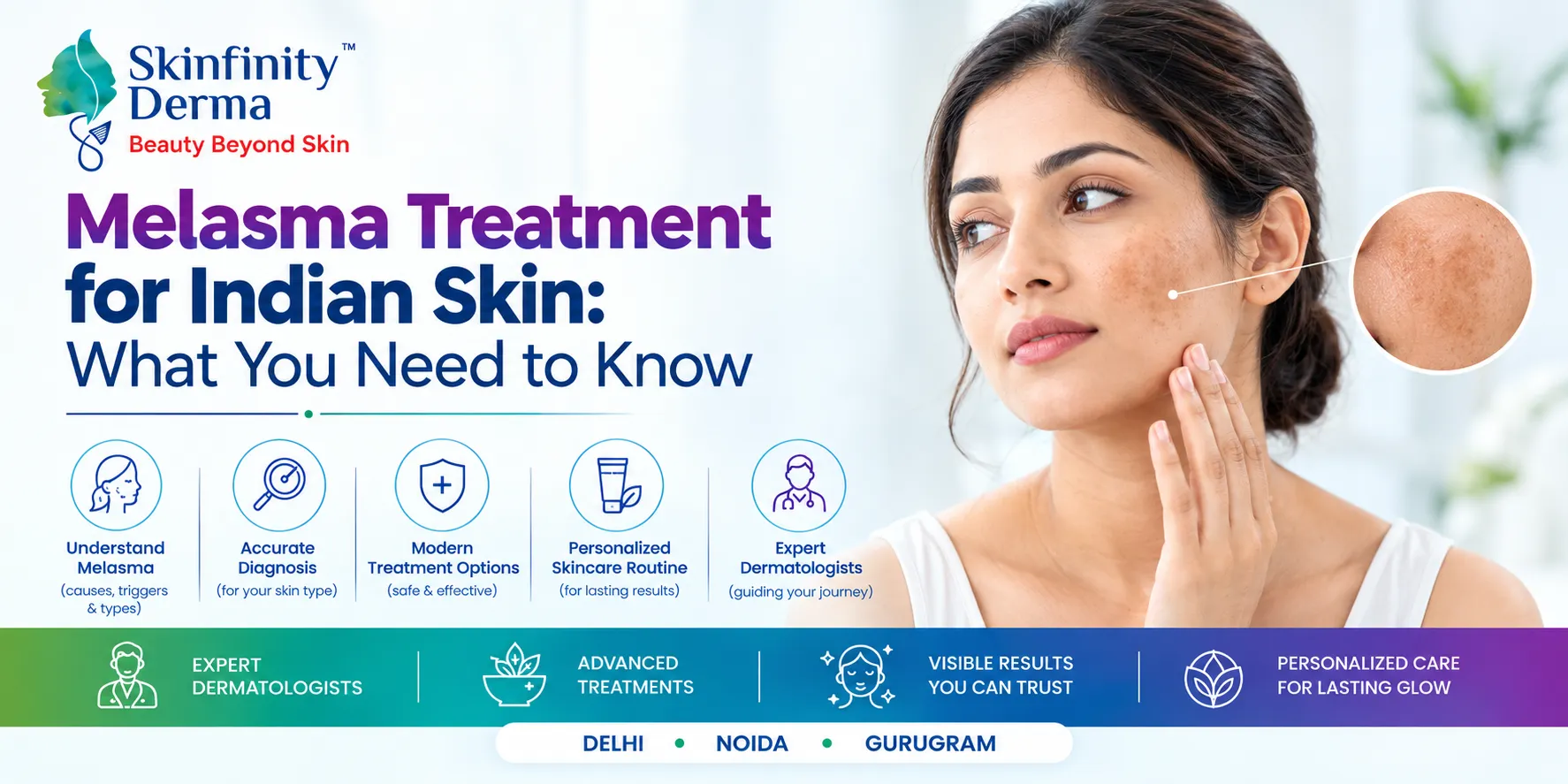
Melasma can appear as brown or grey-brown patches across the cheeks, forehead, nose and upper lip. These patches may deepen after sun exposure, hormonal changes or skin irritation. They can also return after initially improving.
Treating melasma on Indian skin requires particular care. Indian skin contains more active melanin than lighter skin tones. Aggressive creams, chemical peels or laser settings may trigger inflammation and make pigmentation worse.
Effective melasma treatment focuses on three goals. It reduces existing pigmentation, controls melanin production and prevents further darkening. Treatment must also protect the skin barrier and address the triggers that cause melasma to return.
Anyone considering melasma treatment in Noida or Gurgaon should begin with a dermatologist-led diagnosis. Not every brown facial patch is melasma, and the wrong treatment may delay improvement.
What Is Melasma?
Melasma is a chronic pigmentation condition that causes symmetrical dark patches on the face. It occurs when melanocytes produce excess melanin in response to internal and environmental triggers.
Commonly affected areas include:
-
Cheeks
-
Forehead
-
Chin
Melasma does not usually cause pain, itching or changes in skin texture. However, its appearance may affect a person’s confidence and emotional well-being. The condition is commonly classified according to the depth of pigmentation:
-
Epidermal Melasma
The excess pigment is concentrated in the upper layers of the skin. The patches may appear light or dark brown.
Epidermal melasma may respond more readily to topical treatment than deeper forms.
-
Dermal Melasma
Pigment is deposited within deeper skin layers. These patches may appear grey, blue-grey or light brown.
Dermal melasma can be more resistant to treatment and may not clear completely.
-
Mixed Melasma
Mixed melasma contains both epidermal and dermal pigmentation. It is a common presentation and often requires long-term combination treatment.
Melasma is not contagious or dangerous. However, it is persistent and can recur when its triggers remain active.
Why Is Melasma Common in Indian Skin?
The production of melanin is more active in Indian skin as compared to lighter skin. Melanin offers natural protection from UV, but also increases sensitivity to inflammation and light exposure.
Minimal sun exposure can cause pigment production in sensitive people. Darkening may also be caused by heat, light and skin irritation.
Melasma tends to affect women with medium to darker skin tones. There may be genetic predispositions. If close family members have melasma, then the risk of developing it is increased.
Melasma could also be affected by Indian weather. Melanocytes are continually stimulated by strong sunlight and high temperatures, as well as frequent outdoor exposure.
Melasma can be more visible on Indian skin due to:
-
Melanocytes are very sensitive to inflammation.
-
UV exposure is year-round
-
Visible light can exacerbate existing pigmentation.
-
Pigment production can be stimulated by heat.
-
Susceptible melanocytes are activated by hormonal changes.
-
The harshness of skincare products can lead to further pigmentation.
-
The wrong procedures can lead to rebound darkening.
That's why it's important to protect yourself from the sun and treat your skin gently in the long run
What Causes or Triggers Melasma?
Melasma rarely develops because of one factor alone. Several triggers may act together.
-
Sun Exposure
Ultraviolet radiation stimulates melanocytes and increases pigment production. Even short periods of unprotected exposure may deepen existing patches.
Repeated exposure through windows, during travel or while completing daily tasks can also affect melasma.
-
Visible Light
Visible light can contribute to pigmentation in darker skin tones. Standard sunscreens do not always provide sufficient visible-light protection.
Tinted sunscreens containing iron oxides may offer additional protection for pigmentation-prone skin.
-
Hormonal Changes
Pregnancy, hormonal contraception and other hormonal changes may trigger melasma. Melasma that develops during pregnancy is sometimes called chloasma.
Hormonal treatment should never be stopped without consulting the prescribing doctor.
-
Genetics
A family history of melasma can increase the likelihood of developing it. Genetics may also influence how quickly the pigmentation returns.
-
Heat Exposure
Frequent heat exposure may worsen melasma in some people. Cooking heat, steam rooms, saunas and hot working environments may act as triggers.
-
Skin Irritation
Inflammation can stimulate additional pigment production. Strong peels, over-exfoliation, waxing and unsuitable skincare products may worsen the patches.
-
Certain Medicines
Some medicines can increase sensitivity to light or influence pigmentation. Patients should discuss current medicines and supplements with their dermatologist.
-
Cosmetic Products
Fragranced or irritating products can sometimes cause inflammation. Repeated irritation may deepen pigmentation around the cheeks, forehead or mouth.
Why Does Melasma Need Special Consideration in Indian Skin?
Indian skin has a greater tendency to develop post-inflammatory hyperpigmentation. This means that irritation caused by treatment can create additional darkening.
A treatment must therefore reduce pigment without causing unnecessary inflammation.
Indian skin may react poorly to:
-
Excessively strong chemical peels
-
Frequent exfoliation
-
High-energy laser settings
-
Repeated laser passes
-
Unsupervised steroid creams
-
Strong pigment-control combinations
-
Several active ingredients used together
-
Inadequate treatment intervals
A slower and carefully planned approach is often safer. Conservative treatment may take longer, but it reduces the risk of burns, prolonged sensitivity and rebound pigmentation.
Skin tone alone does not determine treatment. The dermatologist must also consider pigment depth, skin sensitivity, recent tanning and previous reactions.
How Is Melasma Diagnosed?
Melasma is usually diagnosed through a physical examination. The dermatologist evaluates the colour, pattern, distribution and depth of the pigmentation.
The consultation may include questions about:
-
When the pigmentation began
-
Pregnancy or hormonal changes
-
Contraceptive medicines
-
Family history
-
Sun and heat exposure
-
Current skincare products
-
Previous peels or laser treatments
-
Recent irritation
-
Occupational exposure
-
Existing medical conditions
A Wood’s lamp or dermoscopy may be used to examine pigment patterns. These tools can support the assessment, although they do not always predict treatment response.
Melasma may resemble several other pigmentation conditions, including:
-
Post-inflammatory hyperpigmentation
-
Lichen planus pigmentosus
-
Riehl’s melanosis
-
Frictional pigmentation
-
Sun-induced pigmentation
-
Pigmented contact dermatitis
-
Medication-related pigmentation
-
Nevus of Ota
-
Facial acanthosis nigricans
Correct diagnosis is important because these conditions may require different treatments.
Melasma Treatment Options for Indian Skin
Melasma treatment usually combines daily photoprotection with pigment-control skincare. Procedures may be added when appropriate.
1. Broad-Spectrum Sunscreen
Sunscreen is essential for managing melasma. Without proper protection, pigmentation can become darker even when creams or procedures are being used.
Apply a broad-spectrum sunscreen with an SPF of 30 or higher. A higher SPF may be recommended for pigmentation-prone skin or when spending extended periods outdoors.
Sunscreen should be applied to the entire face, ears and neck. Reapply after sweating or during prolonged outdoor exposure.
A tinted sunscreen containing iron oxides may provide additional protection against visible light. The tint should blend comfortably with the individual’s skin tone to support regular, long-term use.
2. Hydroquinone
Hydroquinone works by inhibiting tyrosinase activity, which helps reduce melanin production. It may be used for a limited period in selected patients.
Incorrect or prolonged use can cause irritation, rebound pigmentation or other complications. Therefore, hydroquinone should be used under the supervision of a dermatologist.
3. Triple-Combination Cream
Prescription triple-combination creams typically contain hydroquinone, a retinoid and a low-dose corticosteroid. They can be effective in improving melasma when used appropriately.
However, they should not be used as permanent or unsupervised skincare products. Long-term misuse may lead to skin thinning, acne, prominent blood vessels or pigmentation problems.
4. Azelaic Acid
Azelaic acid helps reduce pigment production and may also be useful for acne-prone skin. It is sometimes considered when hydroquinone is unsuitable or contraindicated.
Mild stinging, dryness or irritation may occur during the initial adjustment period.
5. Retinoids
Retinoids help skin cells to turn over and can enhance the effectiveness of other ingredients that control pigment. They can lead to dryness and irritation if introduced too rapidly. Retinoids are usually not used during pregnancy and should only be used as directed by a doctor.
6. Vitamin C
Vitamin C offers antioxidant benefits and could help to slowly reduce the appearance of irregular pigmentation. It is dependent on formulation, concentration and stability.
Vitamin C is typically used as an adjunct to a melasma treatment instead of as a standalone product.
7. Niacinamide
Niacinamide can help maintain the barrier function of the skin and inhibit the transfer of pigment in the skin. Sensitive skin may tolerate lower concentrations.
It may be used in combination with other treatments, if medically appropriate.
8. Kojic Acid and Arbutin
Several pigmentation products contain the ingredients kojic acid and arbutin. They can aid in the decrease of pigment production.
Even these ingredients can cause irritation for sensitive skin. The more pigment-control ingredients, the faster results may not be.
9. Tranexamic Acid
Tranexamic acid can be topically applied, ingested or administered via certain procedures. Oral tranexamic acid may not be appropriate for all people as it can impact blood clotting.
It should be reviewed by a dermatologist who has to take into account personal and family history. Oral tranexamic acid should not be taken for melasma without medical supervision.
10. Chemical Peels
Superficial chemical peels can be a helpful addition to the treatment of epidermal melasma. Options may include glycolic acid, lactic acid, mandelic acid or other dermatologist-recommended acids.
For Indian skin, choosing the right peel, concentration and contact time can help improve pigmentation while keeping irritation to a minimum. A dermatologist can customise the treatment according to the individual’s skin type, sensitivity and pigmentation concerns.
11. Laser and Light-Based Treatment
Certain lasers can be recommended for patients with melasma that is not adequately treated by topical therapy. They typically are a component of a comprehensive treatment program and not the sole therapy.
Laser energy can cause too much heat or inflammation, which can exacerbate melasma. It is important to use right settings, test spots and adequate intervals.
Is Laser Treatment Safe for Indian Skin?
Laser treatment can be used safely in selected Indian patients. However, it is not suitable for every person with melasma.
Low-fluence 1064 nm Q-switched Nd:YAG laser treatment is sometimes used for resistant pigmentation. This approach is commonly called laser toning.
Possible risks include:
-
Post-inflammatory hyperpigmentation
-
Rebound melasma
-
Mottled light patches
-
Uneven pigmentation
-
Burns
-
Prolonged redness
-
Increased sensitivity
Repeated or aggressive laser toning can cause irregular pigment loss. A laser should not be selected only because it is marketed as advanced.
The dermatologist must consider:
-
Natural skin tone
-
Pigment depth
-
Recent tanning
-
Skin sensitivity
-
Previous laser reactions
-
Active inflammation
-
Current skincare
-
History of pigmentation after procedures
Laser treatment does not stop the factors responsible for melasma. Sunscreen and medical skincare remain necessary after the procedure.
Why Does Melasma Keep Coming Back?
Melasma is a chronic and recurring condition. Treatment can reduce existing pigment, but it cannot permanently deactivate melanocytes.
Pigmentation may return because of:
-
Sun exposure
-
Visible-light exposure
-
Hormonal changes
-
Pregnancy
-
Heat exposure
-
Skipping sunscreen
-
Skin inflammation
-
Irritating products
-
Stopping maintenance treatment
-
Aggressive procedures
-
Genetic susceptibility
A person may notice improvement during treatment and then develop darker patches after a holiday or summer season.
Recurrence does not always mean that the original treatment failed. It often means that the underlying triggers remain active.
How Can You Prevent Melasma From Returning?
Long-term control is an important part of melasma treatment for Indian skin.
1. Use Sunscreen Daily
Apply a broad spectrum sunscreen daily. Use it even on cloudy days or when you’re near windows.
Reapply after sweating, washing the face or extended outdoor activities.
2. Consider Tinted Sunscreen
Tinted sunscreen with iron oxides may provide more protection against visible light. This can help the skin that is prone to melasma.
3. Use Physical Protection
Wear a wide-brimmed hat, sunglasses and protective clothing when outside. Stay in the shade as much as possible.
4. Stay out of the sun as much as possible.
Avoid all unnecessary outdoor exposure during periods of high sun. Sunscreen is not the only way to protect yourself from the sun.
5. Control Heat Exposure
Determine if cooking heat, saunas, or strenuous exercise aggravates the condition. It may not be possible to avoid it completely, but unnecessary exposure can be minimised.
6. Avoid Skin Irritation
Never use several acids, scrubs and retinoids at the same time without instructions. Damage to the skin barrier may result in higher pigmentation and inflammation.
7. Follow Maintenance Treatment
The dermatologist may suggest using a less powerful maintenance product after the duration of treatment. Maintenance can help to regulate the production of pigment.
8. Manage Hormonal Triggers
Talk to the appropriate physician about any possible hormone-related causes. Never discontinue a prescribed hormone medication without your doctor’s guidance.
How Long Does Melasma Treatment Take?
Melasma treatment requires patience. Some patients notice early improvement after four to eight weeks of consistent medical skincare.
More noticeable improvement may require three to six months. Deeper or resistant melasma can take longer.
The treatment timeline depends on:
-
Pigment depth
-
Severity
-
Skin sensitivity
-
Hormonal influences
-
Sun exposure
-
Treatment consistency
-
Previous procedures
-
Current inflammation
-
Use of sunscreen
-
Response to maintenance care
Chemical peels and laser procedures may require several sessions. Treatment sessions must be spaced adequately to allow the skin to recover.
Fast treatment is not always safer. Attempting to clear melasma aggressively can cause irritation and rebound pigmentation.
Common Mistakes People Make While Treating Melasma
-
Using Steroid Combination Creams Without Advice
Some over-the-counter pigmentation creams contain potent steroids. They may initially make the skin appear lighter but can eventually cause thinning, acne and difficult pigmentation.
-
Skipping Sunscreen Indoors
UVA and visible light may reach the skin through windows. Consistent photoprotection remains important.
-
Applying Too Little Sunscreen
A thin or uneven layer may not provide the protection stated on the label. Sunscreen should cover the entire exposed area.
Can Melasma Be Permanently Cured?
Melasma can be controlled, but a permanent cure cannot be guaranteed. The melanocytes remain capable of producing additional pigment when triggered.
Treatment may produce significant and long-lasting improvement. However, sun exposure, hormonal changes, heat or inflammation can reactivate pigmentation.
Long-term control usually involves:
-
Daily sunscreen
-
Physical sun protection
-
Suitable medical skincare
-
Avoiding irritation
-
Managing known triggers
-
Maintenance treatment
-
Periodic dermatologist reviews
When Should You See a Dermatologist for Melasma?
Consult a dermatologist when facial pigmentation is persistent, spreading or difficult to identify.
Professional assessment is particularly important when:
-
Pigmentation appears suddenly
-
The patches continue to darken
-
Over-the-counter creams are not helping
-
A cream causes burning or thinning
-
Pigmentation worsens after a peel or laser
-
The patches develop during pregnancy
-
Melasma affects confidence
-
The colour or pattern is unusual
-
Other symptoms occur with pigmentation
-
Previous treatment caused lighter patches
-
The diagnosis remains unclear
A dermatologist can distinguish melasma from other conditions and determine whether the pigment is primarily epidermal, dermal or mixed.
What Is the Best Treatment for Melasma on Indian Skin?
The best treatment is usually a personalised combination of sun protection, topical pigment-control products and maintenance care.
Broad-spectrum sunscreen is essential for every treatment plan. A dermatologist may then consider hydroquinone, azelaic acid, retinoids, tranexamic acid or other ingredients based on skin sensitivity and medical history.
Chemical peels or laser treatment may be added in selected cases. However, procedures should not replace sunscreen or daily medical skincare.
The safest approach for Indian skin is gradual. It aims to reduce pigmentation without creating inflammation that could make melasma worse.
Melasma Treatment at SKINFINITY Derma
At SKINFINITY Derma, we begin by confirming whether the facial pigmentation is melasma or another condition. Our dermatologists examine its colour, distribution, depth and possible triggers before recommending treatment.
We personalise each plan according to your skin tone, sensitivity and previous treatment response. Your melasma treatment may include medical skincare, sun-protection guidance, chemical peels or carefully selected laser procedures.
We do not treat melasma as a one-session pigmentation concern. Our approach also focuses on controlling recurrence and protecting the skin barrier.
Patients seeking melasma treatment in Noida? can visit our Sector 36 clinic near Logix Mall. We also provide melasma treatment in Gurgaon at our Sector 28 clinic on Golf Course Road.
Book a consultation with our dermatologists to understand which melasma treatment is suitable for your skin.
Conclusion
Melasma on Indian skin needs accurate diagnosis, gentle treatment and consistent sun protection. Topical medicines can gradually reduce pigmentation, while selected peels or lasers may support resistant cases. However, aggressive treatment can cause inflammation and further darkening. Long-term maintenance remains essential because melasma can return. A dermatologist can create a safer plan based on pigment depth, skin tone and individual triggers.
Frequently Asked Questions
Why Is Melasma Common in Indian Skin?
Melanin in Indian skin is more active than in lighter skin tones. Therefore, sunlight, visible light, heat and inflammation can more easily trigger visible pigmentation.
Other factors, such as genetics and hormonal changes, can also make some people more susceptible to melasma.
Can Melasma Be Permanently Cured?
Melasma can be successfully managed, but complete and permanent clearance cannot be guaranteed. The condition can recur when melanocytes are stimulated by sunlight, hormones, heat or irritation.
Maintenance skincare and consistent sun protection can help maintain improvement.
Does Sunscreen Help Prevent Melasma From Getting Worse?
Yes. Sunscreen is an important part of melasma treatment. It can reduce further stimulation of pigment caused by the sun’s ultraviolet rays.
A broad-spectrum tinted sunscreen containing iron oxides may also provide additional protection against visible light.
Is Laser Treatment Safe for Indian Skin With Melasma?
In selected patients, laser treatment may be considered safe when performed by an experienced dermatologist using conservative settings.
However, burns, rebound pigmentation or patchy pigment loss may occur if the treatment is unsuitable or performed too aggressively.
Can Chemical Peels Treat Melasma?
Selected cases of epidermal melasma may benefit from superficial chemical peels. These are typically used alongside sunscreen and topical treatments.
Indian skin may experience irritation and worsening pigmentation if strong or frequent peels are used.
Why Does Melasma Keep Coming Back?
Melasma can recur because its triggers may still be present. Sunlight, visible light, hormonal changes, heat and skin inflammation can stimulate new pigment production.
Stopping maintenance treatment or becoming inconsistent with sunscreen can also contribute to recurrence.
How Long Does Melasma Treatment Take to Show Results?
Initial improvement may be seen within 4–8 weeks. More noticeable results may take around 3–6 months.
Deeper or more persistent pigmentation may require longer treatment and ongoing maintenance.
Can Hormonal Changes Cause Melasma?
Yes. Melasma can be triggered or worsened by pregnancy, hormonal contraception and hormonal fluctuations.
Hormonal medications should not be discontinued without advice from a doctor.
What Skincare Ingredients Are Commonly Used for Melasma?
Dermatologists may recommend ingredients such as hydroquinone, azelaic acid, retinoids, niacinamide, vitamin C, kojic acid or tranexamic acid.
The appropriate combination depends on the depth of pigmentation, skin sensitivity and medical history.
Should I See a Dermatologist for Melasma?
Yes, particularly if the pigmentation is persistent, spreading or getting worse. A dermatologist can help determine whether the patches are caused by melasma or another skin condition.
Professional guidance can also help reduce the risk of irritation caused by unsuitable creams or treatments.
Can Melasma Get Worse After Laser Treatment?
Yes. If laser treatment causes excessive heat or inflammation, melasma may worsen.
This risk can be reduced through careful patient selection, conservative settings, test spots and strict aftercare. However, recurrence or darkening can still occur.

 Call Now
 WhatsApp