

Medically Reviewed by: Dr. Shradha Gumber
MBBS, MD - Dermatology , Venereology & Leprosy | Skinfinity Derma Clinic
Read Time: 8 Minutes
Why Your Pigmentation Keeps Returning And What You Can Do to Stop the Cycle — For Good
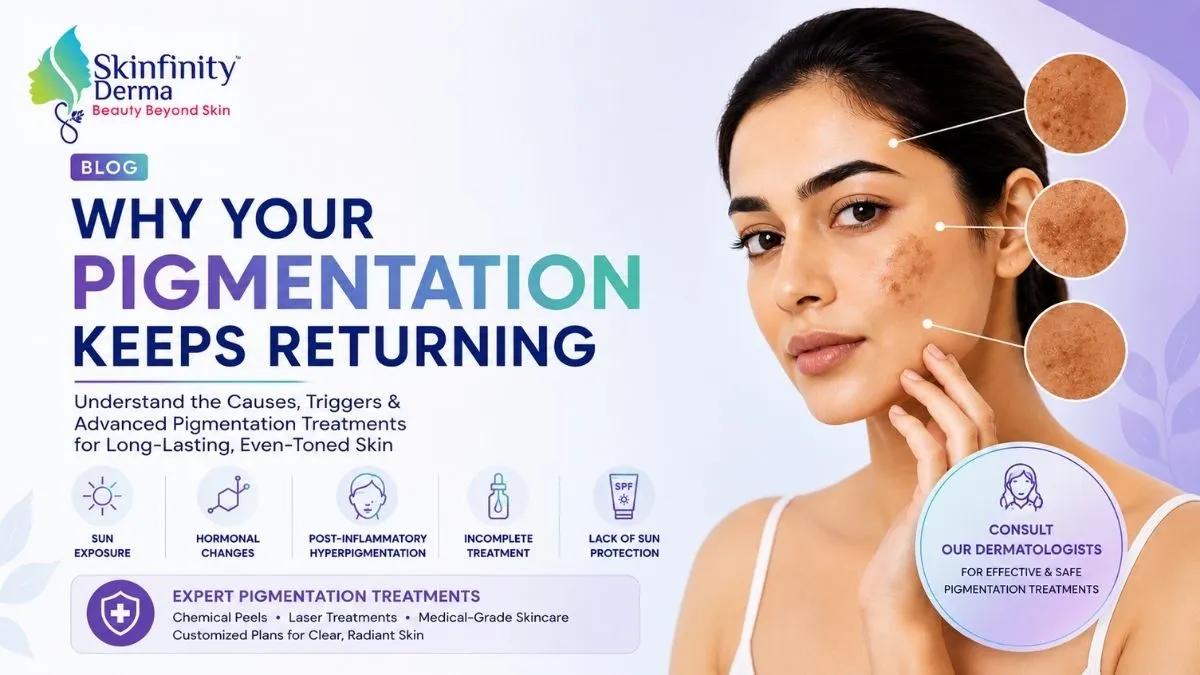
You treated your pigmentation. You saw results. And then — it came back. If this sounds familiar, you are not alone. Pigmentation is one of the most common and most frustrating skin concerns because of one simple truth: it almost never disappears permanently on its own. It requires consistent, science-backed management — and a deep understanding of why it returns in the first place.
At Skinfinity Derma, we see patients every day who have tried everything — creams, peels, home remedies — only to find their dark patches stubbornly reappearing weeks or months later. This article explains exactly why that happens, and how our targeted treatments are designed to break the cycle.
Understanding Pigmentation: More Than Just Dark Spots
Pigmentation refers to the darkening of the skin caused by an overproduction of melanin — the pigment that gives your skin its colour. Melanin is produced by cells called melanocytes, which are found in the deepest layer of the epidermis. Under normal conditions, melanin production is balanced and evenly distributed. But when these melanocytes are triggered — by sun exposure, hormones, inflammation, or injury — they go into overdrive, producing localised patches of discolouration.
What makes pigmentation so persistent is that melanocytes have a memory. Once activated, they remain primed and ready to produce melanin again at the slightest provocation. This is why, even after successful treatment, pigmentation can return with sun exposure, stress, or hormonal changes.
Understanding the type of pigmentation you have is the first step in treating it effectively:
Book An Appointment
|
Type |
Cause |
Location |
Recurrence Risk |
|
Melasma |
Hormones, UV exposure |
Cheeks, forehead, upper lip |
Very High |
|
Post-Inflammatory Hyperpigmentation (PIH) |
Acne, injury, inflammation |
Site of original injury |
High (if cause persists) |
|
Sun Spots / Lentigines |
Cumulative UV damage |
Face, hands, shoulders |
Moderate–High |
|
Freckles |
Genetic + UV activation |
Nose, cheeks |
Moderate |
|
Lichen Planus Pigmentosus |
Chronic inflammation |
Face, neck, flexures |
High |
The Most Common Reasons Your Pigmentation Keeps Coming Back
1. Sun Exposure — The Number One Trigger
UV radiation is the primary driver of melanin production. Even brief, daily sun exposure — walking to your car, sitting near a window — is enough to re-activate dormant melanocytes. Many patients treat pigmentation successfully in winter, only to see it return when summer arrives. Without consistent, high-SPF sun protection worn every single day (regardless of weather), pigmentation will inevitably return.
2. Hormonal Fluctuations
Hormones play a significant role in melanin regulation. Oestrogen and progesterone directly stimulate melanocytes. This is why melasma — sometimes called the 'mask of pregnancy' — is so prevalent in women who are pregnant, on oral contraceptive pills, or going through perimenopause. If the hormonal trigger is not addressed alongside skin treatment, pigmentation will return no matter how effective the procedure.
3. Incomplete Treatment Courses
Pigmentation exists in multiple layers of the skin. When you see lightening of the surface, it does not mean the deeper pigment has been cleared. Many people stop treatment prematurely because the skin looks better — but the melanin deposits deeper in the dermis remain, waiting to resurface. Completing the full recommended treatment course is essential.
4. Inflammation and Skin Trauma
Post-inflammatory hyperpigmentation (PIH) is directly caused by skin inflammation. Active acne, aggressive scrubbing, incorrect use of actives, waxing, threading, or even a simple skin injury can all cause the skin to produce excess melanin as part of its healing response. If you have active acne or regularly inflame your skin, PIH will keep returning until the root cause is treated.
5. Using the Wrong Products
Over-the-counter brightening products typically contain concentrations of active ingredients that are too low to create meaningful change in established pigmentation. Worse, some products contain irritating ingredients that can worsen PIH, or photosensitising compounds that make the skin more vulnerable to UV damage. Without professional guidance, you may be unknowingly making the problem worse.
6. Not Addressing Skin Barrier Health
A compromised skin barrier is more susceptible to inflammation, UV damage, and moisture loss — all of which contribute to pigmentation. Over-exfoliation, harsh cleansers, and dehydration weaken this protective barrier, making the skin more reactive and pigmentation more persistent.
Why Standard Treatments Often Fail: The Evidence
Even medically supervised pigmentation treatments can lose their results over time if maintenance protocols are not followed. Here is a breakdown of the most common mistakes and how to correct them:
|
Common Mistake |
Why It Fails |
What to Do Instead |
|
Skipping sunscreen |
UV re-triggers melanin production immediately |
SPF 50+ daily, even indoors |
|
Stopping treatment too soon |
Pigmentation is deep; surface fading is not full clearance |
Maintain dermatologist-guided protocol |
|
Using OTC products only |
Low concentrations don't reach the dermis |
Prescription-grade or clinic treatments |
|
Ignoring hormonal factors |
Ongoing hormonal stimulus keeps melanocytes active |
Consult on hormonal management |
|
Over-exfoliating |
Inflames skin, worsening PIH |
Gentle, dermatologist-approved exfoliation only |
Treatments Available at Skinfinity Derma
At Skinfinity Derma, we do not believe in one-size-fits-all solutions. Every patient receives a thorough skin analysis and personalised treatment protocol designed to address their specific pigmentation type, skin tone, and underlying triggers. Our clinic offers a comprehensive range of clinically proven pigmentation treatments:
|
Treatment |
How It Works |
Best For |
|
Q-Switch Nd:YAG Laser |
Shatters melanin pigment with targeted laser energy |
Melasma, sun spots, PIH |
|
Chemical Peels (customised) |
Removes pigmented surface cells; stimulates fresh skin |
Mild to moderate pigmentation |
|
Microneedling with Brightening Serum |
Creates micro-channels for deep serum penetration |
PIH, dull uneven tone |
|
Glutathione IV / Oral Therapy |
Systemic antioxidant that suppresses melanin synthesis |
Whole-face brightening, melasma support |
|
Prescription Topical Trio |
Hydroquinone + Tretinoin + Steroid combination |
All types; used as maintenance |
|
Intense Pulsed Light (IPL) |
Broad-spectrum light breaks down excess melanin |
Sun spots, freckles, redness |
All treatments at Skinfinity Derma are performed by qualified dermatologists and trained aesthetic professionals. We use only certified, medical-grade technology to ensure both safety and efficacy for all skin tones — including deeper Indian skin tones, which require special care to avoid post-treatment hyperpigmentation.
The Skinfinity Derma Approach: Treat, Maintain, Protect
Our philosophy is built on three pillars that address not just the visible pigmentation, but the underlying biology driving it:
- TREAT: Clinical treatments to break down existing pigment deposits and suppress overactive melanocytes.
- MAINTAIN: Prescription-grade maintenance regimens that keep pigmentation from re-forming.
- PROTECT: Comprehensive sun protection and lifestyle guidance to reduce recurrence triggers.
We also monitor your progress with follow-up consultations and adjust your treatment plan as needed. Pigmentation management is not a single event — it is an ongoing relationship between you and your dermatologist.
Why Choose Skinfinity Derma?
When it comes to pigmentation, the difference between treatment that works and treatment that keeps failing often comes down to one thing: expert, individualised care. Here is why patients across the region trust Skinfinity Derma with their skin:
- Expert Dermatologist-Led Care: Every consultation and treatment is overseen by experienced, qualified dermatologists — not just aestheticians. We bring medical expertise to every skin concern.
- Customised Protocols for Indian Skin Tones: Our team has deep expertise in treating darker skin tones (Fitzpatrick III–VI), which are more prone to PIH and require modified treatment parameters. We never apply a generic approach.
- Comprehensive, Root-Cause Treatment: We do not just treat the surface. We investigate and address your hormonal profile, lifestyle triggers, and skin barrier health to deliver results that last.
- Advanced, Medically Certified Technology: From Q-Switch Nd:YAG lasers to personalised chemical peels and IPL, we use only clinically validated technology that is safe and effective.
- Transparent Consultations: We educate every patient on exactly what is causing their pigmentation, what realistic outcomes look like, and what ongoing care they need. You will never be left in the dark.
- Holistic Skin Health Philosophy: We pair in-clinic treatments with customised home-care regimens, nutritional guidance, and sunscreen education — because great skin is built both inside and out.
- Proven Results, Real Patients: Our clinic's track record speaks for itself. We have helped hundreds of patients achieve lasting improvement in pigmentation with measurable, visible outcomes.
At Skinfinity Derma, we understand that pigmentation is not just a cosmetic concern — it affects confidence, daily comfort, and quality of life. Our goal is not just to lighten your skin temporarily, but to give you the tools and treatments to maintain healthy, even-toned skin for years to come.
Frequently Asked Questions
Q1. How many sessions will I need to see results?
The number of sessions depends on the type, depth, and severity of your pigmentation, as well as your skin tone and adherence to the home-care protocol. Most patients begin to see visible improvement after 3–4 sessions of laser or peel-based treatments, with optimal results typically achieved over 6–8 sessions spaced 3–4 weeks apart. Your dermatologist at Skinfinity Derma will give you a personalised estimate during your initial consultation.
Q2. Will my pigmentation come back after treatment?
This is the most common concern — and an honest one. Without appropriate maintenance and sun protection, pigmentation can and often does return, especially for conditions like melasma that are hormonally driven. At Skinfinity Derma, we design long-term maintenance protocols specifically to minimise recurrence. Patients who follow their prescribed homecare routine and use broad-spectrum sunscreen consistently enjoy significantly longer-lasting results.
Q3. Are pigmentation treatments safe for dark or Indian skin tones?
Yes — but only when performed by experienced professionals using appropriate settings and technologies. Darker skin tones contain more active melanocytes, which means inappropriate laser intensities or peels can cause post-treatment hyperpigmentation or hypopigmentation. At Skinfinity Derma, our dermatologists are specifically trained in treating Indian and South Asian skin safely. We use carefully calibrated laser parameters and selected peel formulations to deliver effective results without risking skin damage.
Q4. Can I treat pigmentation at home with over-the-counter products?
Over-the-counter products containing ingredients like niacinamide, vitamin C, kojic acid, or alpha arbutin can provide mild improvement in surface-level pigmentation and work well as maintenance tools alongside clinical treatment. However, for established, deep, or recurring pigmentation, OTC products are rarely sufficient on their own. They do not penetrate to the dermal layer where significant pigmentation often resides, and they cannot replace medically supervised treatments. We recommend using OTC products as a complement to — not a substitute for — professional dermatological care.
Ready to break the pigmentation cycle — for good?
Book your personalised skin consultation at Skinfinity Derma today.
www.skinfinityderma.com | Your skin deserves expert care.

 Call Now
 WhatsApp