

Medically Reviewed by: Dr. Aanchal Bansal
MBBS, MD, DNB (Dermatology, Venereology, and Leprosy) | Skinfinity Derma Clinic
Read Time: 8 Minutes
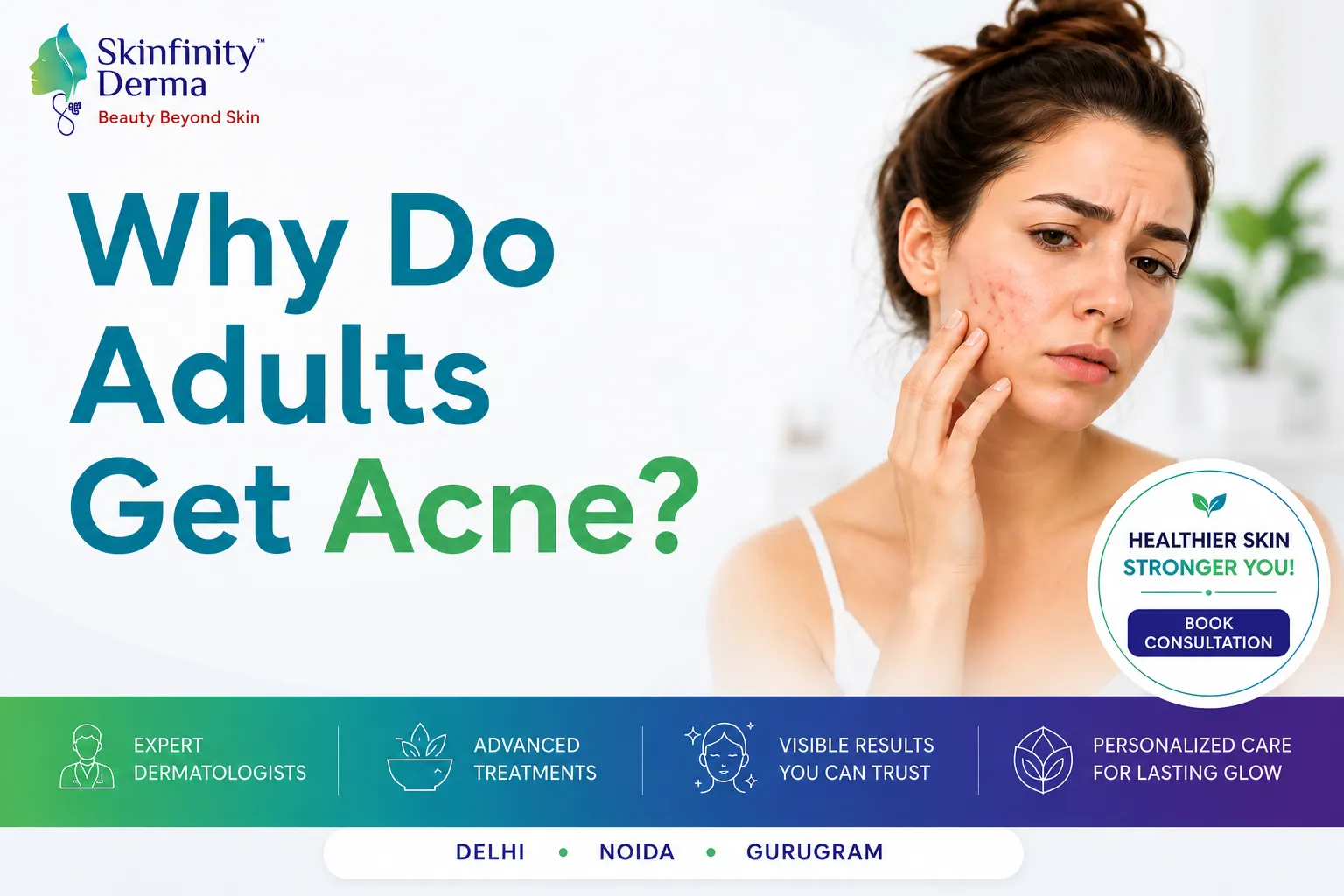
You swore you were over acne in your teenage years, and then suddenly in your mid-twenties, thirties or even forties, you find a familiar grouping of breakouts back on your chin, jaw or even around your cheeks. You are by no means alone. One of the most prevalent, and emotionally unsettling, skin issues that we encounter on a daily basis at Skinfinity Derma is adult acne. Here in this blog, we are going to deconstruct precisely why adults have acne, what causes it and, above all, how to safely and effectively treat acne.
What Exactly Is Adult Acne?
Acne is a long-term skin disorder that develops when the follicles on the skin are obstructed with oil (sebum) and dead skin cells. This provides an ideal bacterial habitat which is Cutibacterium acnes leading to inflammation, redness, pustules, nodules, and cysts. Although acne in teenagers is generally diffuse and localized to the forehead and nose (the T-zone), the appearance of acne in adults is usually different.
Book An Appointment
|
Feature |
Teenage Acne |
Adult Acne |
|
Primary Location |
Forehead, nose, T-zone |
Jawline, chin, cheeks, neck |
|
Skin Type |
Usually oily overall |
Often dry or combination |
|
Lesion Type |
Blackheads & whiteheads |
Deeper, cystic or nodular lesions |
|
Primary Trigger |
Puberty-driven hormonal surge |
Stress, hormones, lifestyle, diet |
|
Scarring Risk |
Moderate |
Higher (deeper lesions) |
|
OTC Response |
Often sufficient |
Usually requires medical treatment |
Top Reasons Adults Get Acne
Understanding the root cause of your adult acne is the first step to treating it effectively. Here are the most clinically significant reasons adults develop breakouts:
1. Hormonal Fluctuations
Hormones are by far the most widespread cause of adult acne, especially in women. The excess oil is stimulated by androgens (male hormones that are found in both sexes) in the sebaceous glands. Acne does have a cyclical outbreak in adult women – it gets worse in the weeks before menstruation, during pregnancy, perimenopause and as a side effect of giving up hormonal contraceptives. Such conditions as Polycystic Ovary Syndrome (PCOS) greatly increase the level of androgens, which leads to ineffective treatment as acne along the jawline and lower face is observed persistently.
2. Chronic Stress
The stress hormone cortisol remains on an all-time high due to modern urban life with long commutes, demanding work, screen overload, etc. Cortisol is sending the sebaceous glands of the skin to increase the production of oil, undermines the skin barrier, interferes with the microbiome of the skin, and slows down the healing process. In stressful situations, particularly in the cities such as Noida and Delhi NCR, stress-acne tends to be a close companion.
3. Wrong Skincare Products
It is a very neglected cause. Most adults apply teenage skin care formulas on the skin despite the fact that their skin type is different with age. Pores can be blocked and cause breakouts by heavy moisturizers, pore-clogging foundations and comedogenic ingredients. That is why it is so crucial to find the best acne treatment for sensitive skin because the wrong solution can only aggravate the acne.
4. Diet & Gut Health
A biological relationship that has been well documented is the gut-skin axis. Excessive production of sebum and inflammation are caused by a high carbohydrate diet, high dairy consumption, high whey protein, and processed foods, which increase the insulin-like growth factor 1 (IGF-1) levels. Diet may be a contributing factor, especially in case of breakouts after eating milk, white bread, or sweet snacks.
5. Environmental Pollutants (Especially in Delhi NCR)
Residing in a polluted area such as Noida or Delhi exposes your skin to particulate matter (PM2.5), nitrogen dioxide, and ozone that enter in between the skin pores, produce free radicals and damage the skin barrier. When the AQI in Delhi hits a peak in winter, dermatologists in the city always report an increase in breakouts and skin inflammation caused by pollution.
6. Certain Medications
There is a range of medications of common prescription that may cause or aggravate acne in adults. These are corticosteroids (inflammation), lithium (bipolar disorder), anticonvulsants, anabolic steroids and some antidepressants. In case you began taking a new medicine and had breakouts at the same time, contact your prescribing doctor as well as a dermatologist.
7. Delayed Sleep & Circadian Rhythm Disruption
The majority of repair and regeneration of your skin occurs between 10 PM and 2 AM. Use of late-night screens, disrupted sleep, and shift work disrupt this repair process, suppress immune response in the skin, and augment inflammatory mediators. Cortisol is also increased due to sleep deprivation, which is a twofold stimulus.
8. Over-Cleansing & Skin Barrier Damage
Trying to fight oiliness, lots of adults wash their faces too often, or use too much drying alcohol-based toners. This is a paradoxical destruction of the skin barrier which leaves the skin to release even more oil - and worsens acne. It is crucial to use the best acne cream for sensitive skin and a non-stripping, gentle cleanser.
|
Acne Trigger |
Mechanism |
Who Is Most Affected |
Red Flag Signs |
|
Hormonal Imbalance |
Elevated androgens ? excess sebum |
Women (PCOS, menstrual cycle) |
Cyclical jaw/chin breakouts |
|
Chronic Stress |
Cortisol ? sebum + inflammation |
Working professionals, students |
Flares during high-pressure periods |
|
Wrong Skincare |
Comedogenic ingredients block pores |
Sensitive & combination skin types |
Acne confined to product-use areas |
|
High Glycaemic Diet |
IGF-1 spike ? sebum overproduction |
People who consume dairy/sugar |
Acne after dietary indulgence |
|
Air Pollution (Delhi NCR) |
PM2.5 ? oxidative stress, pore blockage |
Urban dwellers in Noida/Delhi |
Worsening in high-AQI months |
|
Medications |
Drug-induced sebaceous stimulation |
Patients on steroids, lithium |
Onset coincides with new medication |
|
Poor Sleep |
Disrupted repair cycle + cortisol rise |
Shift workers, late-night users |
Breakouts after sleep-deprived periods |
|
Over-Cleansing |
Barrier damage ? compensatory oiliness |
Those using harsh scrubs & toners |
Skin feels tight yet still breaks out |
Types of Acne You May Experience as an Adult
Not all acne is the same, and treatment depends entirely on the type and severity of your breakouts. Here is a quick clinical overview:
|
Acne Type |
Appearance |
Severity |
Scarring Risk |
Typical Location |
|
Comedones |
Blackheads & whiteheads |
Mild |
Low |
Nose, forehead |
|
Papules |
Small red, raised bumps |
Mild–Moderate |
Low–Moderate |
Cheeks, chin |
|
Pustules |
Pus-filled whiteheads with red base |
Moderate |
Moderate |
Cheeks, jaw |
|
Nodules |
Large, solid, painful lumps deep in skin |
Severe |
High |
Jaw, chin, neck |
|
Cystic Acne |
Large, pus-filled, extremely painful |
Severe |
Very High |
Lower face |
|
Hormonal Acne |
Deep cysts on jaw, chin & neck |
Moderate–Severe |
High |
U-zone (jaw/chin) |
|
WARNING: Don't Pop or Pick Squeezing or picking at adult acne — especially nodules and cysts — dramatically increases your risk of permanent scarring, post-inflammatory hyperpigmentation (PIH), and secondary bacterial infection. Always seek professional treatment instead of attempting to extract lesions at home. |
What Happens When Acne Is Left Untreated? Understanding Acne Scars
One of the most significant consequences of untreated or poorly managed adult acne is permanent scarring. When inflammation from deep acne lesions damages the collagen fibres in the dermis, the skin either produces too little collagen (resulting in depressed, atrophic scars) or too much (leading to raised, hypertrophic scars or keloids). If you are already dealing with acne scarring, as the leading destination for acne scar treatment in Noida, Skinfinity Derma offers a comprehensive range of advanced scar revision therapies.
|
Scar Type |
Appearance |
Collagen Status |
Treatment Options |
|
Ice Pick Scars |
Deep, narrow, pitted channels |
Collagen loss |
Laser resurfacing, TCA cross |
|
Boxcar Scars |
Broad, rectangular depressions |
Collagen loss |
Fraxis Duo laser, microneedling |
|
Rolling Scars |
Wave-like undulation of skin surface |
Fibrotic tethering |
Subcision + filler, laser |
|
Hypertrophic Scars |
Raised, firm scar within wound margins |
Collagen overproduction |
Steroid injections, laser |
|
Post-Inflammatory Hyperpigmentation (PIH) |
Dark spots/patches after acne clears |
Melanin excess |
Chemical peels, laser toning |
Acne Scar Treatment at Skinfinity Derma, Noida
Acne scar treatment has evolved dramatically in the last decade. At Skinfinity Derma, we use only US-FDA approved technologies and evidence-based combination protocols for maximum results with minimum downtime. Our most popular treatments include:
Fraxis Duo Laser (Fractional CO2 + Erbium Laser)
Our gold standard technology is the Fraxis Duo, which is used in the resurfacing of acne scars. It provides controlled micro-injuries to the deepest layer of the dermis, initiating the natural wound-healing process of the body to make new collagen. It can be used in ice pick, boxcar and rolling scars and can be tailored to Indian skin tones to reduce the chances of pigmentation after treatment.
Dermapen 4 (Medical Microneedling)
The Dermapen 4 employs ultra-fine needles to make tiny micro-channels on the skin causing collagen and elastin to produce. Together with growth factor serums or PRP, it can greatly enhance the texture and depth of acne scars as well as the skin barrier issues that plague individuals who want the best acne treatment for sensitive skin.
Chemical Peels
Superficial to medium-deep peels (glycolic acid, salicylic acid, TCA) remove the top layers of skin, which are damaged, enhance the skin overall, and reduce post-inflammatory hyperpigmentation. The dermatologists are very particular when choosing the peel strength depending on the type of skin and sensitivity.
Subcision + Dermal Fillers
For rolling scars specifically, subcision (a minor procedure where fibrous tissue pulling down the scar is severed with a fine needle) combined with hyaluronic acid fillers gives outstanding lifting results.
|
LASER TREATMENT FOR ACNE SCARS: WHAT TO EXPECT The laser treatment for acne scars cost varies depending on the type of laser used, the number of sessions required, and the severity of scarring. At Skinfinity Derma, we provide a personalised assessment before recommending any treatment plan. Typically, 3-6 sessions of fractional laser are recommended for moderate-to-severe scarring, spaced 4-6 weeks apart. Results continue to improve for up to 6 months post-treatment as new collagen forms. |
|
Treatment |
Best For |
Sessions |
Downtime |
Result Timeline |
|
Fraxis Duo Laser |
All atrophic scar types |
3-5 |
3-5 days |
3-6 months |
|
Dermapen 4 (Microneedling) |
Shallow-moderate scars, sensitive skin |
4-6 |
1-2 days |
2-4 months |
|
Chemical Peel |
Pigmentation, mild surface scars |
4-8 |
1-3 days |
6-10 weeks |
|
Subcision + Filler |
Rolling scars |
1-3 |
1-3 days |
Immediate + ongoing |
|
Microdermabrasion |
Surface texture, mild PIH |
6-10 |
None |
6-8 weeks |
Table 6: Acne scar treatment comparison at Skinfinity Derma
Active Acne Treatment: What Works for Adults?
Treating active adult acne requires a multi-pronged approach. A one-size-fits-all protocol rarely works, which is why consulting the best dermatologist in Noida for acne is so critical — a personalised treatment plan is the most effective path forward.
Topical Prescriptions
Dermatologist-prescribed topicals are the frontline defence against active acne. These may include retinoids (adapalene, tretinoin), topical antibiotics (clindamycin), benzoyl peroxide, azelaic acid, and niacinamide. The key difference from over-the-counter options is concentration, formulation precision, and suitability assessment — especially important for those who need the best acne cream for sensitive skin that will not cause irritation, dryness, or barrier damage.
Oral Medications
For moderate-to-severe acne, oral medications may be prescribed. These include antibiotics (doxycycline, minocycline) for their anti-inflammatory effects, hormonal therapies (oral contraceptive pills, spironolactone) for hormone-driven acne in women, and isotretinoin (Accutane) for severe, cystic, or scarring acne.
Skinfinity Skincare Tips for Adults with Acne-Prone or Sensitive Skin
Your daily skincare routine plays a massive role in either aggravating or calming adult acne. Here are dermatologist-approved tips for managing breakout-prone skin, especially if you need the best acne treatment for sensitive skin:
|
DERMATOLOGIST-APPROVED DAILY ROUTINE FOR ADULT ACNE MORNING: Gentle gel/foaming cleanser > Niacinamide serum > Oil-free, non-comedogenic moisturiser > Broad-spectrum SPF 50 sunscreen (non-greasy formula) EVENING: Double cleanse if wearing sunscreen/makeup > Prescription topical (retinoid or antibiotic as directed) > Lightweight, ceramide-based moisturiser WEEKLY: 1-2x gentle exfoliation (enzyme-based or low-concentration BHA) — avoid harsh physical scrubs. |
Additional tips to keep in mind:
• Change pillowcases every 2-3 days to reduce bacterial transfer
• Avoid touching your face throughout the day
• Clean your mobile phone screen regularly (it harbours bacteria that transfer to the jaw and cheek)
• Choose hair products that do not drip onto the forehead or hairline
• Stay hydrated and follow a low-glycaemic, anti-inflammatory diet
Why Choose Skinfinity Derma for Your Acne Treatment in Noida?
If you are searching for the best dermatologist in Noida for acne, Skinfinity Derma stands apart for several compelling reasons:
|
What Sets Us Apart |
Details |
|
Expert Leadership |
Led by Dr. Ipshita Johri (MBBS, DDV, PG Dip. Clinical Dermatology, Cardiff, UK) — a pioneer in evidence-based dermatology in Delhi NCR |
|
US-FDA Approved Technology |
We use only internationally certified equipment including Fraxis Duo Laser, Dermapen 4, and Q-Switched Nd:YAG lasers |
|
Personalised Protocols |
No cookie-cutter treatments — every acne patient receives a customised diagnosis, treatment plan, and follow-up schedule |
|
3,200+ Verified Reviews |
One of Noida's highest-rated skin clinics on Google, with thousands of verified patient reviews |
|
Transparent Pricing |
Clear information on laser treatment for acne scars cost before any procedure begins — no hidden charges |
|
Accessible Expert Care |
Walk-in and online dermatologist consultations available — Mon to Sun, 10 AM to 8 PM |
|
Convenient Locations |
Acne scar treatment in Noida (Sector 36, near Logix Mall) and Gurgaon (Sector 28, Golf Course Road) |
Table 8: Why Skinfinity Derma is the top choice for acne treatment in Noida
Frequently Asked Questions About Adult Acne
Q: Can adult acne be permanently cured?
With appropriate treatment, adult acne can be placed into long-term remission and be successfully controlled. Although the only permanent solution lies in the management of underlying hormonal, dietary or lifestyle triggers, the majority of patients can control their skin and have a clear complexion through a combination of medication and ongoing skincare practices.
Q: Is it safe to use retinoids if I have sensitive skin?
Yes--the right way. The retinoids, which are used with a sufficient buffer moisturiser and at low concentrations, are safe on sensitive skin. Your dermatologist will help you to select the most appropriate acne cream that has retinoids that are sensitive to the skin and will give results without causing a lot of irritation.
Q: How long does it take to see results from acne scar laser treatment?
Fractional laser resurfacing (Fraxis Duo) can be expected to take 3-6 months to show the greatest benefit, but you may see some early changes in your skin texture and tone after the first treatment. Patience is vital – the healing process of skin cannot be hastened.
Q: What is the cost of laser treatment for acne scars in Noida?
The laser treatment for acne scars cost depends on the severity of the acne scar, the part of the body it is aimed at and the number of sessions. In Skinfinity Derma, we do an in-depth consultation followed by a clear outline of costs in a transparent manner to avoid any surprises. We also provide individual packages that make a treatment less expensive in terms of several sessions.
Conclusion
Adult acne is far more common than most people realise, and it is never just a phase that will pass on its own. Hormones, stress, pollution, diet, and lifestyle all play complex interacting roles in keeping adult skin inflamed and breaking out. The good news is that with the right clinical approach — a combination of accurate diagnosis, personalised medical treatment, and smart skincare — clear, healthy skin is absolutely achievable at any age. Do not let acne define your confidence — let the best dermatologist in Noida for acne help you reclaim it.

 Call Now
 WhatsApp