
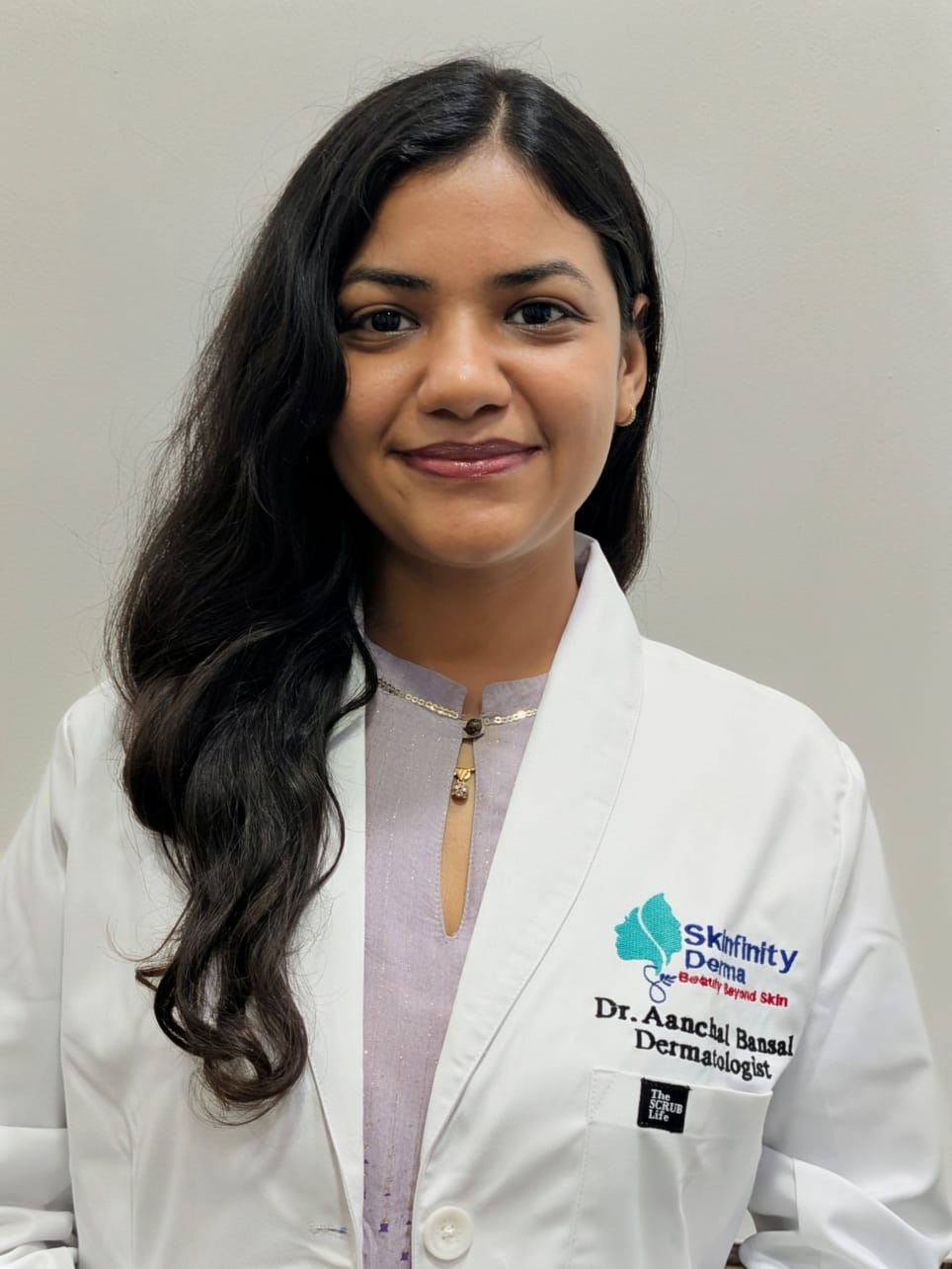
Medically Reviewed by: Dr. Aanchal Bansal
MBBS, MD, DNB (Dermatology, Venereology, and Leprosy) | Skinfinity Derma Clinic
Read Time: 8 Minutes
Uneven skin tone often develops due to acne marks or sun exposure. Hormonal changes can also make pigmentation harder to manage.
Professional Skin Lightening in Delhi NCR focuses on reducing excess pigmentation rather than changing the natural complexion. The aim is to create clearer and more even-looking skin.
Skinfinity Derma offers personalised brightening care through its Skin clinic in Noida and Gurgaon location. Each treatment begins with a skin assessment so the dermatologist can identify the cause and recommend a suitable approach.
Read the complete blog to understand the causes of uneven skin tone and explore the Skin Lightening in Delhi NCR options that may suit different pigmentation concerns.
What Is Skin Lightening Treatment?
Skin Lightening treatment refers to professional skincare procedures that help reduce excess melanin in areas where the skin has become darker than its natural tone.
The term “Lightening” is commonly used but skin brightening is often a more accurate description. Dermatologists do not aim to make every patient fairer. Treatment instead focuses on reducing dark spots and improving uneven pigmentation.
Medical strategies for skin Lightening treatment usually consist of prescribed creams or specialized chemical solutions that wash the surface. Many people believe that skin Lightening treatment requires light-based technology when the marks on the body match a certain design. Skin Lightening treatment is adjusted by the medical professional to match the specific condition of the patient because every person possesses unique needs.
Comprehension regarding the definition of Skin Lightening treatment commences with a single significant fact. Experts claim that the objective of Skin Lightening treatment involves the creation of a strong and balanced appearance instead of an artificial and superficially looking white skin colour.
What Causes Uneven or Dark Skin Tone?
Melanin serves as the biological substance that provides visible colour to the outer surface of the human body. The production of melanin can increase due to sun exposure or when the skin experiences inflammation. Changes in internal body chemicals can also cause melanin to increase in specific areas. The skin may begin to appear uneven in tone and darker spots can become more noticeable because of these phenomena.
Here are the leading causes of uneven and dark skin tone:
Book An Appointment
|
Cause |
How It Affects the Skin |
|
Sun exposure |
UV exposure can stimulate melanin and deepen existing dark spots |
|
Acne |
Inflammation may leave brown marks after pimples heal |
|
Hormonal changes |
Hormonal activity can contribute to melasma |
|
Skin irritation |
Aggressive skincare may trigger post-inflammatory pigmentation |
|
Ageing |
Years of sun exposure can gradually cause darker spots |
|
Certain medicines |
Some medicines can contribute to pigmentation changes |
|
Genetics |
Some people naturally develop pigmentation more easily |
Skin Lightening vs Skin Brightening: What’s the Difference?
Let us now discuss a few key differences between skin Lightening and brightening treatments:
|
Factor |
Skin Lightening |
Skin Brightening |
|
Main goal |
Reduce areas of excess pigmentation |
Improve dull or uneven-looking skin |
|
Natural skin colour |
Should not be permanently changed |
Preserved |
|
Common concerns |
Dark spots and pigmentation |
Dullness and uneven tone |
|
Treatment options |
Peels or selected laser procedures |
Facials or gentle exfoliation |
|
Result |
More even-looking tone |
Fresher-looking complexion |
|
Best approach |
Dermatologist-led when pigmentation is present |
Can be part of regular skin maintenance |
Who Can Consider Skin Brightening Treatment?
People often consider professional skin brightening when uneven pigmentation does not improve with regular skincare. Deeper marks may need targeted treatment because basic daily products do not always reach the underlying pigment.
Human beings with post-acne marks or dark spots from the sun also actively look for professional skin brightening solutions. Experts claim that Melasma and patchy pigmentation require medical attention when the underlying pattern is seen clearly. Professional skin brightening is recommended by experts when these skin conditions do not fade naturally because the marks are deep.
Professional skin brightening helps those with persistent tanning especially when the skin becomes uneven because of many hours of sun exposure. It has been observed that a dull facial appearance alongside superficial pigmentation responds well to therapeutic intervention. Professional skin brightening is also best for individuals who want to fix the damage caused by the sun while the skin still has a muted appearance.
Individuals with active eczema or severe irritation must wait before they start professional skin brightening. Many people believe that the skin barrier must heal before stronger therapeutic interventions are used on the body. Professional skin brightening is also recommended to be delayed until the skin is healthy because the skin barrier needs to recover first.
Best Skin Lightening Treatments Offered by Dermatologists
There is no single procedure that can be called the best treatment for every patient. Dermatologists choose treatment based on the pigmentation type and the depth of the concern.
-
Chemical Peels for Skin Brightening
Skin medical professionals employ chemical peels for issues where colors are not balanced and for melasma. Chemical peels take away skin parts that are damaged so that the surface is renewed through the process of managed shedding.
The strength of chemical peels must be decided after analysing the sensitivity of the person’s skin because excessive exfoliation can cause painful redness. The dermatologist should select a peel that suits the patient’s skin type and tolerance concerning the strength of the procedure. It has also been observed that chemical peels require careful selection of strength so that harm is avoided.
-
Laser Toning for Pigmentation
Laser toning uses controlled laser energy to target selected pigment within the skin.
It may be considered for certain pigmentation concerns when topical care does not provide enough improvement. Lasers can improve selected cases of melasma but darker skin can develop post-inflammatory pigmentation or loss of pigment after unsuitable treatment.
A dermatologist should therefore decide whether laser treatment is appropriate before the procedure begins.
-
Glutathione-Based Treatments
Glutathione has received considerable attention for its potential effect on skin pigmentation.
Research has found some evidence for oral and topical glutathione. Results remain variable and questions about long-term maintenance are still unresolved. Intravenous glutathione for cosmetic skin lightening has raised greater safety concerns and should not be treated as a routine Lightening solution.
Patients interested in glutathione should discuss the formulation and expected benefit with a dermatologist rather than starting treatment independently.
-
Medi-Facials for Skin Rejuvenation
Medi-facials combine professional cleansing with skin-specific products that can improve hydration and surface dullness.
They may work well when the main concern is tired-looking skin or mild unevenness. A medi-facial usually cannot treat deeper pigmentation on its own.
The dermatologist may therefore use it as supportive care alongside a more targeted pigmentation plan.
-
Hydrafacial for Hydration and Radiance
Hydrafacial-style treatments are regarded as a combination of surface cleaning and moisture enrichment during a single appointment. Health specialists state that Hydrafacial assists in making the outer layer feel soft because the procedure enhances short-term brightness.
Individuals who suffer from minor blockage of the pores might observe that the face looks more purified after the work is finished. Hydrafacial undoubtedly makes the face look more vigorous but it does not eliminate melasma or profound dark marks forever.
-
Skin Boosters for Hydration and Glow
Glow Skin boosters work best as internal moisture aids through needle-based delivery. Medical professionals suggest that Skin boosters might increase softness because these injections create a refreshed look when dryness causes a lack of shine.
Pigmentation issues are not directly fixed by Skin boosters which means other options are required when too much dark pigment exists. The dermatologist suggests Skin boosters when the primary target of the care includes elevating the general condition of the outer layer.
How Does Skin Lightening Treatment Work?
Different procedures work through different mechanisms but the overall aim remains similar. Treatment targets excess pigment while supporting healthier skin renewal. Here are the key stages in which a successful skin Lightening treatment unfolds:
|
Treatment Stage |
What Happens |
Why It Matters |
|
Skin assessment |
Pigmentation pattern is examined |
Helps identify the likely cause |
|
Skin preparation |
A suitable skincare routine may be introduced |
Helps reduce irritation during treatment |
|
Pigment treatment |
A peel or laser may be selected |
Targets visible excess pigment |
|
Barrier support |
Hydration is maintained |
Supports skin recovery |
|
Sun protection |
Daily sunscreen is advised |
Helps prevent new darkening |
|
Follow-up |
Results are reviewed |
Allows treatment to be adjusted |
Benefits of Skin Brightening Treatments
Professional skin brightening can offer several advantages when the treatment matches the actual concern.
-
More even-looking skin: Treatment can help darker patches blend better with the surrounding complexion.
-
Improvement in acne marks: Post-inflammatory pigmentation may fade gradually when the inflammation has settled.
-
Better management of sun spots: Selected procedures can target areas that have darkened after repeated sun exposure.
-
Professional treatment selection: The dermatologist identifies whether the concern needs skincare or an in-clinic procedure.
-
Controlled treatment strength: Peel concentration or laser settings can be adjusted according to skin sensitivity.
-
Support for Indian skin: Treatment can be planned carefully to reduce the risk of worsening pigmentation.
-
Long-term maintenance guidance: Patients receive advice on sunscreen and skincare that can help protect treatment results.
Skin Lightening Treatment for Pigmentation and Dark Spots
Pigmentation treatment works best when the type of dark spot is identified first.
Post-acne marks often respond differently from melasma. Superficial sun spots may also require a different approach from pigmentation that sits deeper within the skin.
|
Pigmentation Concern |
Treatment That May Be Considered |
Main Goal |
|
Post-acne marks |
Topical care or chemical peels |
Fade residual pigmentation |
|
Melasma |
Prescription skincare with selected procedures |
Control recurring pigmentation |
|
Sun spots |
Chemical peel or selected laser treatment |
Reduce defined dark areas |
|
Uneven tone |
Mild peel or medi-facial |
Improve overall brightness |
|
Persistent pigmentation |
Combination treatment |
Target pigment through different approaches |
|
Sensitive skin |
Gentle topical care |
Improve tone without unnecessary irritation |
Melasma often needs continued management because recurrence is common. Evidence reviews show that topical treatments remain important while lasers and chemical peels can have mixed results depending on the patient and protocol.
Skin Lightening Treatment for Different Skin Types
Skin type changes how aggressively pigmentation should be treated.
|
Skin Type |
Treatment Approach |
Main Precaution |
|
Dry skin |
Gentle brightening with barrier support |
Avoid excessive exfoliation |
|
Oily skin |
Lightweight products with selected peels |
Control irritation from strong actives |
|
Sensitive skin |
Mild treatments with longer recovery |
Avoid aggressive procedures |
|
Acne-prone skin |
Treat active acne before marks |
Reduce new inflammation |
|
Pigmentation-prone skin |
Conservative peels or devices |
Prevent post-inflammatory pigmentation |
|
Mature skin |
Brightening with hydration support |
Consider overall skin quality |
Indian skin needs careful treatment because inflammation itself can create more pigment. Cautious and individualised treatment is therefore particularly important in richly pigmented skin.
How Many Sessions Are Needed?
There is no fixed number of sessions for skin Lightening or brightening treatment.
Mild surface pigmentation may improve after a few treatment cycles. Persistent acne marks may take longer while melasma often needs ongoing management.
Chemical peels are usually spaced so the skin has enough time to recover. Laser protocols also vary according to the device and pigmentation pattern.
The dermatologist should review the skin between sessions rather than continuing treatment at the same intensity automatically.
When Can You Expect Results?
Results usually appear gradually rather than immediately.
|
Treatment Period |
What You May Notice |
|
First few weeks |
Skin may look fresher as hydration improves |
|
After initial sessions |
Some superficial pigmentation may begin fading |
|
After repeated treatment |
Dark spots may become less noticeable |
|
During maintenance |
Skin tone may remain more even with proper care |
|
Without sun protection |
Pigmentation may begin darkening again |
Some post-inflammatory dark spots can take several months to fade naturally. Darker pigmentation may take even longer depending on its depth.
Skin Lightening Treatment Before and After
The dermatologist should assess the pigmentation pattern and existing skincare routine before treatment. Patients should disclose retinoid use or previous reactions to peels. Active acne should also be discussed because continuing inflammation can create new pigmentation.
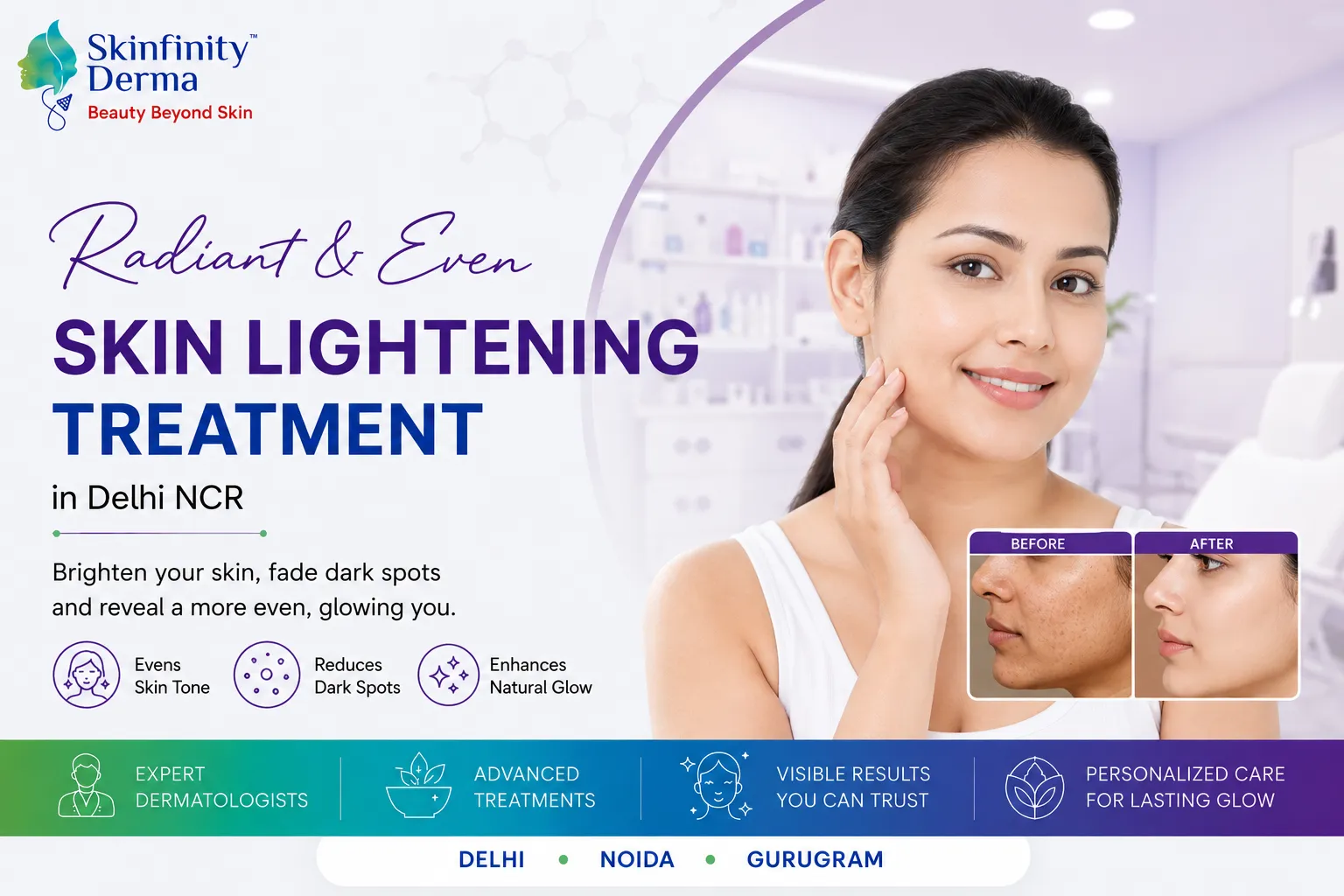
The skin may look brighter as excess surface buildup reduces. Dark spots generally fade more gradually after treatment. Before-and-after results can vary considerably between patients. Images should therefore be viewed as examples rather than guarantees.
Is Skin Lightening Treatment Safe?
Professional skin brightening treatment is generally well tolerated when the procedure suits the patient’s skin.
Chemical peels can safely improve discoloration when performed appropriately but they can still cause irritation.
Laser procedures require additional caution in darker skin because unsuitable settings can cause post-inflammatory hyperpigmentation or hypopigmentation.
This is why treatment should begin with a dermatologist assessment instead of choosing a procedure based only on advertisements.
Possible Side Effects and Precautions
Temporary reactions can occur after pigmentation treatment.
Possible effects include:
-
Mild redness
-
Temporary dryness
-
Tingling
-
Skin sensitivity
-
Temporary peeling
-
Mild swelling
More significant reactions can occur after aggressive treatment. These may include persistent irritation or additional pigmentation.
Physical treatments such as lasers and chemical peels can sometimes worsen post-inflammatory pigmentation when the skin is injured excessively.
Patients should tell the dermatologist about active skin conditions and previous treatment reactions before starting a procedure.
Skin Care After Lightening Treatment
Aftercare plays a major role in maintaining results.
Use a gentle cleanser while the skin is recovering and follow it with a moisturiser that supports the skin barrier. Strong scrubs should be avoided because additional irritation can trigger pigmentation.
Daily broad-spectrum sunscreen is essential. UV exposure can make existing dark marks deeper and can also contribute to new pigmentation.
Retinoids or exfoliating acids may need to be paused after stronger procedures. They should be restarted according to the dermatologist’s instructions.
Patients should also avoid picking peeling skin because this can create additional inflammation.
Skin Lightening Treatment Cost in Delhi NCR
The Skin Lightening treatment cost in Delhi NCR depends on the selected procedure and the number of sessions required.
|
Treatment |
Estimated Cost in Delhi NCR |
|
Dermatologist consultation |
?800 to ?1,500 |
|
Medi-facial |
?2,000 to ?6,000 per session |
|
Hydrafacial-style treatment |
?3,000 to ?8,000 per session |
|
Chemical peel |
?2,500 to ?7,000 per session |
|
Laser toning |
?4,000 to ?12,000 per session |
|
Advanced pigmentation laser |
?6,000 to ?15,000 per session |
|
Skin boosters |
?12,000 to ?30,000 per session |
|
Combination pigmentation treatment |
?7,000 to ?20,000 or more |
These figures are general estimates rather than fixed Skinfinity Derma prices. The final amount depends on the treatment area and the technology used. The number of sessions can also affect the overall cost. A personalised estimate should be given after the dermatologist examines the skin.
What Affects Skin Lightening Treatment Cost in Delhi NCR?
|
Cost Factor |
Why It Matters |
|
Type of pigmentation |
Resistant concerns may require longer treatment |
|
Treatment selected |
Laser procedures usually cost more than basic peels |
|
Number of sessions |
More sessions increase the overall expense |
|
Treatment area |
Larger areas may require more time |
|
Device used |
Advanced technology can affect session pricing |
|
Combination care |
Using more than one treatment may increase total cost |
Why Choose Skinfinity Derma for Skin Brightening Treatment?
Skinfinity Derma provides dermatologist-led pigmentation care through its Noida and Gurgaon clinics. Patients looking for a trusted Skin clinic in Noida can receive an assessment before beginning any skin brightening procedure.
Here is how Skinfinity Derma approaches treatment:
-
Diagnosis before treatment: The dermatologist first determines why the skin has become uneven. This helps prevent unnecessary procedures.
-
Personalised treatment planning: The plan is selected according to the pigmentation pattern and skin sensitivity.
-
Indian skin-focused approach: Treatment strength is controlled carefully because aggressive procedures can trigger additional pigmentation.
-
Multiple treatment options: Patients may receive peels or laser-based care when these procedures suit the concern.
-
Natural-looking results: The aim is to improve uneven tone without trying to change the patient’s natural complexion.
-
Clear aftercare: Patients receive guidance on sunscreen and supportive skincare after treatment.
-
Follow-up care: Progress is reviewed so the dermatologist can change the treatment when the skin response requires it.
What Is the Best Treatment for Skin Lightening?
The best treatment depends on what is making the skin appear darker or uneven.
A chemical peel may suit superficial pigmentation. Laser toning may be considered for selected deeper concerns after the skin has been assessed carefully.
Patients with melasma often need prescription skincare alongside strong sun protection. Procedures may sometimes be added but treatment should remain conservative because melasma can recur.
Medi-facials or Hydrafacial-style procedures may be useful when dullness is the main concern. They are less likely to correct deeper pigmentation on their own.
The best approach is therefore not the most aggressive treatment. It is the one that targets the actual problem while protecting the skin.
Conclusion
Skin Lightening treatment should mainly work on reducing excess pigmentation rather than changing natural skin colour. Acne marks and sun exposure can create an uneven complexion while hormonal changes may lead to persistent pigmentation. Each concern responds differently which makes proper diagnosis important.
The final Skin Lightening treatment cost in Delhi NCR depends on the procedure and the number of sessions required. Patients can visit the Skin clinic in Noida to understand which treatment may be suitable for their skin and what results can realistically be expected.
Patients searching for Skin Lightening in Delhi NCR can consult Skinfinity Derma for a personalised treatment plan. We offer dermatologist-led care through its Noida and Gurgaon locations. Connect with us to know more.
FAQs
1. Is Skin Lightening Treatment Permanent?
No treatment can guarantee permanently lighter skin. Pigmentation may return after sun exposure or hormonal changes. Consistent sunscreen and maintenance care can help preserve improvement.
2. How Many Sessions Are Required for Skin Brightening?
The number of sessions depends on the treatment and pigmentation type. Mild concerns may improve after a few sessions while stubborn pigmentation may require longer care.
3. Is Skin Lightening Treatment Safe?
It can be safe when treatment is selected and performed appropriately. Chemical peels and lasers can still cause irritation or pigmentation changes when used too aggressively.
4. Can Skin Lightening Treatments Remove Pigmentation?
Professional treatments can reduce many forms of excess pigmentation. The extent of improvement depends on the cause and depth of the pigment.
5. Can I Get Skin Lightening Treatment for My Face?
Yes. Many pigmentation procedures are designed for facial skin. A dermatologist should first assess sensitivity and identify the pigmentation type.
6. Is Laser Treatment Better Than Chemical Peel for Skin Lightening?
Neither treatment is automatically better. Chemical peels may suit superficial pigmentation while lasers may be considered for selected deeper concerns. The dermatologist should decide after examining the skin.
7. Does Skin Lightening Treatment Work on Indian Skin?
Yes. Pigmentation treatments can work on Indian skin when they are selected carefully. Conservative treatment is important because darker skin tones can develop additional pigmentation after inflammation.
8. Can Skin Lightening Treatments Lighten Acne Marks?
Yes. Post-acne pigmentation can often improve with topical care or chemical peels. Selected laser procedures may also be considered when the marks remain resistant.
9. What Should I Avoid After a Skin Lightening Treatment?
Avoid strong scrubs and unapproved active products while the skin is recovering. Excessive sun exposure should also be avoided because it can deepen pigmentation again.
10. Can Skin Lightening Treatment Make My Skin Permanently Fairer?
No. Dermatology treatments should not aim to permanently change a person’s natural skin colour. Professional treatment focuses on reducing excess pigmentation and restoring a more even-looking tone.

 Call Now
 WhatsApp