

Medically Reviewed by: Dr. Ipshita Johri
MBBS, DDV | Skinfinity Derma Clinic
Read Time: 8 Minutes
You've experimented with the cucumber slices. You had to purchase an expensive eye cream. You even began to stop sleeping after midnight. And yet, you look in the mirror every morning, and there they are beneath your eyes – those pesky little shadows that make you look tired when you're not.
You're not imagining it. And you're definitely not alone.
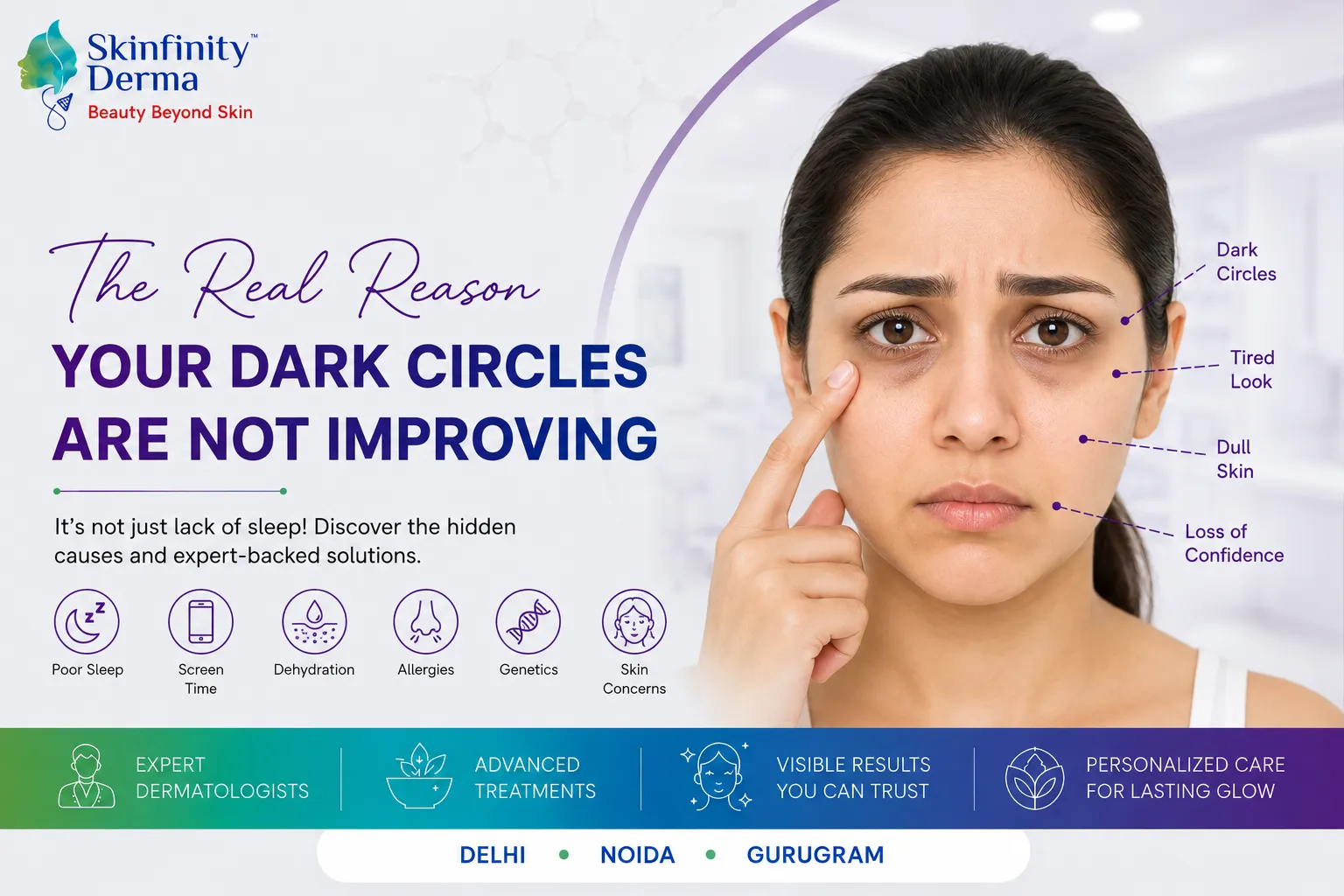
The reality is, almost everyone approaches dark circles almost the same way—more sleep and a new serum—and they never bother to find out why dark circles even exist. And that's exactly why they don't go away. This is something we at Skinfinity Derma see daily in our clinic with patients: They're doing the absolute correct things and targeting an incorrect cause. Once we get to the heart of the issue, then we are on to real improvement.
Let's break it down.
Dark Circles Aren't One Problem — They're Many
This is the single most important thing to understand. Dark circles are not a single condition. They are a symptom, and depending on the cause, the solution is completely different.
Dermatologists classify under-eye darkness into three primary types:
-
Pigmented dark circles — caused by excess melanin in the under-eye skin, often due to sun exposure, post-inflammatory hyperpigmentation, or genetics.
-
Vascular dark circles — caused by dilated or congested blood vessels showing through the thin under-eye skin, creating a bluish-purple hue.
-
Structural dark circles — caused by volume loss, hollowing, or shadowing from the bone structure underneath, which creates a sunken, shadowed appearance.
If you're using a brightening cream to treat a structural shadow, it will do nothing. If you're using a filler to treat pigmentation, you're solving the wrong problem. This mismatch between cause and treatment is the number one reason dark circles don't improve — and it's more common than you'd think.
Reason #1: You're Treating the Wrong Type
The majority of non-prescription eye products are promoted on a generic basis as "dark circle correctors". But what they don't often mention is that they are mostly going to focus on one specific type, usually pigmentation. Many ingredients, such as vitamin C, kojic acid and niacinamide, are great for brightening; however, they do very little for vascular or structural darkness.
If dark circles look more blue or purple than brown, they are most likely vascular (from blood vessels). The skin under the eyes is thinner than any other on the face, and under the skin there is a highly concentrated network of small blood vessels. As these vessels become dilated, blood accumulates in the area and appears as a dark bluish shadow through the skin as a result of fatigue, allergies, screen time or even alcohol use.
Likewise, if your darkness seems more like a shadow – especially if it seems to get worse in certain lighting – the problem might be structural. With age, the fat pads under eyes become saggy or diminished, while the bones are more prominent. This shades away any topical product, leading to an unfilled shadow.
What actually helps: A correct skin consultation to find out the type of your skin. Further targeted treatments can help – laser treatments for pigmentation, caffeine-containing serums or gentle massage for vascular problems, and fillers containing hyaluronic acid for volume loss can all make a difference.
Reason #2: Your Genetics Are Working Against You
Here's something no lifestyle blog will tell you — sometimes, dark circles are simply written into your DNA.
Chances are you'd have them as well if your parents or grandparents had them. Underlying blood vessels may be more apparent in those who are genetically predisposed to having thinner skin under the eyes. It can also identify the distribution of your natural skin colour and the amount of melanin that your skin under the eyes generates. For example, individuals who have deeper skin tones would have a higher probability of developing dark pigmentation circles as a result of high melanin production.
This DOES NOT mean there is nothing to be done. It requires changing the expectations. Genetics causes dark circles; home remedies will not have a great impact unless you get professional help. Patience is needed for laser-based therapies, chemical peels and medical-grade topical products with ingredients such as tranexamic acid, retinol and stabilised vitamin C to visibly improve over time, so it's important to follow guidance from professionals.
Reason #3: Sun Exposure Is Quietly Making Them Worse
The area beneath the eyes is among the sun-sensitive regions of the face and also one of the most underprotected places on your face. The majority opt to cover their noses, ears, foreheads and cheeks, and that's as far as they go. However, UV radiation in the under-eye area directly stimulates melanin production, gradually increasing the melanin over time.
But if you've religiously been treating your dark circles constantly but not putting on any sunscreen around your eyes – or any one you put on outdoors – you might be facing the situation that can never possibly outpace the sun damage.
What really works: Wearing a broad-spectrum SPF30 or higher, lightly around the eyes, each and every morning, regardless of the weather. UV-protective sunglasses also protect this sensitive eye area from direct and reflected UV. For many patients, this is the only thing they need to do, and it does make a difference to their skin in months.
Reason #4: Allergies and Sinus Congestion Are Overlooked Culprits
Chronic allergic rhinitis (hay fever) and sinus congestion are probably some of the most overlooked causes of dark circles. During nasal congestion, the blood is unable to return to the heart from the face. The blood accumulates in the tiny veins under the eyelids, resulting in what sometimes is referred to as "allergic shiners".
If you find that your dark circles are darker in some seasons than others or you rub your eyes often because they itch, allergies may be a big factor. The pigmentation continues to worsen over time due to the repeated rubbing, which is also harmful to the fragile skin and tiny capillaries in the area.
The real treatment: Treating the root cause of the allergy with the correct anti-allergic medications (for instance, antihistamines or nasal sprays) can help a lot with vascular pooling. DO NOT rub your eyes; use a clean, moist cloth and press gently. It's also helpful to sleep with your head slightly raised to decrease the fluid buildup under the eyes during the night.
Reason #5: Nutritional Deficiencies You Didn't Know You Had
Your skin is a window to your body, and the area underneath your eyes is the most sensitive. There is a strong association between iron and vitamin B12 deficiencies and dark circles due to the effects on the body's ability to transport oxygen to tissues. The problem is when a skin cell is deprived of oxygen, the under-eye area automatically gives it a dull, dark look.
Vitamin K also helps to control blood clotting and to make capillaries stronger. Low levels may cause capillary fragility, which will increase the vascular shadows under the eyes.
Another common internal component that is often overlooked is dehydration. In a chronically under-hydrated body, the skin will become thinner and more translucent, so that vessels under the skin become more visible. This effect is strikingly noticeable in the under-eye area, which has the thinnest skin on the face.
What actually helps: A blood panel to check iron, B12, and folate levels, particularly if you've had persistent dark circles since early adulthood. Increasing hydration, incorporating iron-rich foods like lean meats, lentils, and leafy greens, and ensuring adequate vitamin C intake (which aids iron absorption) can support meaningful improvement from the inside out.
Reason #6: Your Skincare Routine Is Causing Irritation
This one surprises many people. If you've been layering multiple active ingredients around the eyes — retinol, acids, strong vitamin C formulations — you may be causing low-grade irritation that's actually worsening the very problem you're trying to fix.
Post-inflammatory hyperpigmentation is a well-documented phenomenon: when skin is irritated or inflamed, it produces more melanin as a protective response. The under-eye skin, being exceptionally thin and delicate, is especially vulnerable. A product that feels perfectly fine on your cheeks can cause repeated micro-inflammation around the eyes, leading to progressive darkening.
What actually helps: Simplify your under-eye routine. Look for gentle, fragrance-free formulations specifically designed for the eye area. If you use retinol, apply it only to the face and let it migrate gradually to the under-eye zone, rather than applying it directly. And if you notice any stinging, tightness, or redness after applying a product near the eyes — stop using it there, even if the same product works well elsewhere on your face.
When Should You See a Dermatologist?
If your dark circles have persisted despite consistent lifestyle changes and appropriate skincare for more than three to four months, it's time for a professional evaluation. A dermatologist can assess the type and severity of your dark circles, review your medical history, and recommend targeted treatments that go beyond what any product can achieve at home.
Professional options include laser therapy and chemical peels for pigmentation, platelet-rich plasma (PRP) injections for skin rejuvenation, hyaluronic acid fillers for structural hollowing, and prescription-strength topical formulations for deeper pigmentation concerns.
At Skinfinity Derma, we begin with a thorough consultation to identify the type and cause of your dark circles before recommending any treatment. Because the most advanced treatment in the world won't work if it's targeting the wrong problem.
Quick Takeaway: Are You Making Any of These Mistakes?
-
Using brightening products when your issue is structural or vascular
-
Skipping SPF around the eyes
-
Not treating underlying allergies or sinus conditions
-
Applying harsh actives directly to the under-eye area
-
Not addressing nutritional deficiencies
-
Expecting home remedies to fix a problem that requires clinical intervention
If even one of these resonates, there's a clear next step — and it's more actionable than buying another eye cream.
Frequently Asked Questions
Q1. Can dark circles go away permanently?
Yes - if they're caused by lifestyle factors like poor sleep or dehydration, they can improve permanently once those habits change. Genetic or structural dark circles are harder to eliminate and usually require professional treatments like laser, PRP, or fillers for long-lasting results.
Q2. Why did my dark circles suddenly get worse even though my habits haven't changed?
Sudden worsening often signals a new or worsening allergy, hormonal changes, increased sun exposure, or age-related volume loss beneath the eyes. Thyroid issues and anaemia can also play a role. If it's abrupt and unexplained, a quick medical check is worth it.
Q3. Is it safe to use retinol around the eyes for dark circles?
Yes, but carefully. The under-eye skin is very delicate, so use a low-concentration formula made for the eye area, apply every few nights, and always follow with a moisturiser. Stop if you notice redness or stinging. A dermatologist can help you find the right strength for your skin.
At Skinfinity Derma, we believe that lasting skin improvement begins with understanding — not guesswork. If you're ready to move past trial and error and get to the real reason behind your dark circles, book a consultation with our team today.

 Call Now
 WhatsApp