

Medically Reviewed by: Dr. Shradha Gumber
MBBS, MD - Dermatology , Venereology & Leprosy | Skinfinity Derma Clinic
Read Time: 8 Minutes
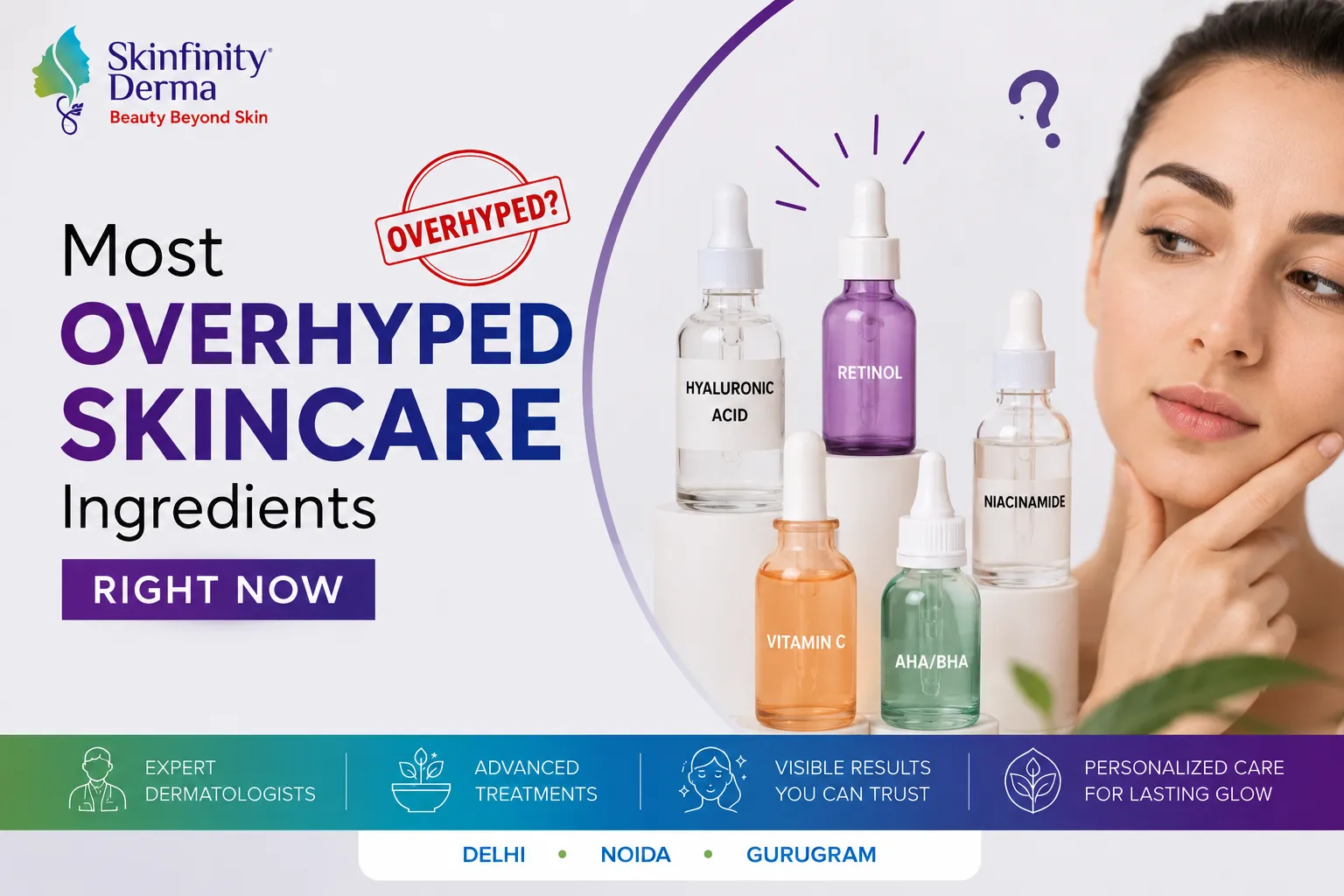
In an era where a single TikTok video can propel a skincare ingredient from obscurity to sold-out shelves overnight, it has never been more important to separate genuine dermatological science from cleverly packaged marketing. Every year, the beauty industry generates billions of dollars in revenue by convincing consumers that the latest molecule, botanical extract, or lab-synthesised compound is the one missing piece in their skincare puzzle. But the truth, as board-certified dermatologists will confirm, is far more nuanced.
At Skinfinity Derma, we believe that informed skin is healthy skin. That is why our expert team has taken a hard look at some of the most buzzed-about ingredients dominating feeds, shelves, and beauty publications right now. Not all of them are fraudulent, but many are dramatically over-promised. Here is our honest, evidence-based guide to the most overhyped skincare ingredients at this moment, and what you should realistically expect from them.
1. Bakuchiol — The 'Natural Retinol' That Is Not Quite Retinol
Bakuchiol, derived from the seeds of the Psoralea corylifolia plant, has been aggressively marketed as a gentler, plant-based alternative to retinol. The headlines write themselves: all the anti-ageing benefits of retinol, with none of the irritation. Influencers and clean beauty brands have been particularly enthusiastic.
The reality is more measured. A handful of small studies, notably a 2019 paper published in the British Journal of Dermatology, showed bakuchiol could produce comparable results to 0.5% retinol over a 12-week period in a small cohort. However, the study sizes were limited and the concentration of retinol used was modest. Retinol, and especially prescription retinoids like tretinoin, have decades of robust clinical evidence behind them for collagen stimulation, acne management, and photodamage repair. Bakuchiol has a fraction of that research portfolio.
Who might genuinely benefit? Those with sensitive or reactive skin who cannot tolerate retinoids may find bakuchiol a worthwhile compromise. But if your skin handles retinol well, there is little scientific justification to switch. Manage expectations accordingly.
2. Niacinamide — Overloaded and Overused
Niacinamide, or vitamin B3, is not a bad ingredient. Far from it. It genuinely helps with pore appearance, uneven skin tone, moisture retention, and mild anti-inflammatory benefits. The problem is not with niacinamide itself but with the volume at which it is now appearing in every conceivable product, often at concentrations far beyond what is necessary.
The sweet spot for niacinamide is 2 to 5 percent. Some products now boast 10 or even 20 percent concentrations, implying that more is always better. Research does not support this. Higher concentrations can cause flushing in some individuals due to the formation of nicotinic acid when niacinamide breaks down, and the additional benefit beyond 5 percent is minimal.
Additionally, niacinamide has been stacked into moisturisers, serums, toners, cleansers, and sunscreens simultaneously, meaning many consumers are unknowingly using it at vastly excessive cumulative levels. The marketing machine has taken a solid, well-studied ingredient and turned it into a cure-all it was never meant to be.
Book An Appointment
|
Ingredient |
Marketing Claim |
What Evidence Actually Shows |
Verdict |
|
Bakuchiol |
Natural retinol alternative |
Limited small-scale studies; modest anti-ageing effect |
Overhyped |
|
Niacinamide (10%+) |
Transforms pores and pigmentation |
5% is optimal; higher % yields little extra benefit |
Overloaded |
|
Collagen (Topical) |
Rebuilds skin collagen |
Molecules too large to penetrate; no proven efficacy |
Marketing Myth |
|
Hyaluronic Acid (layered) |
Deep hydration to all layers |
Only hydrates surface; effectiveness depends on humidity |
Misrepresented |
|
CBD / Hemp Extract |
Anti-inflammatory, anti-acne |
Early stage research; formulation stability issues |
Premature Hype |
|
Snail Mucin |
Repairs and regenerates skin |
Some wound-healing data; no robust RCTs in cosmetic use |
Needs More Data |
|
Gold / Diamond Dust |
Luxury anti-ageing |
Zero clinical evidence; purely cosmetic/marketing |
Complete Hype |
3. Topical Collagen — The Molecule That Cannot Get In
Collagen-infused creams and serums are perennial bestsellers, and for understandable reasons. Collagen is the structural protein responsible for skin plumpness and firmness. As we age, our collagen production declines, leading to sagging and the formation of wrinkles. The logic of rubbing collagen onto skin seems intuitive.
The problem is fundamental biology. Collagen molecules are far too large to penetrate the stratum corneum, the outermost layer of the skin. The molecular weight of collagen is between 10,000 and 300,000 Daltons, while effective skin penetration generally requires compounds below 500 Daltons. Topical collagen sits on the surface, acts as a temporary humectant and film-former, and eventually washes off.
Does this mean collagen products are entirely useless? Not completely. They can improve surface texture momentarily and provide some short-term moisturisation. But they categorically do not rebuild your skin's collagen matrix. If stimulating collagen is your goal, evidence-backed options include retinoids, vitamin C serum (ascorbic acid), and professional treatments such as microneedling and laser resurfacing.
4. Hyaluronic Acid — The Misunderstood Moisturiser
Hyaluronic acid (HA) has become one of the most ubiquitous skincare ingredients of the decade, and there is genuine science behind its hydrating properties. However, the marketing surrounding it significantly overstates both its mechanism and its results.
Hyaluronic acid is a humectant, meaning it draws water towards itself. The complication is that in low-humidity environments, it can actually draw moisture from the deeper layers of the skin towards the surface, where it evaporates. The result can paradoxically be drier skin over time. Furthermore, the molecular weight of HA in most products is too large to penetrate beyond the skin's surface. Claims about HA delivering hydration to deep dermal layers are largely unsupported.
The ingredient works best when applied to damp skin and immediately sealed with an occlusive moisturiser to lock in that moisture. The layering rituals and multi-molecular-weight serums promoted in the premium skincare space offer marginal gains that the science does not yet convincingly validate.
5. CBD and Hemp Extract — Early Hype, Thin Evidence
The CBD skincare market has exploded, with products promising everything from dramatic acne reduction to eczema relief and anti-ageing effects. Cannabis-derived compounds, particularly cannabidiol, do interact with the skin's endocannabinoid system and have demonstrated some anti-inflammatory properties in preliminary studies.
However, the research in a cosmetic context is still embryonic. Most studies are in vitro (on cells in a lab) or involved oral/systemic CBD rather than topical application. The formulation challenges are significant: CBD is notoriously unstable, degrades with light and heat, and it is unclear how much reaches target tissues from a topical product. Regulatory ambiguity in many markets adds another layer of complexity.
The industry has raced ahead of the science, pricing CBD products at a premium that is not yet supported by commensurate clinical evidence. Some individuals may find them soothing, but whether that is the CBD or other ingredients in the formulation is difficult to determine.
|
Skin Concern |
Overhyped Pick |
Evidence-Based Alternative |
Why It Works |
|
Anti-ageing |
Bakuchiol |
Tretinoin / Retinol |
Decades of RCT evidence for collagen stimulation |
|
Pigmentation |
Vitamin C (unstable form) |
Ascorbic Acid (L-form, 10-20%) |
Directly inhibits tyrosinase enzyme |
|
Acne |
CBD oil |
Benzoyl Peroxide / Salicylic Acid |
Proven antimicrobial and comedolytic action |
|
Hydration |
Layered HA serums |
Glycerin + Ceramides + Occlusives |
Humectant + barrier repair + sealing |
|
Firming |
Topical Collagen |
Microneedling + Retinoids |
Stimulates endogenous collagen production |
|
Redness/Sensitivity |
Snail Mucin |
Centella Asiatica / Azelaic Acid |
Stronger anti-inflammatory evidence base |
6. Snail Mucin — Intriguing but Incomplete
Snail secretion filtrate, or snail mucin, has gained a devoted following, particularly in the K-beauty community. The ingredient contains glycoproteins, hyaluronic acid, glycolic acid, and zinc, which sound impressive on paper. Some studies have shown wound-healing and moisturising properties, and anecdotal reports of improved skin texture are widespread.
The challenge is the quality of the evidence. Most studies are small, lack proper controls, or are conducted on wound healing rather than cosmetic concerns like fine lines or uneven tone. Independent verification of efficacy in standardised cosmetic trials is sparse. There is also significant variability in how snail mucin is processed and standardised across manufacturers, making product-to-product comparisons unreliable.
Snail mucin is unlikely to cause harm and may offer some surface hydration and soothing benefits. But it is not the skincare revolution it has been positioned as, and the premium pricing it commands in many markets reflects marketing success rather than superior clinical outcomes.
7. Gold, Diamond Dust, and Luxury Particulates
Perhaps the most egregious example of hype over science is the category of luxury particulates: 24-karat gold leaf, diamond powder, pearl extract, and similar high-end additions to skincare formulations. These ingredients carry enormous aspirational appeal and allow brands to command extraordinary price points.
The dermatological evidence for any of these is, to be direct, essentially nonexistent. Gold has no proven mechanism for improving skin at the cellular level. Diamond particles may function as mild physical exfoliants, which you could achieve with far less expensive ingredients. Pearl extract contains some amino acids and minerals, but nothing that distinguishes it from cheaper alternatives.
These are marketing ingredients, pure and simple. They tap into our psychological associations between luxury, rarity, and quality. If your budget allows, there is nothing harmful about using them. But you should do so with open eyes: you are paying for an experience, not a clinical outcome.
The Ingredients That Genuinely Deliver
To balance our assessment, it is worth underscoring that not all popular ingredients are overhyped. The following have robust, peer-reviewed evidence behind them and remain the gold standard for their respective concerns:
• Retinoids (retinol, retinaldehyde, tretinoin): Strongest evidence base for anti-ageing and acne
• Broad-spectrum SPF: The single most evidence-backed intervention for skin ageing and cancer prevention
• L-Ascorbic Acid (Vitamin C): Proven antioxidant and pigmentation reducer in stable formulationsx`
• Azelaic Acid: Effective for rosacea, melasma, and post-inflammatory hyperpigmentation
• Ceramides: Foundational barrier-repair ingredients with strong clinical support
• Benzoyl Peroxide and Salicylic Acid: Still the most effective over-the-counter options for acne
Why Choose Skinfinity Derma?.
In a market saturated with noise, Skinfinity Derma stands apart by doing things differently. We do not chase trends. We do not reformulate our products every season to include the latest viral ingredient. We build our protocols and recommendations around one thing only: evidence-based dermatology that delivers measurable outcomes for your unique skin.
1. Board-Certified Dermatological Expertise
Every recommendation at Skinfinity Derma originates with qualified dermatologists in Noida. Our clinical team stays abreast of peer-reviewed literature, attends international dermatology conferences, and undergoes continuous professional development. When we tell you an ingredient works, we can show you the research behind it.
2. Personalised Skin Assessment
We do not believe in one-size-fits-all skincare. Your skin type, Fitzpatrick scale rating, medical history, lifestyle, and specific concerns all inform the personalised protocol we design for you. What works beautifully for one patient may be counterproductive or even harmful for another.
3. Transparent, Honest Communication
We will never recommend a product simply because it is trending or because a brand has paid for shelf placement. If an ingredient lacks evidence, we say so, as this article demonstrates. Our patients trust us because we prioritise their skin health over our commercial interests.
4. Cutting-Edge In-Clinic Treatments
Beyond topical products, Skinfinity Derma offers a comprehensive range of clinically validated procedures including fractional laser resurfacing, microneedling with radiofrequency, chemical peels, and prescription-strength topical regimens. These treatments are tailored, supervised, and grounded in outcomes data.
5. Long-Term Skin Partnership
Great skin is not achieved in a single appointment or by purchasing a single serum. It is built over time through consistent, evidence-based habits and regular professional oversight. At Skinfinity Derma, we are committed to being your long-term partner in skin health, monitoring your progress and adjusting your protocol as your skin evolves.
Frequently Asked Questions
Q1. How can I tell if a skincare ingredient is genuinely effective or just well-marketed?
The most reliable approach is to look for peer-reviewed clinical studies involving human subjects, ideally randomised controlled trials (RCTs) published in reputable dermatology journals. Ingredient amounts matter too: even proven ingredients can be included at concentrations too low to exert a measurable effect. At Skinfinity Derma, we are always happy to review your current product routine and offer an honest clinical assessment of what is truly working for your skin and what may be an expensive placeholder.
Q2. Is it ever safe to try a new hyped ingredient, or should I always wait for more evidence?
Trying new ingredients is not inherently dangerous, provided you introduce them slowly and patch-test first. The risk is financial and opportunity-cost based: if you are spending significant money on an ingredient with little evidence, you may be missing the budget and the routine space for something more effective. Our dermatologists recommend building your routine on a foundation of proven ingredients first: a gentle cleanser, a broad-spectrum SPF, a retinoid (if appropriate), and a barrier-supporting moisturiser. Once that foundation is solid, experimenting with trending ingredients on top carries lower risk.
Q3. Can I use multiple active ingredients together, or does that cause more harm than good?
This is one of the most important questions in modern skincare, and the answer is nuanced. Some combinations are synergistic, such as vitamin C in the morning and retinol at night. Others can irritate or deactivate each other, such as using certain acids immediately before or after retinol application. Layering too many actives simultaneously is a common mistake encouraged by social media, and it can disrupt the skin barrier, cause sensitisation, and actually worsen the concerns you are trying to address. A Skinfinity Derma consultation will map out a safe, effective layering protocol designed specifically for your skin.
Q4. Are expensive skincare products always better than affordable ones?
Price is an unreliable indicator of efficacy. Some affordable drugstore products contain gold-standard ingredients at optimal concentrations and perform excellently in clinical assessments. Conversely, some luxury products charge premium prices for aesthetically pleasant formulations that contain ineffective or underdosed actives, or trend-driven ingredients with minimal evidence. What matters is formulation quality, ingredient concentration, pH levels, packaging stability, and whether the product suits your specific skin type. At Skinfinity Derma, we evaluate products on their scientific merit, not their price tag, and our recommendations span a wide range of price points.

 Call Now
 WhatsApp