

Medically Reviewed by: Dr. Aanchal Bansal
MBBS, MD, DNB (Dermatology, Venereology, and Leprosy) | Skinfinity Derma Clinic
Read Time: 8 Minutes
Melasma often appears as brown or grey-brown patches on the cheeks, forehead, nose, upper lip or chin. Although it does not harm physical health, persistent facial pigmentation can affect confidence and become difficult to manage without the right guidance.
Many people begin by trying natural ingredients at home. Some remedies may soothe the skin, support its protective barrier or gradually improve its overall appearance. However, melasma is influenced by sunlight, visible light, hormones, genetics and inflammation. A kitchen ingredient alone cannot always address these underlying factors.
Effective melasma treatment requires a combination of daily sun protection, gentle skincare, suitable active ingredients and realistic expectations. Professional support may also be necessary because melasma can occur at different depths within the skin.
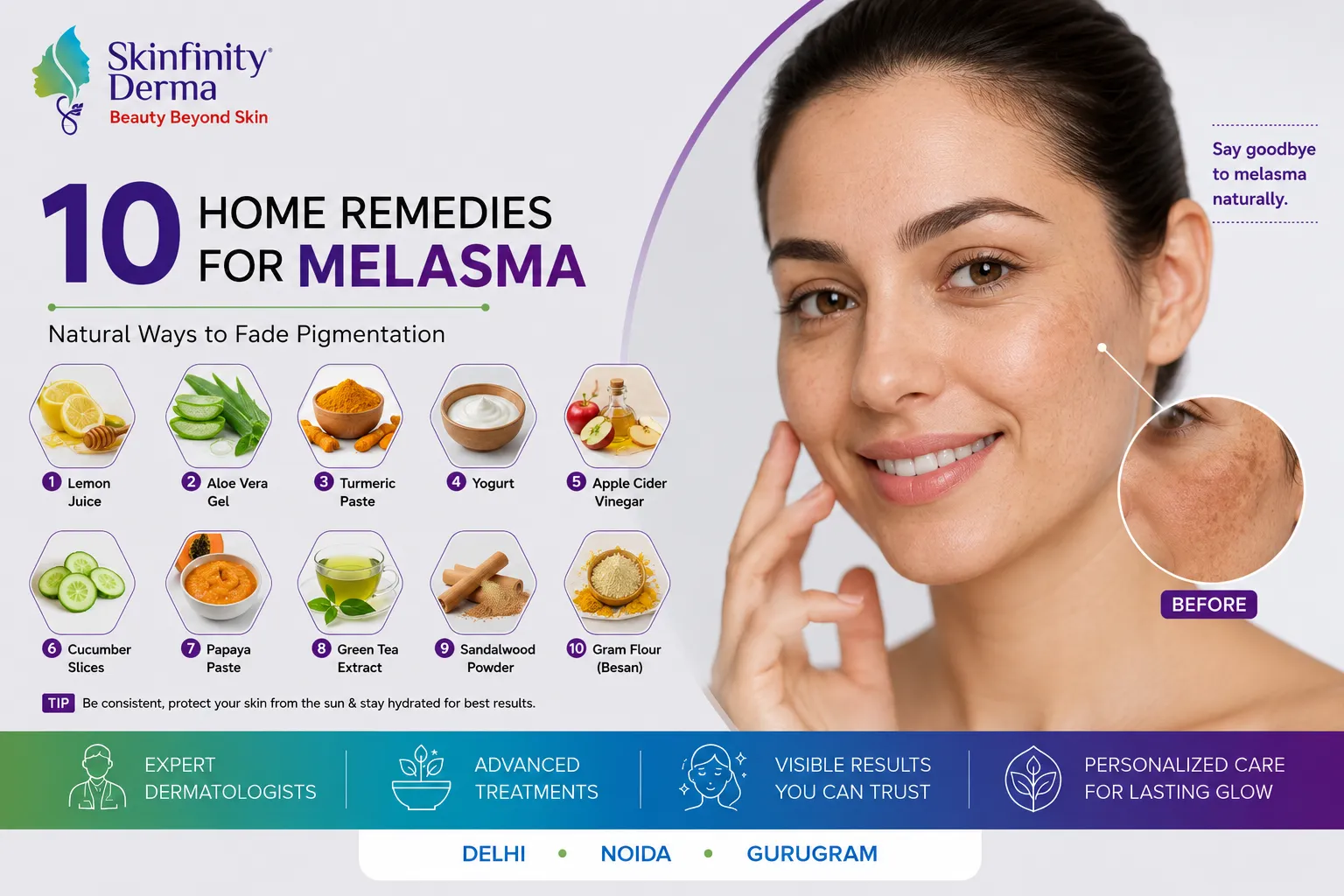
This guide explains 10 safe and practical home remedies for melasma. It also covers harmful remedies to avoid, supportive dietary choices and signs that indicate it is time to consult a Dermatologist in Noida or a dermatologist in Gurgaon.
What Is Melasma? Causes, Symptoms & Common Triggers
Melasma is an acquired pigmentation condition that causes symmetrical dark patches on sun-exposed areas of the skin. It develops when melanocytes produce more melanin than the surrounding skin requires. Melanocytes are specialised cells responsible for producing the pigment that gives skin its natural colour.
Melasma is more common among women and people with medium to deeper skin tones. However, men and individuals of every skin tone can develop it. The condition is harmless and does not usually cause pain, itching or changes in skin texture.
Its appearance can vary according to skin tone and pigment depth. Some people develop light-brown patches, while others notice darker brown or greyish areas. The patches commonly appear on both sides of the face in a similar pattern.
Melasma may be classified into three types:
-
Epidermal melasma occurs when excess pigment is concentrated in the outer skin layer.
-
Dermal melasma develops when pigment is located deeper within the skin.
-
Mixed melasma contains both epidermal and dermal pigmentation.
Epidermal pigmentation may respond more readily to topical care. Dermal and mixed melasma can be more resistant and may require a longer treatment plan.
Common melasma triggers include:
-
Ultraviolet radiation from sunlight
-
Visible light
-
Pregnancy-related hormonal changes
-
Oral contraceptive pills
-
Hormone replacement therapy
-
Genetic susceptibility
-
Excessive heat exposure
-
Skin inflammation
-
Harsh skincare products
-
Certain medicines
-
Thyroid or hormonal conditions in some individuals
Melasma that develops during pregnancy is sometimes called the mask of pregnancy. It may fade after delivery as hormone levels stabilise, but this does not happen in every case.
Melasma can also resemble sunspots or post-inflammatory hyperpigmentation. Therefore, proper diagnosis matters. A dermatologist in Noida can examine the pigmentation pattern and determine whether the discolouration is actually melasma or another condition requiring different care.
Can Home Remedies Really Help Treat Melasma?
Home remedies may support melasma management, but they should not be presented as permanent cures. Their effectiveness depends on the depth of pigmentation, the underlying trigger and the sensitivity of the skin. Home remedies are most helpful when they:
-
Keep the skin calm and moisturised
-
Support the natural skin barrier
-
Reduce unnecessary inflammation
-
Limit exposure to sunlight and visible light
-
Provide mild antioxidant benefits
-
Encourage consistent skincare habits
A remedy should never cause burning, severe tingling or prolonged redness. Irritation can stimulate additional pigment production and worsen existing patches. This risk is especially relevant for Indian and deeper skin tones that may develop post-inflammatory hyperpigmentation easily. Home remedies should therefore complement evidence-based melasma treatment rather than replace it.
10 Proven Home Remedies for Melasma
The term “proven” requires careful interpretation. Sun protection and gentle skincare have much stronger scientific support than most kitchen ingredients. The following measures can support melasma-prone skin, but their results may vary.
1. Use tinted broad-spectrum sunscreen daily
The best home prevention tip for melasma is to use sunscreen. Melanocytes and skin produce more pigment when exposed to sunlight. There is a possibility of darkening of existing patches or return of faded areas by repeated exposure, even for short durations.
Select a broad-spectrum sunscreen that has an SPF of 50 or more. Tinted sunscreens with iron oxides provide extra protection from visible light, which can exacerbate melasma in individuals with medium and darker skin tones.
Use sunscreen 15 minutes before going outside. Cover the entire face, neck, ears, hairline and other exposed areas. Reapply every two hours when outdoors and after swimming, sweating or wiping your face.
Sunscreen is still needed on cloudy days because the sun’s rays can penetrate the clouds. It is also recommended during travel and when spending long periods of time in front of a sunny window.
Physical protection enhances the outcomes. Wear a wide-brimmed hat, use an umbrella and seek shade when possible. These practices will help to shield the skin better than relying on sun cream.
2. Apply pure aloe vera gel
Aloe vera is known for its moisturising and soothing properties. It may help reduce the appearance of melasma by calming inflammation, supporting the skin barrier and gradually improving uneven pigmentation. Certain compounds in aloe vera have also been studied for their potential effects on melanin production.
Choose a fragrance-free aloe vera gel without drying alcohol or artificial colours. Apply a thin layer to clean skin and leave it on for 15 to 20 minutes. Rinse it off immediately if it causes discomfort.
A small clinical study suggested that formulated aloe vera extract may help lighten melasma. However, aloe vera alone may not completely get rid of melasma, and regular aloe gel or freshly cut leaves may not provide the same results.
Always perform a patch test before applying aloe vera to the face. Fresh aloe leaves contain yellow latex that can irritate the skin. Therefore, a well-formulated commercial gel may be safer than using aloe directly from the plant.
3. Soothe the skin with colloidal oatmeal
Colloidal oatmeal is known for its soothing and moisturising properties. It may help reduce the appearance of melasma by calming irritation, supporting the skin barrier and preventing inflammation that can worsen pigmentation. Its antioxidant compounds may also help protect the skin from environmental stress.
Mix finely ground colloidal oatmeal with enough water to form a soft paste. Apply a thin layer to clean skin without rubbing or scrubbing. Leave it on for approximately 10 minutes before rinsing with lukewarm water.
Colloidal oatmeal alone may not completely get rid of melasma because it does not directly remove excess pigment. However, it can support melasma treatment by keeping the skin calm and improving its tolerance to dermatologist-recommended products.
Always perform a patch test before applying it to the face. Avoid coarse homemade oatmeal scrubs because large particles and physical friction can irritate the skin and make melasma appear darker.
4. Try a plain yoghurt mask cautiously
Plain yoghurt is rich in lactic acid, a member of a group of exfoliating ingredients known as alpha hydroxy acids. Exfoliation can be gentle to help slough off dead surface cells and make the skin look healthier and more even-toned.
Put a small amount of plain, unsweetened yoghurt on a small area first. Leave it on for five to 10 minutes before rinsing. Start at once at a rate of one application weekly, and discontinue if skin is irritated.
The controlled concentration and pH of a professionally formulated lactic acid product are not available in yoghurt. Thus, its impact is unpredictable and usually not severe.
Avoid combining yoghurt with lemon, baking soda or essential oils. These additions help to make it more likely to irritate. This remedy should not be used by people with extremely sensitive skin, active dermatitis or milk allergies.
5. Use turmeric in a gentle mask
Curcumin is a compound found in turmeric that has antioxidant and anti-inflammatory effects. These attributes can help nourish the skin in cases where inflammation is a factor in skin discoloration.
Add a pinch of turmeric to plain yoghurt or fragrance-free aloe vera gel. Apply a thin layer, leave for 5-10 minutes and thoroughly rinse. Turmeric can temporarily cause yellowing of the skin if used in excess.
There is limited evidence for using homemade turmeric masks for melasma. Turmeric should be used as an adjunctive agent and not as a cure. It also varies in quality and could contain different amounts of curcumin in different products.
Test the mixture on a patch prior to using it on the face. Do not use together on the same day with other exfoliating acids, retinoids or other potentially irritating treatments.
6. Strengthen the skin barrier with moisturiser
While moisturiser is not a direct pigment-lightening agent, it is very important to use in the management of melasma. A damaged skin barrier makes it easier for irritants to penetrate. The inflammation that follows may exacerbate pigmentation.
Choose a simple fragrance-free moisturiser containing ingredients such as ceramides, glycerin, hyaluronic acid, squalane, panthenol or colloidal oatmeal.
Use after cleaning when skin is slightly moist. It can also be used following an active ingredient recommended by a dermatologist for the purpose of dryness and discomfort.
Don’t use heavily scented creams or those with lots of botanical extracts. When irritation occurs, it will be more difficult to know the cause because of the complicated formulas.
Regularly applying moisturisers can also help to increase tolerance to prescribed products. Barrier care is thus an integral component of long-term melasma treatment.
7. Apply a cooled green tea compress
Polyphenols are the antioxidants found in green tea. The compounds have been investigated as anti-oxidative and anti-inflammatory effects on the skin.
Make regular (plain) green tea without sugar or flavours. Let it cool down completely and then dip a fresh cotton ball or soft cloth in it. Apply the compress for 5-10 minutes.
Make fresh tea each time to minimize risk of contamination. Avoid rubbing over the pigmented areas with a rough tea bag, as this can irritate.
For warm or slightly irritated skin, a green tea compress can help to soothe it. But, there is not enough evidence to prove that homemade green tea can remove melasma. It should be used in addition to a current regimen of sun protection and appropriate treatment.
8. Introduce a stable vitamin C product
Vitamin C is an antioxidant that may help manage uneven pigmentation by influencing melanin production and reducing oxidative stress. A properly formulated vitamin C serum is more reliable than applying fruit juice to the face.
Choose a product from a reputable brand and begin with a lower concentration if the skin is sensitive. Apply it in the morning before moisturiser and sunscreen unless the product directions recommend otherwise.
Pure L-ascorbic acid can be effective, but it may cause tingling or irritation. Vitamin C derivatives may feel gentler, although their behaviour and effectiveness can differ.
Never use lemon or orange juice as a substitute. Fruit juice is acidic and unstable. It may cause inflammation, skin sensitivity or a phototoxic reaction after sun exposure.
Introduce vitamin C gradually. Avoid starting several active ingredients simultaneously because this makes reactions difficult to trace.
9. Consider azelaic acid
Azelaic acid is a naturally occurring dicarboxylic acid commonly used to manage acne, redness and pigmentation. It may help control abnormal melanin production and can form part of an evidence-based melasma routine.
Over-the-counter strengths are available in some locations, while stronger concentrations may require a prescription. Apply the product according to its instructions and begin on alternate nights if the skin is sensitive.
Mild dryness or tingling may occur initially. Stop using it and seek guidance if it causes intense burning, swelling or persistent redness.
Azelaic acid may be particularly helpful for people managing acne and pigmentation together. However, its suitability depends on the person’s skin and existing products. A Dermatologist in Gurgaon can recommend an appropriate concentration and frequency.
10. Reduce unnecessary heat and light exposure
Ultraviolet radiation is a major melasma trigger, but visible light may also contribute to pigmentation. Some people notice that prolonged heat exposure makes their patches appear darker.
Avoid sitting beside strong sunlight for extended periods. Curtains or blinds can reduce direct exposure indoors. Wear a hat outdoors and use tinted sunscreen containing iron oxides.
People who notice heat-related worsening may limit unnecessary exposure to hot ovens, steam rooms or extremely heated environments. The goal is not to avoid normal warmth but to recognise and control personal triggers.
Do not place ice directly on the face to cool the skin. Extreme cold can damage the barrier and cause inflammation. Use a cool, clean compress instead when needed.
Foods That May Support Healthy, Even-Toned Skin
No food can remove melasma or replace medical treatment. However, a balanced diet provides nutrients that support normal skin function and antioxidant defence.
Include vitamin C-rich foods such as guava, amla, berries and citrus fruits. Carrots, pumpkins and leafy vegetables provide carotenoids. Tomatoes contain lycopene, while nuts and seeds provide vitamin E and healthy fats.
Beans, lentils, dairy products and fortified alternatives contribute protein and minerals. Protein supports tissue repair and the formation of structural skin components.
Whole grains supply B vitamins and sustained energy. Adequate water supports normal hydration, although drinking excessive water will not directly lighten pigmentation.
Avoid detox diets that promise rapid skin whitening. Restrictive diets may lead to nutritional deficiencies without improving melasma. Supplements should also not be started without professional advice because excessive doses can cause side effects or interact with medicines.
Home Remedies You Should Avoid for Melasma
Harsh remedies can burn or inflame the skin. This inflammation may lead to additional pigmentation and make melasma more difficult to manage.
-
Avoid applying lemon juice because its acidity can irritate the skin. Citrus compounds may also cause reactions after sun exposure.
-
Apple cider vinegar can disrupt the skin barrier or cause chemical burns when used undiluted. Baking soda has an alkaline pH that can cause dryness and sensitivity.
-
Undiluted essential oils may cause irritant or allergic contact dermatitis. Some citrus oils can also increase sensitivity to sunlight.
-
Toothpaste contains detergents and flavouring agents designed for teeth rather than facial skin. Household bleach must never be applied to the body.
-
Coarse scrubs containing sugar, salt or walnut shells create friction and microscopic damage. Raw potato or onion juice also lacks strong clinical evidence and may irritate the skin.
-
Avoid unregulated fairness creams. Some may contain undisclosed steroids, mercury or high-strength hydroquinone. Prolonged misuse can cause acne, skin thinning, visible blood vessels or permanent discolouration.
How to Build a Simple Melasma Skincare Routine at Home
A simple routine is easier to follow consistently and carries a lower risk of irritation.
-
In the morning, cleanse with a mild fragrance-free product. Apply vitamin C if the skin tolerates it. Follow with moisturiser and broad-spectrum tinted sunscreen.
-
During the day, reapply sunscreen when outdoors. Use physical protection whenever possible.
-
At night, remove sunscreen and makeup without scrubbing. Apply azelaic acid or a prescribed treatment according to professional directions. Finish with a fragrance-free moisturiser.
-
Introduce only one active ingredient at a time. Wait long enough to assess tolerance before adding another product. Do not combine multiple acids, retinoids and homemade masks without guidance.
-
Pregnant or breastfeeding individuals should consult a doctor before using active products. Retinoids should not be used during pregnancy.
How Long Do Home Remedies Take to Show Results?
Melasma improves gradually. Consistent sun protection may prevent noticeable worsening within weeks, but visible fading often takes several months.
-
Supportive home care may produce subtle changes after eight to 12 weeks. Deeper melasma may respond more slowly or require professional treatment.
-
Results depend on pigment depth, hormonal triggers, sun exposure, skin sensitivity and routine consistency. Irritation or irregular sunscreen use can delay improvement.
-
Take monthly photographs in the same lighting to monitor changes. Daily mirror checks can be misleading because lighting affects the appearance of pigmentation.
When Should You See a Dermatologist for Melasma?
Consult a Dermatologist in Noida or Dermatologist in Gurgaon when the diagnosis is uncertain, pigmentation appears suddenly or home care causes irritation.
Professional care is also recommended when melasma does not improve after three months of consistent protection and suitable skincare. Seek an assessment when patches itch, scale, bleed, hurt or change rapidly.
A dermatologist may recommend hydroquinone, tretinoin, azelaic acid, cysteamine, kojic acid, tranexamic acid or combination treatment depending on the case.
Chemical peels, microneedling or laser procedures may be considered for selected patients. These treatments must be chosen carefully because aggressive procedures can worsen pigmentation in deeper skin tones.
Final Words
Melasma may fade naturally when its trigger resolves. Pregnancy-associated melasma sometimes improves after delivery. Pigmentation related to hormonal medicines may also lessen after the medicine is changed under medical supervision.
However, natural fading is not guaranteed. Melasma can persist for years or return after sunlight, visible light or hormonal changes.
The condition is usually managed rather than permanently cured. Continued sunscreen use and maintenance skincare remain important even after visible improvement.
At Skinfinity Derma, we assess the type, depth and possible triggers of pigmentation before creating a personalised plan. Our Melasma Treatment combines dermatologist-recommended skincare, sun protection guidance and suitable clinical procedures to improve pigmentation safely. We focus on gradual improvement while protecting the skin barrier and reducing the risk of recurrence.
FAQs
What is the fastest way to reduce melasma at home?
Start with broad-spectrum tinted sun cream, mild skincare products and a skin pigmentation product that is approved by a dermatologist. Use sun cream each morning and reapply every two hours when outside. Do not pick, scrub or change products often, as this can cause irritation and pigment production. Melasma may become worse if you use a strong bleaching or exfoliating product.
Is aloe vera good for melasma?
Aloe vera can moisturise and calm the skin and help maintain its barrier function. Some preliminary studies indicate benefits for pigmentation, but regular aloe gel is not a cure. Use one that is free of fragrance and do a patch test before using it on the face. Discontinue use if it causes itching, burning or redness of the skin.
Can turmeric remove melasma?
Turmeric will not completely eliminate melasma. It may offer antioxidant and anti-inflammatory benefits, but there is limited evidence for homemade masks. It can be added in small amounts to plain yoghurt or fragrance-free aloe vera gel. However, turmeric tends to temporarily colour the skin and can irritate sensitive individuals.
Is lemon safe for melasma?
No. Lemon juice may irritate the skin and cause reactions upon exposure to sunlight. It is very acidic and can cause burns and redness. This inflammation can cause darker pigmentation, especially in medium and darker skin tones. Professionally formulated vitamin C products are less likely to cause side effects than lemon juice.
Does sunscreen prevent melasma from getting worse?
Yes. Regular use of sunscreen minimises UV exposure, which can trigger melanin production. Tinted sunscreen containing iron oxide also protects against visible light, which can worsen melasma. Select a broad-spectrum product that has a sun protection factor of at least 30 and use a hat, umbrella and shade for extra protection.
Can melasma come back after treatment?
Yes. Melasma is likely to reappear if the sun, visible light, hormones, heat or irritation trigger new pigment production. Recurrence may occur even when the patches have almost disappeared. Maintenance care is necessary and typically involves the use of daily sunblock, gentle skincare and continued use of dermatologist-prescribed products.
When should I consider professional melasma treatment?
If pigmentation continues despite regular at-home care, comes back regularly or causes a loss of confidence, consider getting professional treatment for melasma. It is also important to get professional advice if patches appear suddenly, change quickly or become itchy and scaly. A dermatologist will be able to confirm the diagnosis, determine the depth of the pigmentation and develop a tailored treatment plan.
Be patient with melasma, as its causes can continue to be present after the pigmentation has faded. Home remedies can help the skin, but they should not harm its protective barrier. The best way to achieve improvement and long-term control is to use sunscreen consistently, follow a gentle skincare routine and seek professional advice.

 Call Now
 WhatsApp