

Medically Reviewed by: Dr. Aanchal Bansal
MBBS, MD, DNB (Dermatology, Venereology, and Leprosy) | Skinfinity Derma Clinic
Read Time: 8 Minutes
You must have heard the saying “you are what you eat” and it rings true even today. A healthy body and beautiful skin usually come from the foods we eat rather than topical creams and lotions. This is why glutathione has become a popular ingredient among celebrities because it helps maintain the healthy and glowing appearance of one’s face and even the entire body.
Its global market is worth a whopping USD 1.9 billion. This shows just how popular glutathione and its products have become. What you may not know is that drips and pills are not the only ways to acquire this antioxidant. There are actually foods that can help boost your glutathione levels. These glutathione-rich foods can aid in maintaining a good antioxidant system by protecting your body from the harmful effects of free radicals while also supporting normal cellular function.
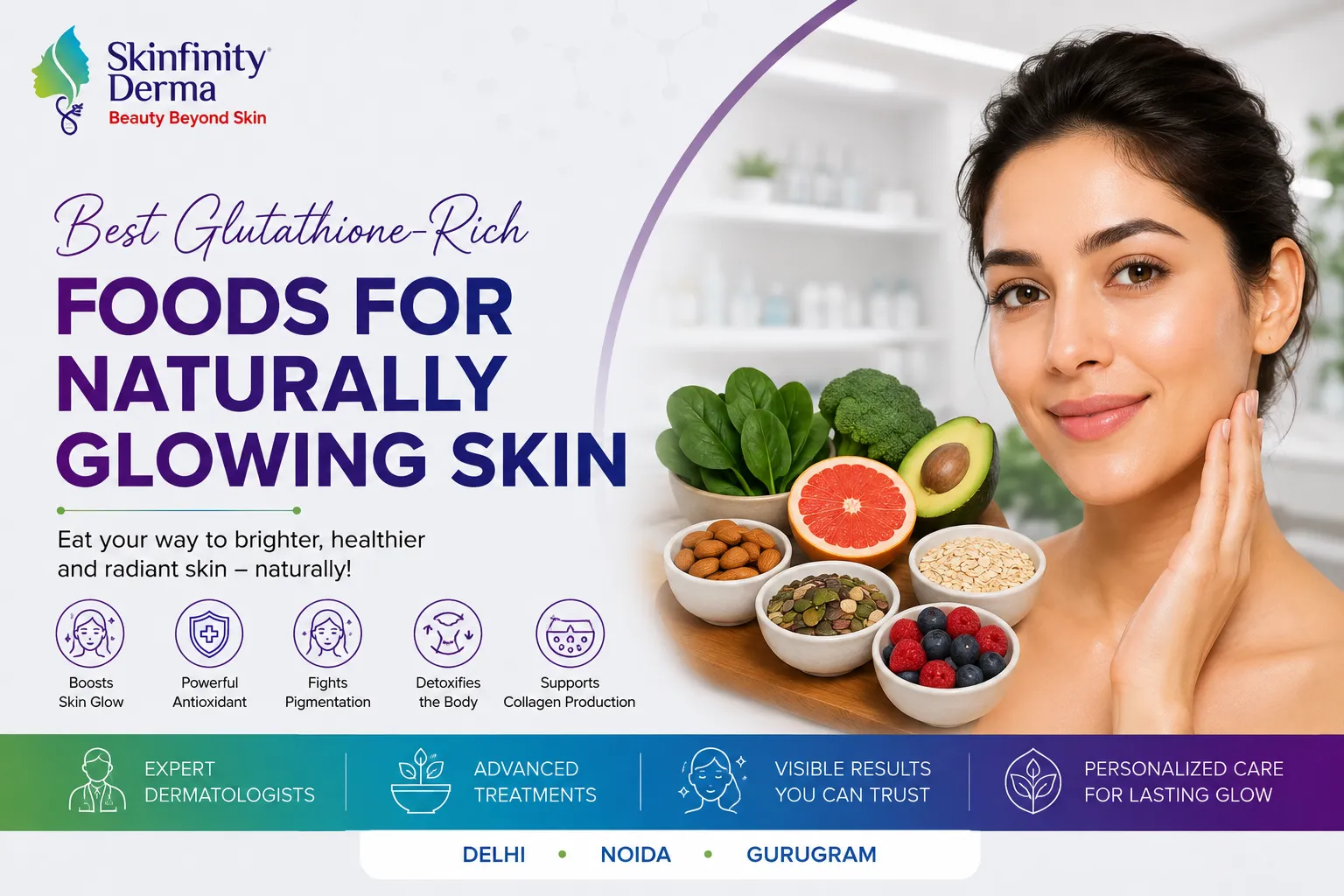
This guide covers the best glutathione foods for glowing skin and explains how to include them in everyday meals. Let us explore more.
What Is Glutathione and Why Is It Important for Skin?
Glutathione is a powerful antioxidant produced naturally in the body. This antioxidant is made up of three amino acids namely:
-
Cysteine
-
Glutamate
-
Glycine
It is mainly responsible for preventing oxidative damage to cells. It also assists in synthesizing antioxidants and supporting normal cellular functions. Glutathione is a powerful natural that acts as your body's main defender by stopping cell damage. It plays an equally powerful part in cleaning out toxins and supporting your immune system to stay strong
Top Glutathione-Rich Foods for Glowing Skin
The following foods are useful natural glutathione sources or provide nutrients that support glutathione production.
Book An Appointment
|
Food |
Key Benefit |
|
Asparagus |
Naturally contains glutathione |
|
Avocado |
Provides glutathione and healthy fats |
|
Spinach |
Contains glutathione and antioxidants |
|
Broccoli |
Supports natural glutathione pathways |
|
Cauliflower |
Provides sulfur-containing compounds |
|
Okra |
Contains glutathione and fibre |
|
Garlic |
Supports glutathione production |
|
Onion |
Provides sulfur-rich compounds |
|
Amla |
Rich in vitamin C |
|
Guava |
Supports antioxidant defence |
|
Oranges |
Provides vitamin C |
|
Papaya |
Provides vitamin C and antioxidants |
|
Eggs |
Provide amino acids for glutathione production |
|
Dal |
Provides plant protein and amino acids |
|
Lentils |
Support natural glutathione production |
|
Beans |
Provide protein and fibre |
|
Soybeans |
Supply protein and amino acids |
|
Tofu |
Provides plant-based protein |
|
Paneer |
Provides protein and amino acids |
|
Curd |
Provides protein and nutrients |
|
Nuts |
Provide protein and antioxidant-supporting minerals |
Sample Glutathione-Rich Indian Meal Plan
|
Meal |
Simple Option |
Key Nutrients |
|
Breakfast |
Spinach besan chilla |
Protein with leafy greens |
|
Mid-morning |
Guava |
Vitamin C |
|
Lunch |
Palak dal with roti |
Amino acids with plant antioxidants |
|
Snack |
Almonds with papaya |
Healthy fats with antioxidants |
|
Dinner |
Broccoli tofu sabzi |
Protein with cruciferous vegetables |
|
Side |
Cucumber and tomato salad |
Fresh plant nutrients |
This type of pattern provides several natural sources of glutathione while also supporting the body’s ability to make glutathione itself.
How Does Glutathione Support Naturally Glowing Skin?
-
Aids function as antioxidant
Exposure to UVA light causes exposure to reactive oxygen species within your skin cells. This reactive form of oxygen molecules can damage key molecules such as proteins and fats through oxidation. Glutathione helps to counteract these molecules and in addition supports your overall body’s defense against oxidation.
Glutathione also works to reduce both hydrogen and lipid hydroperoxide to water with glutathione peroxidase. According to a 2026 study published in a systematic review that examined 194 publications identified the role of glutathione in maintaining redox balance within the skin and its capacity to safeguard mitochondrial structure along with skin membrane lipids in opposition to oxidative damage.
-
Facilitates synergistic effect with additional antioxidants
Glutathione does not work alone. It forms part of a larger antioxidant defence system. Vitamin E and vitamin C work together with other antioxidants to protect cells. Glutathione actively helps regenerate these antioxidants after they react with oxidised free radicals. This process allows them to continue supporting cellular protection.
-
Could reduce pigmentation
Glutathione might play a role through pathways concerning the tyrosinase enzyme based on the data and scientific studies performed. Glutathione seems to favour the creation of pheomelanin (lighter) over eumelanin (darker). The 2025 scientific research reviewed previously discovered a trio of RCTs in which clients using oral glutathione demonstrated a considerable drop in melanin index in comparison to placebo.
A previous scientific study that analysed 60 individuals, assigned 500 milligrams of oral glutathione per day for a duration of four weeks, found 2 significantly considerable variations in melanin index from the 6 skin places they had measured. There is however insufficient studies so that you can tell any significant long-term consequences and effects.
-
Supports correct cell purpose
Glutathione retains homeostatic within the cells in addition to sheltering several important body structures throughout your skin cells from harmful oxidation. Keratinocytes and fibroblasts need protection with antioxidant systems to sustain basic physical functions along with retaining epidermis durability.
Research carried out in the lab established that keratinocytes possessed 248% and 193% higher general glutathione amounts and glutathione peroxidase activity, respectively, than ordinary fibroblasts. Researchers also noted that keratinocytes were more resilient to UV-ray exposure-related oxidative damage under controlled conditions.
-
Assists in maintaining regular skin turnover
Healthy skin turnover depends on the normal function of keratinocytes. These cells develop into new skin cells. Glutathione helps them maintain a healthy redox balance. One study found that glutathione deficiency increased oxidative damage to mitochondria and DNA. It also reduced the number of living cells.
One particular study conducted in young mice showed that approximately a 70% reduction in skin glutathione amounts didn’t generate significant damage in ordinary epidermis homeostasis, whereas in older mice, keratinocyte overproliferation became more obvious. This indicates that glutathione is a component of the defensive antioxidant process responsible for the repair and strength of healthy pores and skin.
Foods to Limit for Healthier-Looking Skin
|
Food Type |
Why Limit It |
Better Approach |
|
Highly processed foods |
They may replace nutrient-rich foods in the diet |
Choose more whole foods |
|
Sugary drinks |
They provide high amounts of added sugar with little nutrition |
Prefer water or unsweetened drinks |
|
Excess fried food |
Frequent intake can make the overall diet less balanced |
Keep fried foods occasional |
|
High-sugar desserts |
They can increase added-sugar intake quickly |
Choose smaller portions |
|
Packaged snacks |
They may provide little fibre or micronutrients |
Choose fruit or nuts more often |
|
Refined bakery foods |
They often contain added sugar and refined flour |
Prefer less processed options |
|
Excess alcohol |
It can affect hydration and overall nutrition |
Keep intake limited or avoid it |
|
Very salty processed foods |
High sodium intake may contribute to temporary puffiness |
Choose fresher meals when possible |
Can Eating Glutathione-Rich Foods Lighten Skin?
There is no solid evidence that eating glutathione-rich foods can permanently make a person several shades whiter or fairer. Glutathione-rich foods are best for adding a natural glow to your face but expecting that you will get white or a few shades fairer is not something that you should do. Glutathione has gained immense attention because of its possible effects on melanin pathways. The evidence is still limited and studies are still in progress.
Can Glutathione Foods Help With Pigmentation and Dark Spots?
Glutathione-rich foods for skin can support antioxidant defence. These foods are great but they should not be expected to remove melasma or dark spots on their own.
Pigmentation may occur after acne or prolonged exposure to the sun. Hormonal changes are another common yet influential trigger of melasma.
Once pigmentation develops within the skin, these concerns may require targeted skin treatment. Medical treatment can address the pigmentation itself while a healthy diet helps support the skin’s overall health. If pigmentation does not improve with consistent skincare, it is best to consult a dermatologist.
How Cooking Affects Glutathione in Food
Preparation matters when choosing foods to boost glutathione levels. Research examining glutathione in foods has found that fresh and frozen foods can retain useful amounts while some forms of processing can lead to substantial losses. You do not need to eat every vegetable raw. Instead:
-
Include some fresh fruits and salads.
-
Steam vegetables when suitable.
-
Avoid unnecessarily prolonged cooking.
-
Use freshly prepared meals when possible.
Cooking also makes some foods easier to digest and can improve the availability of other nutrients. The goal is balance rather than avoiding cooked food.
How to Improve Glutathione Naturally Through Lifestyle
-
Eat Enough Protein
Experts claim that glutathione is made from amino acids. A diet with sufficient protein supplies the fundamental components needed for glutathione production and supports the body in this process. Plant-based options such as lentils and beans can be included in the diet. Soy foods and dairy products can also provide useful nutritional support.
-
Include Vegetables Every Day
Various garden crops provide distinct antioxidants and phytochemicals for the body. It has been observed that regular variety is more beneficial than depending on a single costly superfood. Because different nutrients exist in various plants, health is supported by a diverse selection of vegetables.
-
Include Vitamin C-Rich Foods
Vitamin C is the strongest ally of glutathione. Its increased intake directly and indirectly bolsters glutathione in your body. Amla and guava are the best and most affordable options to include in your diet if you want to enhance your intake of vitamin C-rich foods. Citrus fruits like oranges are also great because they have an abundance of vitamin C.
You must also know the fact that vitamin C and glutathione work together as a powerful combination which helps reinforce the antioxidant production system in your body.
-
Sleep Consistently
Sleep is your best friend if you want to increase production and absorption of glutathione in your body. Sleep supports numerous repair processes in the body that boost glutathione production and assimilation.
How Long Does It Take to See Skin Benefits From a Healthy Diet?
A healthy diet does not produce an overnight glow. Skin cells need time to renew and nutritional improvements also work gradually. Someone who previously had a poorly balanced diet may notice changes in general well-being within a few weeks. Visible changes in the skin can take longer and are much harder to predict.
Proper hydration and adequate nutrition may help the skin appear healthier over time. Pigmentation will not necessarily fade simply because dietary glutathione levels have increased.
A practical approach is to maintain a balanced diet consistently for several months rather than judging the effects of individual foods after only a few days.
Which Food Contains the Most Glutathione?
There is no reliable single winner because glutathione levels vary according to the food variety and freshness. Storage and preparation also affect the amount that remains.
Older food analyses found that fruits and vegetables generally provide moderate to high dietary glutathione while cereals and dairy products tend to contain much less. Freshly prepared meats can also contain substantial amounts.
Asparagus and avocado are commonly recognised as useful glutathione-containing choices among plant foods. Spinach and okra are also frequently included among dietary sources.
The better strategy is not to search for one food with the highest number. A varied diet provides direct glutathione together with the amino acids and micronutrients needed for the body to produce its own.
Glutathione-Rich Foods vs Glutathione Supplements
|
Factor |
Glutathione-Rich Foods |
Glutathione Supplements |
|
Main role |
Support everyday nutrition |
Provide concentrated glutathione |
|
Additional nutrients |
Usually provide fibre or vitamins |
Depends on formulation |
|
Evidence for raising glutathione |
Depends on overall dietary pattern |
Results vary by formulation |
|
Skin-lightening evidence |
Not established |
Limited and inconsistent |
|
Best use |
Part of a balanced diet |
Consider only when appropriate |
|
Long-term approach |
Suitable for regular dietary intake |
Should not replace healthy eating |
A 2026 review notes that glutathione can come from diet or supplementation. It also reports that precursor-based approaches may produce more consistent changes in human glutathione than simply consuming glutathione itself. This is another reason to focus on a complete diet rather than one supplement.
How Skinfinity Derma Clinic Can Help With Pigmentation
A healthy diet can support your skin from within but persistent pigmentation may require professional treatment. Dark spots and uneven skin tone can develop due to prolonged sun exposure or acne marks. Hormonal changes can also contribute to pigmentation concerns. Dietary glutathione can support antioxidant defence but it should not be expected to remove melasma or dark spots on its own.
At Skinfinity Derma Clinic, we offer dermatologist-led care for pigmentation and other skin concerns. We begin by assessing your skin and understanding the factors that may be contributing to pigmentation. Our dermatologists then recommend a personalised treatment plan based on your skin condition and individual requirements.
We also offer IV Glutathione Therapy for suitable candidates who want professional support for their skin and antioxidant needs. Glutathione is a powerful antioxidant that helps protect cells from oxidative stress and supports the body’s natural antioxidant system. Our IV Glutathione Therapy is administered under professional supervision after evaluating whether the treatment is appropriate for you.
Our approach combines professional skin care with guidance that supports overall skin health. This can be particularly helpful when dark spots or uneven skin tone continue despite a healthy diet and consistent skincare routine.
IV Glutathione Therapy Cost in Noida
The average cost of IV Glutathione Therapy in Noida is around INR 12,000 per session. The final cost may vary depending on several factors.
Factors that influence the cost include:
-
Number of sessions: The total cost depends on how many sessions are recommended as part of your treatment plan.
-
Individual requirements: The treatment may be customised according to your specific skin concerns and desired outcomes.
-
Dosage and formulation: The amount and formulation of glutathione used during each session can influence the overall cost.
-
Additional ingredients: Some IV formulations may contain additional vitamins or nutrients which can affect the treatment cost.
-
Treatment plan: The frequency and duration of the recommended therapy can also influence the total expense.
-
Professional supervision: Dermatologist-led assessment and medical supervision may also form part of the overall treatment cost.
Conclusion
Glutathione is an important antioxidant that the human body produces naturally. A balanced diet can support this process by supplying glutathione along with the nutrients needed for its production.
Some of the best glutathione foods include asparagus and avocado. Spinach and okra can also contribute to dietary glutathione intake while broccoli and garlic support the body’s natural glutathione pathways.
A practical glutathione-rich diet should therefore include plenty of vegetables and fresh fruits along with adequate protein. These natural glutathione sources can support antioxidant defence and help maintain healthy-looking skin. They should not be expected to work as natural bleaching agents or replace professional treatment for specific skin concerns.
People looking for a more targeted approach can consider dermatologist-guided glutathione treatments alongside healthy dietary habits. Skinfinity Derma Clinic offers IV Glutathione Therapy under professional guidance with treatment planned according to individual skin concerns and requirements. Book a consultation with Skinfinity Derma Clinic to learn whether IV Glutathione Therapy is suitable for you and how it may complement your overall skin care plan.
FAQs
1. Which Fruits Increase Glutathione?
Avocado contains naturally occurring glutathione while vitamin C-rich fruits can support the body’s antioxidant system. Guava and amla are useful choices for vitamin C while oranges and papaya can also form part of a balanced diet.
2. Does Eating Glutathione-Rich Food Make Skin Glow?
A diet containing vegetables and fruits can support healthy skin because it provides antioxidants and other essential nutrients. Glutathione foods for skin may contribute to this nutritional support but they cannot guarantee a specific level of glow.
3. Is Avocado Good for Glutathione?
Yes. Avocado is one of the commonly recognised plant-based natural glutathione sources. It also provides healthy fats which make it a useful addition to a balanced diet.
4. Does Vitamin C Increase Glutathione?
Vitamin C forms part of the antioxidant network that interacts with glutathione. Research reviews suggest that vitamin C intake can influence glutathione status although individual responses vary.
5. Can Glutathione-Rich Foods Reduce Pigmentation?
Foods alone should not be expected to remove pigmentation. They may support antioxidant defence but conditions such as melasma or post-acne pigmentation often require targeted skincare or dermatologist-led treatment.
6. Can I Increase Glutathione Naturally?
Yes. You can support natural glutathione production through a balanced diet that provides enough protein and sulfur-containing foods. Cruciferous vegetables and vitamin C-rich produce can also form part of this approach.
7. Are Glutathione Supplements Better Than Foods?
Not necessarily. Supplements provide concentrated amounts but research on their benefits varies by formulation. Foods also provide other nutrients needed for overall health so they remain the foundation of a healthy diet.
8. How Much Glutathione-Rich Food Should I Eat Daily?
There is no established daily serving target specifically for dietary glutathione. Instead of counting glutathione milligrams aim for a varied diet that regularly includes vegetables and fruits alongside adequate protein.
9. What Foods Should I Avoid for Healthier Skin?
There is no universal list of foods that everyone must avoid. Keep highly processed foods and sugary drinks occasional while making nutrient-rich whole foods the main part of your diet.
10. Which Food Contains the Most Glutathione?
Glutathione levels vary according to freshness and preparation so there is no universal highest food. Asparagus and avocado are commonly cited among useful plant sources while spinach and okra can also contribute.

 Call Now
 WhatsApp