

Medically Reviewed by: Dr. Aanchal Bansal
MBBS, MD, DNB (Dermatology, Venereology, and Leprosy) | Skinfinity Derma Clinic
Read Time: 8 Minutes
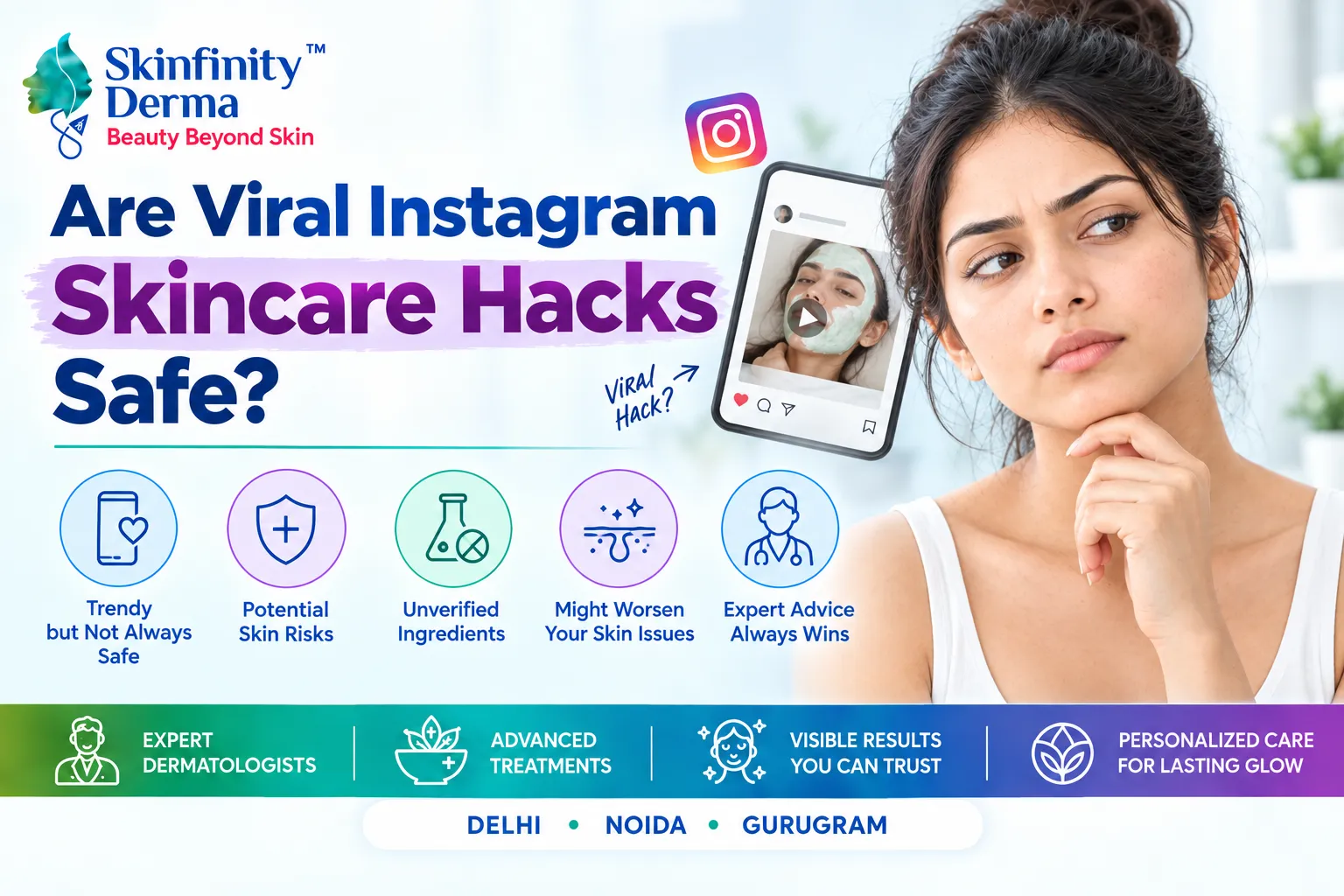
Open Instagram or TikTok on any given morning and your feed is flooded with them — glowing influencers pressing ice cubes against their cheeks, slathering slugging layers of petroleum jelly at midnight, or warning you that sunscreen is somehow toxic. With millions of followers, a ring light, and an enthusiastic delivery, these creators can make even the wildest skincare ritual look not just plausible, but essential.
But here's what the algorithm won't tell you: your skin doesn't care about likes. It cares about science.
At Skinfinity Derma, we believe beautiful skin starts with informed choices — not viral moments. So we've done the research, consulted the dermatology literature, and broken down the most popular Instagram skincare hacks doing the rounds right now. Some are surprisingly solid. Others? They need to come with a warning label.
Why Instagram Skincare Is a Double-Edged Serum
Social media has democratised skincare in genuinely remarkable ways. Consumers are more ingredient-aware than ever before, brands are being held accountable for their claims, and conversations around melanin-rich skin, acne positivity, and ageing are more visible and nuanced than they've ever been.
The problem? Anyone with a smartphone and a filter can become a skincare authority overnight. Unlike a licensed dermatologist, an influencer isn't required to cite studies, disclose paid partnerships consistently, or consider that their skin type may be entirely different from yours. When a hack goes viral, it's because it's dramatic, satisfying to watch, or promises a miracle — not because it's clinically validated.
A 2025 study published in the Journal of the American Academy of Dermatology found that a significant portion of skincare advice circulating on social media contained inaccurate or potentially harmful information. That's not a reason to log off — it's a reason to scroll smarter.
The Viral Hacks Under the Microscope
1. Ice Rolling & Ice Facials
THE CLAIM: Rubbing ice directly on your face reduces puffiness, shrinks pores, and gives you a natural glow.
THE VERDICT: Partially safe, with caveats. Cold therapy does temporarily constrict blood vessels, which can reduce morning puffiness and give skin a momentary tightened appearance. This is why ice-cold eye masks have been a backstage staple for decades.
However, applying ice cubes directly — without a cloth barrier — risks ice burns, capillary damage, and paradoxical flushing, particularly in those with rosacea, sensitive skin, or conditions like perioral dermatitis. The "pore shrinking" claim is a myth: pores don't have muscles and cannot open or close. If you enjoy the ritual, use a proper ice roller and limit sessions to 60–90 seconds per area.
2. Slugging (Overnight Petroleum Jelly Masking)
THE CLAIM: Coating your face in Vaseline overnight locks in moisture and repairs the skin barrier while you sleep.
THE VERDICT: Actually grounded in dermatology — for the right skin type. Petroleum jelly is a well-researched occlusive agent. It doesn't moisturise skin itself, but it creates a seal that dramatically reduces transepidermal water loss (TEWL), which is essential for barrier repair. Dermatologists have long used petrolatum in post-procedure care and eczema management.
The catch? If you have acne-prone or congestion-prone skin, slugging can trap dead skin cells, sebum, and bacteria under that occlusive layer — worsening breakouts. Those with oily or combination skin should avoid it entirely, or limit application to targeted dry patches like elbows or lips. For dry or compromised skin types, used correctly over well-cleansed skin, it can be genuinely therapeutic.
3. DIY Lemon Juice Brightening Treatments
THE CLAIM: Rubbing lemon juice on dark spots or acne scars will fade hyperpigmentation naturally.
THE VERDICT: A dermatological red flag. Lemon juice has a pH of approximately 2–3, which is highly acidic — far beyond what your skin's natural acid mantle (pH 4.5–5.5) can handle. Direct application disrupts the skin barrier, causes irritant contact dermatitis, and — crucially — makes your skin profoundly photosensitive due to furanocoumarins present in citrus.
The result? Rather than fading dark spots, many users report worsening post-inflammatory hyperpigmentation (PIH) — especially on deeper skin tones. This is one Instagram hack where we urge you to simply stop. If brightening is your goal, look for clinically validated ingredients: tranexamic acid, niacinamide, azelaic acid, or alpha-arbutin — all available in formulations designed for your skin's pH.
4. SPF Skipping ("Sunscreen Is Toxic" Misinformation)
THE CLAIM: Chemical sunscreens are absorbed into the bloodstream and are harmful; skipping SPF is safer.
THE VERDICT: Among the most dangerous misinformation circulating online. Yes, a 2019 FDA pilot study detected certain sunscreen chemicals in blood at low concentrations — but detection is not toxicity. The study did not conclude that sunscreens are unsafe. Subsequent research and regulatory review have reaffirmed the safety of approved sunscreen filters at recommended use levels.
Unprotected UV exposure, on the other hand, is the single most well-established cause of premature skin ageing and is directly linked to skin cancer development — including melanoma. If you have concerns about chemical filters, mineral sunscreens containing zinc oxide or titanium dioxide are excellent alternatives. But please, wear your SPF. Every single day.
5. Toothpaste on Pimples
THE CLAIM: Dabbing toothpaste on a pimple overnight dries it out and reduces inflammation.
THE VERDICT: An outdated myth that can actively harm your skin. Older toothpaste formulations contained triclosan, which had mild antimicrobial properties — but modern toothpastes are formulated for oral enamel, not facial skin. Ingredients like sodium lauryl sulphate (SLS), fluoride, and whitening agents can cause chemical burns, contact dermatitis, and post-inflammatory hyperpigmentation when applied to the face.
For effective spot treatment, you have genuinely excellent options: benzoyl peroxide (2.5–5%) targets acne-causing bacteria, salicylic acid dissolves within pores, and sulphur-based treatments offer a gentler drying effect. Use those instead.
6. Facial Gua Sha and Jade Rolling
THE CLAIM: These ancient tools lift, sculpt, drain lymph fluid, and reverse ageing when used daily.
THE VERDICT: Low risk, moderate benefit — if expectations are managed. There is some evidence that gentle facial massage can promote lymphatic drainage and temporarily reduce morning puffiness. The ritual itself encourages mindful application of serums and oils, which is genuinely beneficial for product absorption.
The claims around facial "lifting" and permanent structural change are unsupported by clinical evidence. Used correctly — gently, always in upward strokes on well-lubricated skin — these tools are unlikely to harm and may support overall skin health as part of a broader routine. The key phrase is "used correctly"; aggressive dragging on dry skin can cause micro-tears and worsen skin laxity over time.
How to Be a Smarter Skincare Consumer Online
Before you try the next trending hack, ask yourself:
• Who is recommending this? Is it a licensed dermatologist, aesthetician, or someone paid to promote a product?
• Is there peer-reviewed evidence? Before-and-after photos are not clinical trials. Look for referenced studies.
• Does it match your skin type? What works for an influencer with dry skin in a cold climate may actively damage your oily, acne-prone skin in a humid environment.
• Is it replacing something better? For almost every viral hack promising a specific result, there is a clinically validated, dermatologist-approved product or treatment that does the same thing more safely and effectively.
• Would you consult a professional first? For persistent skin concerns — acne, pigmentation, rosacea, premature ageing — a 30-minute dermatology consultation will always outperform a 30-second Reel.
The Ingredients That Actually Work (Backed by Science)
While Instagram chases novelty, dermatology science has been quietly accumulating decades of evidence on a core group of ingredients that genuinely deliver. These are what Skinfinity Derma recommends as the pillars of any effective skincare routine:
• Retinoids (retinol, tretinoin): The gold standard for anti-ageing and acne. Decades of randomised controlled trials support their efficacy in increasing collagen production, accelerating cell turnover, and reducing hyperpigmentation.
• Niacinamide: A well-tolerated vitamin B3 derivative with strong evidence for reducing redness, regulating sebum, fading pigmentation, and strengthening the skin barrier.
• Vitamin C (L-ascorbic acid): A potent antioxidant that neutralises free radical damage from UV and pollution while inhibiting melanin synthesis to brighten the complexion.
• Hyaluronic Acid: A humectant that binds water to the skin, providing hydration at multiple skin depths. Suitable for virtually all skin types.
• AHAs & BHAs (glycolic acid, salicylic acid): Chemical exfoliants that are far more effective and gentler than physical scrubs. AHAs address surface texture and radiance; BHAs penetrate follicles to address acne and congestion.
• Broad-Spectrum SPF 30+: Non-negotiable. Every other step in your routine works harder and lasts longer when your skin is protected from UV damage daily.
The Skinfinity Derma Philosophy: Trust Science, Not Filters
We live in a wonderful and maddening age of skincare. There has never been more accessible information — and never more noise to sift through. The viral moment will always chase the next scroll; your skin health is a long-term investment that deserves better than that.
At Skinfinity Derma, our approach is simple: we follow the evidence. We believe every person deserves a personalised skincare plan built on their unique skin type, concerns, lifestyle, and goals — not what's trending this week. And when something from social media genuinely holds up to scientific scrutiny, we'll be the first to celebrate it.

 Call Now
 WhatsApp