

Medically Reviewed by: Dr. Ipshita Johri
MBBS, DDV | Skinfinity Derma Clinic
Read Time: 8 Minutes
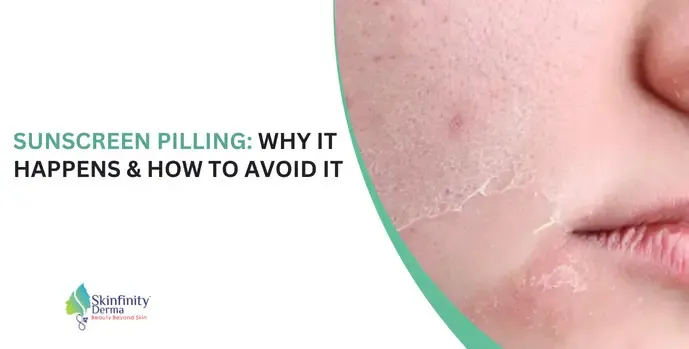
Sunscreen pilling is one of the most common and annoying skincare problems we face daily. It happens to protect skin from sun damage when sunscreen starts flaking, rolling, or forming tiny balls on the skin instead of absorbing smoothly. This not only looks messy but also makes people question whether their sun protection is even working. Sunscreen pilling matters because it can interfere with proper SPF coverage and ruin makeup, causing foundation or concealer to separate and patch. With sunscreen pills, many users skip reapplication altogether, increasing sun damage risk.
What is Sunscreen Pilling?
Sunscreen pilling refers to the formation of small flakes or rolled-up particles on the skin after applying sunscreen. Instead of sinking in, the product sits on the surface and clumps together when rubbed or layered with other skincare or makeup. Pilling feels gritty or rubbery and becomes more visible as you blend or touch the skin. Unlike patchiness, which occurs when sunscreen absorbs unevenly, pilling creates distinct rolled bits. It is also different from peeling, which is caused by dry or shedding skin cells. Sunscreen pilling is mainly a formulation or application issue, not a skin condition.
Why Does Sunscreen Pill on Skin?
Sunscreen pilling usually occurs due to product incompatibility, incorrect application techniques, or skin-related factors affecting absorption.
1. Product Layering Issues
Sunscreen often pills when layered over incompatible skincare products. Using heavy serums, thick moisturizers, or silicone-rich primers underneath can prevent proper absorption. When layers don’t bind well together, friction causes them to separate and roll on the skin, leading to visible sunscreen pilling.
2. Formula Mismatch
Formula incompatibility is a major reason for sunscreen pills. Silicone-based products don’t blend well with water-based skincare, causing separation. Similarly, thick mineral sunscreens sit on the surface longer than lightweight chemical sunscreens, increasing the chances of clumping when layered or blended improperly.
3. Applying Too Much or Too Little Sunscreen
Using the wrong amount disrupts how sunscreen settles on the skin. Too much product overwhelms the skin’s ability to absorb it, while too little leads to uneven spreading. Over-rubbing worsens pilling, whereas under-blending leaves residue that later rolls off.
4. Skin Type & Skin Condition
Dry, flaky skin creates texture that sunscreen clings to and rolls over. Oily skin produces excess sebum, which breaks down product layers. Poor exfoliation allows dead skin cells to accumulate, making it harder for sunscreen to adhere smoothly and increasing sunscreen pilling.
5. Application Technique Errors
Rushing skincare steps is a common mistake. Applying sunscreen before previous layers fully settle causes products to mix improperly. Aggressive rubbing instead of gentle patting creates friction, which physically rolls sunscreen off the skin, resulting in visible pilling and uneven coverage.
Does Sunscreen Pilling Mean It’s Not Working?
Sunscreen pilling does not automatically mean your sunscreen has stopped working, but it can reduce how evenly the SPF is applied on your skin. When sunscreen pills, some areas may lose proper coverage, which can compromise sun protection if not corrected. If visible pilling occurs, it’s best to gently remove the flakes and reapply sunscreen evenly to ensure full SPF protection. A common myth is that pilling cancels sunscreen effectiveness entirely. But this isn’t true unless large amounts are rubbed off. Another misconception is that pilling only happens with low-quality sunscreens. In reality, technique, layering, and skin prep matter just as much as the formula itself.
Sunscreen Pilling Under Makeup: Why It Happens More?
Sunscreen pilling under makeup is more noticeable because multiple products interact on the skin’s surface. Primers, foundations, and concealers, especially those with silicone bases, can cause sunscreen to roll when layered incorrectly. Powder makeup can also grip unsettled sunscreen, making flakes more visible, while heavy liquid foundations may drag the product during blending. Timing is another major factor: applying makeup before sunscreen has fully set increases friction and pilling. Rushing through skincare steps often leads to uneven layers that don’t bond well together. Allowing sunscreen to absorb properly and choosing compatible formulas can significantly reduce sunscreen pilling under makeup.
How to Prevent Sunscreen Pilling (Step-by-Step Guide)?
Preventing sunscreen pilling requires proper skin prep, compatible products, and correct application techniques for smooth absorption.
1. Prep Your Skin Properly
Start with gentle cleansing to remove oil, sweat, and residue that interfere with sunscreen adherence. Light exfoliation 2 to 3 times a week helps remove dead skin cells that cause rolling. Maintain hydration balance by using a lightweight, non-greasy moisturizer so sunscreen glides evenly without clinging to dry patches.
2. Choose Compatible Products
Product compatibility plays a key role in preventing sunscreen pilling. Match product bases. Use water-based sunscreen with water-based skincare and silicone-based formulas together. Opt for lightweight moisturizers under sunscreen, as heavy creams increase the risk of layering issues and surface buildup.
3. Apply Sunscreen the Right Way
Use the correct amount of sunscreen. About two fingers’ length for the face and neck. It ensures even coverage without excess buildup. Gently pat or press sunscreen into the skin instead of rubbing aggressively. Allow at least 60–90 seconds before applying makeup or additional skincare layers.
4. Adjust for Your Skin Type
For oily skin, choose gel or fluid sunscreens and blot excess oil before application. For dry or sensitive skin, focus on hydration and avoid over-exfoliation. Applying sunscreen on calm, well-moisturized skin helps it absorb smoothly and prevents flaking or rolling.
Best Types of Sunscreens That Don’t Pill Easily
Lightweight, fast-absorbing sunscreen textures reduce friction, layer better with skincare, and are less likely to pill.
1. Gel-Based Sunscreens
Gel-based sunscreens are ideal for preventing pilling because they absorb quickly and leave minimal residue on the skin. Their lightweight texture spreads evenly without sitting on the surface, reducing friction during layering. These formulas work especially well for oily and acne-prone skin and under makeup.
2. Fluid or Serum Sunscreens
Fluid or serum sunscreens have thin, runny textures that blend seamlessly into the skin. Because they are designed to sink in rapidly, they are considered some of the best sunscreen options that don’t pill. They layer well with moisturizers and makeup, making them suitable for daily use.
3. Lightweight Mineral Formulas
Modern lightweight mineral sunscreens use micronized zinc oxide or titanium dioxide, reducing thickness and residue. These improved formulations spread more evenly and are less prone to rolling. When applied correctly on well-prepped skin, they provide effective sun protection without noticeable pilling.
Mineral vs Chemical Sunscreen: Which Pills More?
This table will help you quickly understand why mineral sunscreens pill more often and how choosing the right formula and application method can reduce sunscreen pilling.
Book An Appointment
|
Comparison Factor |
Mineral Sunscreen |
Chemical Sunscreen |
|
Texture |
Thicker, creamy |
Lightweight, fluid |
|
Absorption style |
Sits on skin |
Absorbs into skin |
|
Pilling tendency |
Higher chance |
Lower chance |
|
Reason for pilling |
Physical UV filters |
Dissolves into skin |
|
Layering with skincare |
More difficult |
Easier |
|
Makeup compatibility |
Can roll under makeup |
Works well under makeup |
|
Spreadability |
Requires careful blending |
Spreads easily |
|
Friction sensitivity |
Pills with rubbing |
Tolerates rubbing better |
|
How to improve performance |
Apply by patting |
Standard application |
|
Best usage tip |
Apply on well-prepped skin |
Allow brief settling time |
Common Sunscreen Pilling Mistakes to Avoid
Sunscreen pilling often results from small but avoidable mistakes in product layering, timing, and application habits that disrupt proper absorption and smooth layering on the skin.
-
Layering multiple active-heavy skincare products
-
Applying sunscreen on damp or wet skin
-
Rushing layers without adequate waiting time
-
Using expired or improperly stored sunscreen
-
Over-rubbing sunscreen during application
Quick Fixes If Your Sunscreen Starts Pilling
If sunscreen begins to pill, quick corrective steps can minimize disruption, reset layers, and restore smooth coverage without removing essential sun protection.
-
Gently blot skin instead of wiping
-
Light facial mist to settle layers
-
Stop rubbing and let product sit
-
Reapply sunscreen using patting method
Dermatologist-Approved Tips for Sunscreen Application
Dermatologists recommend strategic layering, skin-type–specific formulas, and technique adjustments to ensure sunscreen applies evenly without pilling or compromising protection.
-
Apply sunscreen after skincare fully absorbs
-
Choose non-comedogenic, fragrance-free formulations
-
Avoid mixing incompatible product bases
-
Switch sunscreen if persistent pilling occurs
Next Visit Skinfinity Derma for Dermatologist Consultation
If persistent sunscreen pilling or other skin concerns are affecting your routine, consulting the Skinfinity Derma Skin Clinic can make a real difference. Led by Dr. Ipshita Johri, widely regarded as one of the best dermatologists in Delhi NCR, the aesthetics clinic offers advanced solutions particular to your skin type. From medical-grade facials and customized chemical peels to laser treatments for pigmentation, acne, and texture issues, every treatment is evidence-based and personalized. Skinfinity Derma focuses on improving skin health, ensuring products like sunscreen perform smoothly and effectively every day.
Book your appointment now.

 Call Now
 WhatsApp