

Medically Reviewed by: Dr. Aanchal Bansal
MBBS, MD, DNB (Dermatology, Venereology, and Leprosy) | Skinfinity Derma Clinic
Read Time: 8 Minutes
A facial is no longer limited to cleansing, massage and a temporary glow. Modern treatments can target dehydration, clogged pores, acne, pigmentation and uneven skin texture. Two popular options are Hydrafacial treatment and Medi Facial treatment.
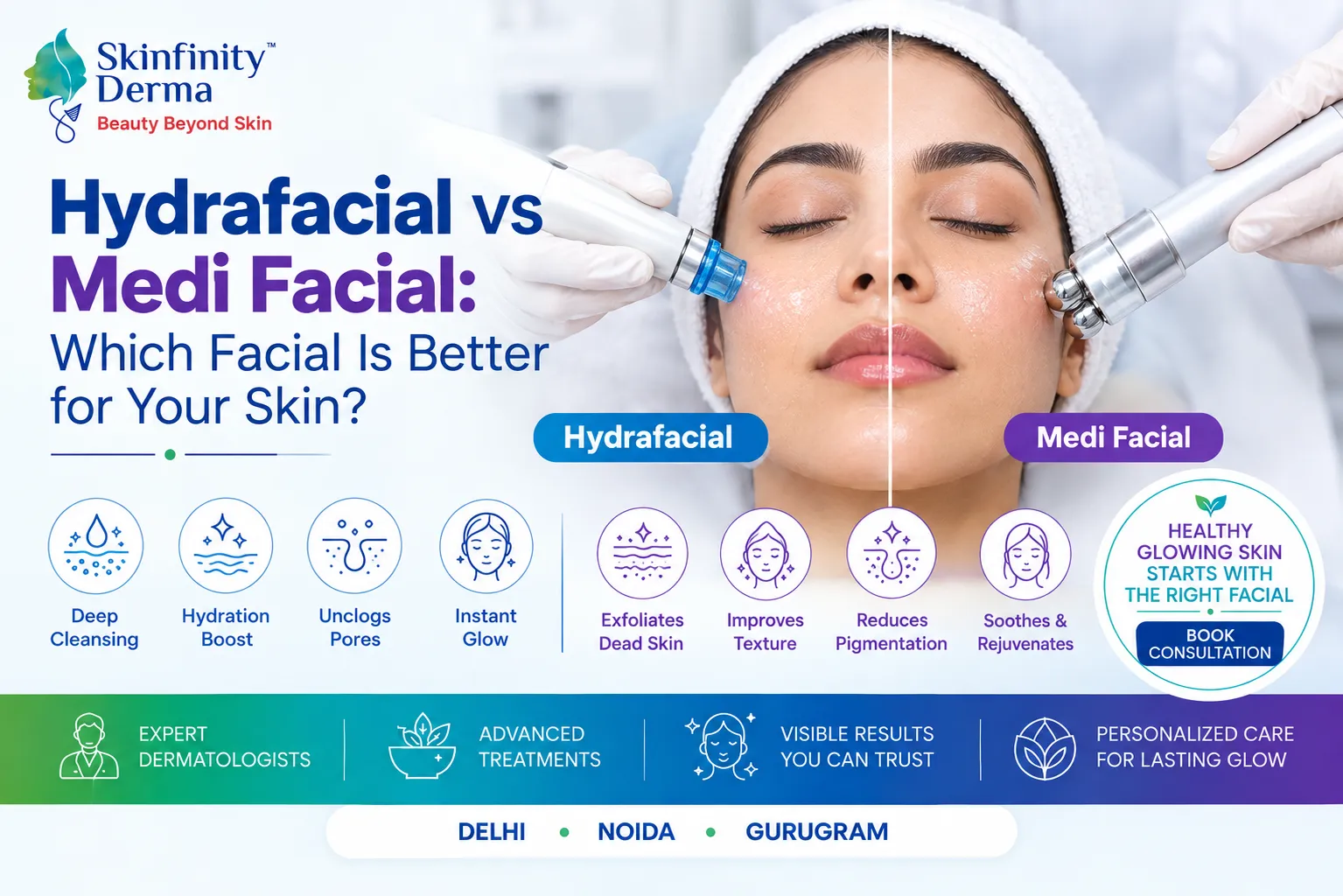
Both treatments can improve the appearance of the skin, but they are not identical. Hydrafacial follows a device-based process that cleanses, exfoliates, extracts and hydrates. A Medi Facial is a broader category of dermatologist-guided facials customised with products, technologies and active ingredients.
Choosing between a Hydrafacial or Medi Facial depends on your skin type, primary concern and desired result. This guide compares their process, benefits, suitability, cost and expected results.
What Is a Hydrafacial?
Hydrafacial is a non-invasive hydradermabrasion treatment performed with a specialised device. It combines cleansing, exfoliation, gentle extraction and serum infusion within one session.
A standard Hydrafacial treatment usually includes three main stages:
-
Cleansing and Exfoliation: The treatment removes surface buildup and loose dead skin cells.
-
Extraction: Controlled suction helps clear oil and debris from congested pores.
-
Hydration: Moisturising serums are delivered to support hydration and improve the skin’s appearance.
What Is a Medi Facial?
A Medi Facial is a professional facial designed and performed under clinical or dermatologist-led guidance. Unlike a fixed facial protocol, Medi Facial treatment is an umbrella term covering several customised facial procedures.
Common Medi Facial benefits include:
-
Customisation according to skin type
-
Targeted care for specific concerns
-
Controlled use of professional skincare products
-
Supervision by trained skin professionals
-
Options for acne, pigmentation, dryness and dullness
-
Adjustment of treatment intensity based on skin sensitivity
Hydrafacial vs Medi Facial: Key Differences
Book An Appointment
|
Factor |
Hydrafacial treatment |
Medi Facial treatment |
|
Treatment type |
Device-based hydradermabrasion |
Broad category of clinical facials |
|
Main process |
Cleansing, exfoliation, extraction and hydration |
Customised according to the skin concern |
|
Extraction |
Controlled suction |
May involve extraction depending on the protocol |
|
Customisation |
Boosters and settings can be adjusted |
Ingredients, devices and steps can be extensively customised |
|
Main benefits |
Hydration, smoother texture and cleaner-looking pores |
Targeted support for acne, pigmentation, dryness or ageing concerns |
|
Session duration |
Usually 30–60 minutes |
Usually 45–75 minutes |
|
Downtime |
Usually none or minimal |
Depends on the treatment intensity |
|
Suitable occasion |
Routine maintenance or pre-event glow |
Maintenance or concern-specific treatment |
|
Number of sessions |
One session for temporary glow or a series for maintenance |
Depends on the concern and selected protocol |
|
Professional guidance |
Recommended |
An essential part of treatment selection |
Hydrafacial vs Medi Facial for Different Skin Concerns
The right facial depends on what the skin needs. The same treatment may produce different results for two people with different skin types.
-
Hydrafacial for Acne
Hydrafacial for acne can be beneficial for people who have oily skin, mild congestion, and blackheads. Controlled exfoliation can remove dead skin cells that may clog pores. The suction step may also help remove some surface oil and pore debris without aggressive manual extraction.
Oil control and aesthetic improvement in clogged areas can be achieved with customised solutions. The skin might appear cleaner and smoother following treatment. When recommended by a dermatologist, regular sessions can be part of an acne-care routine.
However, Hydrafacial is not a treatment that will cure acne or control all the factors that contribute to it. Suction, exfoliation, or extraction can irritate inflamed, painful, or cystic acne. The skin may also become more sensitive if the treatment is applied to broken or recently picked pimples.
A dermatologist can help reduce the suction pressure, use gentler solutions, or avoid suction on inflamed areas. Medical acne treatment might still be necessary to control blocked pores, sebum overproduction, inflammation, and recurring acne.
-
Medi Facial for Acne
Depending on the type, severity and condition of the skin, a Medi Facial for acne can be tailored. The treatment can involve light cleansing, oil-control products, gentle exfoliation, soothing masks and LED therapy.
Its most important benefit is flexibility. The dermatologist can remove unnecessary steps when the skin is inflamed and choose products that are appropriate for acne-prone skin. The treatment might also be directed towards hydrating the skin if acne medications have caused dryness or sensitivity.
A Medi Facial could help to diminish surface oil, eliminate the buildup of debris and clear congested skin of dirt. It can also help to maintain the integrity of the skin barrier without using harsh scrubs or forceful extraction.
However, a Medi Facial is still a complementary treatment. It will not be a substitute for acne medication prescribed by a doctor when acne is moderate, severe, painful or leaves scars. An acne treatment programme may be recommended by a dermatologist to help manage existing acne and prevent new acne from forming.
-
Hydrafacial for Pigmentation
Temporary dullness and mild surface unevenness can be improved with Hydrafacial for pigmentation. While controlled exfoliation will remove dead skin cells, serum infusion will help to hydrate the skin. This can help to make the skin look smoother, fresher and temporarily brighter.
Brightening boosters can be customised to help with the appearance of superficial discolouration. Hydration can also help to minimise dry and uneven texture that can make pigmentation more visible.
However, Hydrafacial is not effective in the long-term treatment of melasma, deep pigmentation or long-lasting acne marks. Pigmentation can occur due to a variety of causes such as sun damage, inflammation, hormones and skin damage. Not all the underlying causes can be corrected with a facial.
It is still important to use sunscreen and skincare products accordingly. Others might require chemical peels, lasers or other dermatologist-recommended treatments. The treatment plan should take into account the nature and severity of pigmentation.
-
Medi Facial for Pigmentation
For pigmentation, a Medi Facial offers greater flexibility in selecting brightening ingredients based on the individual’s skin type and sensitivity. The protocol may include vitamin C, niacinamide, or other appropriate active ingredients, along with gentle exfoliation and hydration.
Each step can be modified by the dermatologist based on the kind of pigmentation. The treatment could help diminish dullness, promote a uniform complexion tone and boost skin barrier function.
This personalised technique can be beneficial for Indian skin as over-exfoliating can irritate the skin and lead to post-inflammatory pigmentation. A dermatologist can help to decrease the strength of the treatment or avoid products that are not suitable to lower this risk.
Medi Facial treatment can help to gradually improve dullness and uneven tone. However, ongoing pigmentation will require a complete treatment plan to address its cause. To maintain the results, daily sunscreen and appropriate home skincare are required.
-
Dry and Dehydrated Skin
One of the key components of Hydrafacial treatment is the infusion of serum, which can be beneficial for dehydrated skin. It can exfoliate away surface dullness and provide moisturising solutions. After the first session, the face may feel softer, smoother and more comfortable.
When dryness is accompanied by some dullness and mild congestion, the treatment can be modified by adding hydrating boosters. However, if the skin barrier is compromised, suction and exfoliation should be modified.
A hydrating Medi Facial can offer the same benefits by using nourishing products, moisturising masks and barrier-friendly techniques. It might be better if the skin is extremely dry, sensitive or not suitable for suction.
Both treatments are not substitutes for regular home care. To keep your skin hydrated following the facial, you need a gentle cleanser, an appropriate moisturiser and daily sunscreen.
-
Oily and Congested Skin
Hydrafacial may be beneficial for oily skin that has blackheads and obvious congestion. It exfoliates and uses suction, which can help to remove some surface oil, loose dead skin cells and pore debris. This can help to make oily areas look clearer and less clogged.
The treatment can also be tailored using products that will help to balance oil production without causing too much dryness. The intensity of the treatment should be balanced and not too strong, as excessive removal of oil can cause irritation.
Controlled exfoliation and appropriate active ingredients can also help to manage oily skin in a Medi Facial. This can involve steps that help soothe or hydrate the skin to avoid dryness.
If oily skin is accompanied by active acne, sensitivity or pigmentation, a Medi Facial may be more suitable. The dermatologist can develop the process around all these concerns instead of focusing simply on pore extraction.
-
Sensitive Skin
Both treatments must be customised for sensitive skin. Adjustments to Hydrafacial suction, exfoliating tips and acids might be necessary. Redness, stinging or temporary discomfort can be caused by strong suction or inappropriate solutions.
A Medi Facial can exclude irritating ingredients and concentrate on hydration, soothing products and skin barrier support. It is flexible and might be better for those who are unable to tolerate regular exfoliation or extraction.
Individuals with eczema, rosacea, active rashes or a compromised skin barrier should seek expert advice before treatment. They might need to wait until their skin is stable before getting the facial.
A patch test or a less intense initial session might be recommended for sensitive skin. Previous reactions and current skincare products should also be discussed with the dermatologist before the treatment.
Hydrafacial vs Medi Facial: Which One Gives Better Results?
Hydrafacial often provides more predictable immediate results because its process is standardised. The skin may appear cleaner, plumper and more radiant after one session. These effects are mainly associated with exfoliation and hydration.
A Medi Facial can provide better targeted results when the protocol is designed for a specific concern. An acne-focused Medi Facial differs from one intended for pigmentation or dryness. The results therefore depend heavily on the selected treatment.
Hydrafacial may be the better choice when the priorities are:
-
Immediate hydration
-
Gentle pore cleansing
-
Temporary improvement in dullness
-
Smoother-looking texture
-
Minimal downtime
-
Preparation for an event
A Medi Facial may be the better choice when the priorities are:
-
A highly customised treatment
-
Support for acne-prone skin
-
Care for pigmentation or uneven tone
-
Barrier support for sensitive skin
-
Treatment using selected clinical technologies
-
A long-term concern-specific plan
Both treatments provide the best results when combined with sunscreen and suitable home skincare.
Which Facial Is Better for Indian Skin?
Indian skin contains more melanin and may develop post-inflammatory pigmentation after irritation. Sun exposure, heat and pollution can also contribute to tanning, oiliness, congestion and uneven tone.
Hydrafacial can suit Indian skin when dehydration, dullness or pore congestion is the main concern. The treatment should be customised to avoid excessive suction or exfoliation.
A Medi Facial may be more suitable when Indian skin has pigmentation, active acne or sensitivity. The dermatologist can select the products and intensity according to the person’s complexion and tendency to develop dark marks.
Skin colour alone does not determine the correct facial. The choice should consider oil production, hydration, sensitivity, active conditions and treatment history.
How Much Does Hydrafacial and Medi Facial Cost?
The cost of Hydrafacial and Medi Facial varies according to the city, clinic, technology and treatment customisation.
Hydrafacial in Noida may generally cost approximately ?2,500–?7,000 per session. Advanced versions with boosters, LED therapy or lymphatic drainage may cost more. Published clinic prices vary widely because some providers use the term “hydrafacial” for different devices and protocols.
A Medi Facial may cost approximately ?3,000–?15,000 per session. The final price depends on the ingredients, devices, add-ons and professional supervision involved. Some premium clinical protocols may cost more.
Factors affecting the price include:
-
Type and authenticity of the device
-
Quality of serums and professional products
-
Treatment steps and session duration
-
Addition of boosters or LED therapy
-
Dermatologist’s expertise
-
Clinic location
-
Number of sessions required
Ask what the quoted price includes before booking. A low-cost session may not contain the same steps, consumables or supervision as a complete clinical treatment.
How to Choose the Right Facial for Your Skin?
Begin with the skin concern rather than the popularity of the treatment.
1. Identify Your Main Concern
Determine whether your priority is hydration, acne, pigmentation, congestion or pre-event glow. One facial cannot address every concern equally.
2. Consider Your Skin Sensitivity
Inform the dermatologist about sensitive skin, allergies, rosacea or eczema. Mention any previous reaction to acids, exfoliation or facial treatments.
3. Share Your Current Skincare Routine
Retinoids, exfoliating acids and acne medicines may influence treatment timing. Do not stop prescribed products without speaking to the doctor.
4. Ask About the Complete Protocol
Ask which device, serums and treatment steps will be used. For a Medi Facial, understand how the protocol has been customised for your skin.
5. Set Realistic Expectations
A single session may provide hydration and glow. Acne, pigmentation and texture usually require consistent skincare or a planned treatment series.
6. Choose Professional Supervision
A dermatologist-guided assessment reduces the risk of using unsuitable acids, excessive suction or irritating products.
Find the Right Hydrafacial Treatment at SKINFINITY
Choosing between a Hydrafacial and Medi Facial depends on your skin type and primary concerns. At SKINFINITY, we assess your skin before recommending a suitable treatment and customise the steps accordingly.
-
Hydrafacial in Gurgaon: Our Hydrafacial treatment in Gurgaon? focuses on cleansing, controlled exfoliation, extraction and hydration based on your skin’s condition.
-
Organic Hydrafacial: Our Organic Hydrafacial? offers a customised approach for people seeking gentle cleansing, nourishment and hydration.
-
Personalised Skin Assessment: We evaluate acne, pigmentation, congestion, dryness and sensitivity before selecting the treatment.
-
Dermatologist-Guided Care: Our team adjusts the products and treatment intensity to support your skin while reducing unnecessary irritation.
Book a consultation at SKINFINITY to determine which Hydrafacial or Medi Facial treatment suits your skin.
Conclusion
Hydrafacial works well for hydration, mild congestion and an immediate glow, while a Medi Facial offers greater customisation for acne, pigmentation and sensitive skin. Neither option is universally better. A dermatologist can assess your skin, select the appropriate protocol and recommend aftercare to support safer, more consistent results over time.
FAQs
1. Is Hydrafacial better than a Medi Facial?
Hydrafacial does not necessarily outperform a Medi Facial. It may be better suited to those who want to hydrate their skin, gently cleanse their pores, reduce congestion, and achieve a quick glow.
A Medi Facial provides greater flexibility in addressing acne, pigmentation, dryness, sensitivity, and a compromised skin barrier. The dermatologist can select the products and technology based on the specific concern.
The right choice depends on the skin’s condition and sensitivity, as well as the desired results. A professional skin evaluation can help determine which treatment is more suitable.
2. What is the main difference between Hydrafacial and Medi Facial?
Hydrafacial is a process that involves a special machine to cleanse, exfoliate, extract and hydrate the skin. Some surface oil and pore debris is removed with controlled suction, and serums are used to hydrate.
A Medi Facial is a more comprehensive type of clinical facials. It can be customized with various ingredients, masks, exfoliation techniques and technologies depending on the skin concern.
One of the main focuses in Hydrafacial is extraction and hydration. A Medi Facial targets the entire treatment of issues like acne, pigmentation, dryness or sensitivity.
3. Is Hydrafacial good for acne-prone skin?
Hydrafacial can be used to help skin that is prone to acne and has mild congestion, blackheads and excess surface oil. Controlled exfoliation gently sloughs away dead skin cells and suction helps to draw out some of the debris from clogged pores without squeezing.
But Hydrafacial is not an appropriate treatment for all kinds of acne. The suction and exfoliation can irritate painful, cystic, broken or highly inflamed lesions. Treatment intensity may need to be decreased for sensitive and acne prone skin.
Hydrafacial is not a medical treatment for acne. Your dermatologist may also recommend appropriate skincare and/or prescription therapy for inflammation management and for preventing future acne breakouts.
4. Is Medi Facial good for pigmentation?
A Medi Facial can help treat dullness, mild tanning, and superficial pigmentation. The dermatologist can select brightening ingredients and adjust the strength of exfoliation based on the skin type and sensitivity.
The treatment may include ingredients such as niacinamide or vitamin C, along with hydration and barrier support. This customisation may benefit skin that is prone to irritation or post-inflammatory pigmentation.
Melasma or deep pigmentation cannot be completely removed with a Medi Facial. Daily sunscreen and regular dermatologist-recommended procedures may be necessary to achieve lasting improvement.
5. Which is better for glowing skin: Hydrafacial or Medi Facial?
Hydrafacial is a combination of exfoliation, extraction and hydration and frequently gives an instant shine. Exfoliating and providing hydrating serums can help create a smoother, fresher complexion.
Customised ingredients, masks and technologies can also enhance radiance with a brightening Medi Facial. May be more appropriate if dullness is related to dryness, pigmentation or sensitivity.
For those who want to get hydrated before an event, hydrafacial might be a good option. If the skin needs a more targeted treatment a Medi Facial may be more suitable.
6. Does Hydrafacial have any downtime?
The downtime associated with Hydrafacial is minimal or nonexistent. Most people can return to work and normal activities immediately after the treatment.
In some instances, temporary redness, tightness, or sensitivity may occur. These effects are more likely in sensitive skin or when stronger exfoliation and customised boosters are used.
Take proper care of your skin after the facial and apply sunscreen. Do not scrub the skin, use exfoliating acids or retinoids, or expose it to unnecessary heat after the session without a dermatologist’s guidance.
7. Can I get a Medi Facial before a wedding or event?
A gentle Medi Facial can be scheduled before a wedding or event to enhance hydration, smoothness, and radiance. The protocol should be selected based on the skin type and previous treatment history.
Do not try a new or intensive facial immediately before an event. Using strong exfoliants or unfamiliar ingredients can lead to redness, dryness, or an unexpected reaction.
Schedule the facial several days in advance. Those with sensitive or acne-prone skin may want to try it one or two weeks earlier.
8. Can Hydrafacial remove pigmentation permanently?
No. Although Hydrafacial can help brighten dullness and help with mild surface pigmentation, it will not be able to remove pigmentation permanently.
Exfoliation can help to slough away dead cells on the surface, and hydration and brightening boosters can help to give temporary radiance. Not all causes or the depth of pigmentation will be treated.
It is important to diagnose deep acne marks and recurrent pigmentation as melasma. Long-term treatments can involve lasers or other dermatologist-prescribed treatments, chemical peels, and active skincare and sunscreen.
9. Can I combine Hydrafacial with other skin treatments?
Hydrafacial can be paired with other treatments like LED therapy or other selected boosters in a customised treatment. These additions can help to hydrate, brighten or make skin look congested.
It can also be scheduled for chemical peelings, lasers, microneedling or injectables. But these procedures might require to be done in different appointments.
The order and spacing of treatments should be determined by the dermatologist. Planning can minimize irritation, prevent over-exfoliation and skin barrier disruption.

 Call Now
 WhatsApp