
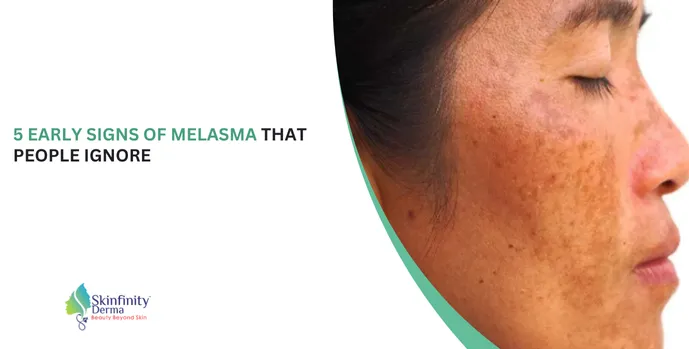
Melasma creates dark or grayish-brown spots on the skin. It takes time to develop and often begins with minor changes that most people ignore. Early diagnosis of these signs allows for more effective therapy and prevents deeper discoloration. Additionally, it protects the skin from long-term damage.
The early indications are frequently misconstrued as for uneven skin tone or tanning. The pigment may settle deeper as a result of this delay. When delivering care, soft awareness promotes confidence and comfort.
What Causes Melasma and Why It Appears Slowly
Melasma typically develops as pigment cells become more sensitive. This occurs as a result of several frequent factors. Sun exposure is the most prevalent cause, as even light sunlight can activate pigment cells. Hormonal changes during pregnancy or with birth control tablets can also be a factor. Heat from the stove, stress, heredity, and specific skincare products may all contribute to this. These triggers operate softly. Long before the patches grow dark or visible, the skin begins to show early warning signs.
5 Early Signs of Melasma That Many People Ignore
These are the top 5 signs of melasma that many people ignore.
1. Light brown shadows on cheeks or forehead.
The first indicator is usually a subtle shadow that resembles a light tan. It appears slowly and settles on the cheekbones, forehead, or nose. Many people mistake it for dullness or sunburn. It gradually becomes more distinct and apparent under natural light.
2. An uneven skin tone that does not improve with routine skincare.
You may observe an area with uneven tones that does not react to brightening creams. Exfoliating does not make it lighter. Even after following a healthy regimen, the skin remains spotty. This occurs because the pigment lies deeper and is influenced by internal causes.
3. Pigment that darkens with sun exposure.
Another early warning sign is darkening after only a brief time in the sun. The patch appears light indoors but deepens while outside. This fast alteration serves as an early warning that pigment cells are becoming more reactive.
4. Small, flat, brown specks gradually combine into larger patches.
Early melasma may resemble tiny freckles. These locations connect together throughout time. Upper lip and cheekbones are common regions. The change is gradual and subtle, but it gets more noticeable over time.
5. A symmetrical design on each side of the face.
Melasma typically emerges in a balanced pattern. You can observe identical shadows on both cheeks. Many individuals disregard this pattern since it appears gradually. Symmetry suggests that the pigment is melasma.
How To Confirm If It Is Melasma?
You can check a few things from home. Examine your skin in mild natural light. Move your face gently and see if the pigment forms a patch. Examine both sides of your face to determine whether the darkness appears balanced. Take note of whether the pigment deepens following exposure to sunlight or heat.
A dermatologist can confirm the diagnosis through a careful examination. Sometimes a special light is used to determine how deep the pigment is. This assists in developing the safest treatment approach.
What To Do When You Notice These Early Signs?
Start protecting your skin immediately. Use sunscreen every morning, and reapply as needed. Choose mild skincare and avoid harsh scrubbing. Try to prevent prolonged exposure to heat or sunshine. Keep your skin calm and hydrated. Medical creams, light peels, and supportive treatments are effective in treating early-stage melasma. These treatments are slow and gentle. Laser treatments may be utilized as needed, but only after a thorough review. Beginning treatment early provides the best opportunity for consistent improvement.
How To Prevent Melasma From Getting Worse?
Daily protection is the most important step.
-
Apply a broad-spectrum sunscreen.
-
Wear a wide-brimmed sun hat when outdoors.
-
When possible, avoid heat from cooking or steaming.
-
Choose items that do not irritate the skin.
-
Antioxidants can help the skin stay calm.
Consistency is more important than intensity. Small everyday routines protect the skin and decrease the likelihood of deeper pigmentation.
When To Seek Help From a Dermatologist?
Call for assistance if the pigment spreads quickly. Seek help if you're anxious or unsure. If there is no progress after 4 to 6 weeks of care, a skin specialist in Gurgaon can help you develop a safe and pleasant treatment plan.
You deserve to receive care that boosts your confidence and well-being.
Final Thoughts & Next Step
Melasma begins slowly, with soft shadows and gradual changes in tone. These early warning indicators are easily missed. Understanding them provides clarity and comfort. Early treatment avoids deeper pigmentation and promotes skin health. If you're ever unsure, a simple evaluation can help you understand your skin and start treating it properly.
Skinfinity Derma provides both gentle and sophisticated treatment for melasma. Our physicians analyze the underlying cause and develop safe melasma treatment solutions tailored to your skin. Expert-guided pigmentation care will help you feel more clear and confident. Schedule your appointment now.

 Call Now
 WhatsApp