

Medically Reviewed by: Dr. Ipshita Johri
MBBS, DDV | Skinfinity Derma Clinic
Read Time: 8 Minutes
Unwanted facial or body hair can require frequent shaving, waxing or threading. These methods remove visible hair temporarily but do not reduce its future growth.
Laser hair reduction targets active hair follicles using controlled light energy. A planned course can make regrowth finer, lighter and slower. Results vary according to hair colour, skin tone, hormones and treatment consistency.
Anyone considering Laser Hair Reduction in Gurgaon should begin with a professional assessment. The practitioner must select the correct device settings for the patient’s skin and hair characteristics. This assessment is particularly important for Indian skin, which may develop pigmentation after excessive heat or irritation.
How Does Laser Hair Reduction Work?
Laser hair reduction uses concentrated light to target melanin within the hair. The absorbed light changes into heat and damages structures involved in future hair growth.
Hair grows through different phases:
-
Anagen phase: The hair is actively growing and remains attached to the follicle.
-
Catagen phase: Growth slows as the hair begins separating from the follicle.
-
Telogen phase: The follicle rests before the hair eventually sheds.
Laser treatment works most effectively during the active growth phase. Since every hair does not enter this phase simultaneously, one appointment cannot treat the entire area effectively. Several sessions are scheduled to target new groups of active follicles.
Treated hairs may remain visible immediately after the procedure. They usually loosen and shed gradually over the following days or weeks. Patients should avoid pulling them out.
Laser treatment generally responds best to coarse, dark hair containing adequate pigment. White, grey and very light hair may respond poorly because the laser has little pigment to target.
Benefits of Laser Hair Reduction
A properly planned treatment course may offer several practical benefits:
-
Noticeably slower hair regrowth
-
Finer hair within the treated area
-
Reduced dependence on waxing
-
Fewer shaving-related cuts
-
Less irritation caused by frequent hair removal
-
Improvement in selected cases of ingrown hair
-
More convenient management of large areas
-
Longer-lasting reduction compared with temporary methods
Results are progressive rather than immediate. Hair density usually reduces across the treatment course, although complete clearance cannot be guaranteed.
Laser Hair Reduction vs Waxing
Waxing removes hair from the root but does not permanently affect the follicle. Regrowth commonly returns within several weeks, requiring another appointment.
Laser treatment works beneath the skin by applying energy to suitable follicles. Repeated sessions can reduce the number and thickness of hairs that return.
Book An Appointment
|
Factor |
Laser Hair Reduction |
Waxing |
|
Method |
Targets pigmented hair follicles |
Pulls hair from the root |
|
Results |
Progressive, long-term reduction |
Temporary removal |
|
Frequency |
Scheduled treatment course |
Repeated throughout the year |
|
Hair length |
Area is usually shaved beforehand |
Hair must grow before treatment |
|
Ingrown hair |
May improve selected cases |
Can contribute to ingrown hair |
|
Discomfort |
Brief warmth or snapping sensation |
Pulling discomfort during each strip |
|
Suitability |
Depends on hair colour and skin type |
Suitable for many hair colours |
|
Maintenance |
Occasional maintenance may be needed |
Regular waxing remains necessary |
Waxing, threading and plucking should usually be avoided between laser sessions. These methods remove the follicular target needed for the next treatment. Shaving is generally allowed because it removes hair above the surface without pulling it from the root.
Is Laser Hair Reduction Safe for Indian Skin?
Laser hair reduction can be performed on Indian skin when the device and settings are chosen carefully. The practitioner must account for melanin within both the skin and hair.
Higher melanin levels can increase the possibility of surface heat absorption. Incorrect treatment settings may cause burns, blisters or changes in pigmentation. Recent tanning can raise this risk further.
Device options may include:
-
Long-Pulsed Nd:YAG Laser
The 1064 nm Nd:YAG wavelength reaches deeper structures and has lower absorption by surface melanin than shorter wavelengths. It is frequently considered for deeper Indian skin tones.
-
Diode Laser
Diode systems are commonly used for hair reduction across various skin tones. Their suitability depends on the device, cooling method and individual settings.
-
Alexandrite Laser
Alexandrite technology can work effectively for lighter skin with dark hair. It requires greater caution as skin melanin increases.
No single laser is automatically best for every Indian patient. Skin type, tanning history and hair thickness must guide the choice. A test spot may be advised before treating a larger area.
The FDA defines permanent hair reduction as a stable, long-term decrease in regrowing hair after a treatment course. This does not mean every hair will disappear forever.
Areas That Can Be Treated
Laser hair reduction may be considered for several facial and body areas:
-
Upper lip
-
Chin and jawline
-
Sidelocks
-
Neck
-
Underarms
-
Arms
-
Legs
-
Back
-
Chest
-
Abdomen
-
Bikini line
-
Full body
Facial hair needs careful evaluation because hormonal growth may respond differently from body hair. Women with irregular periods, sudden facial hair or other hormonal symptoms may need a medical assessment before treatment begins.
Tattooed skin should not be treated directly with a hair-removal laser. Patients must tell the practitioner about tattoos, permanent makeup and previous pigmentation reactions.
How Many Sessions Are Required?
Most patients need a series of sessions because treatment only affects follicles in the appropriate growth phase.
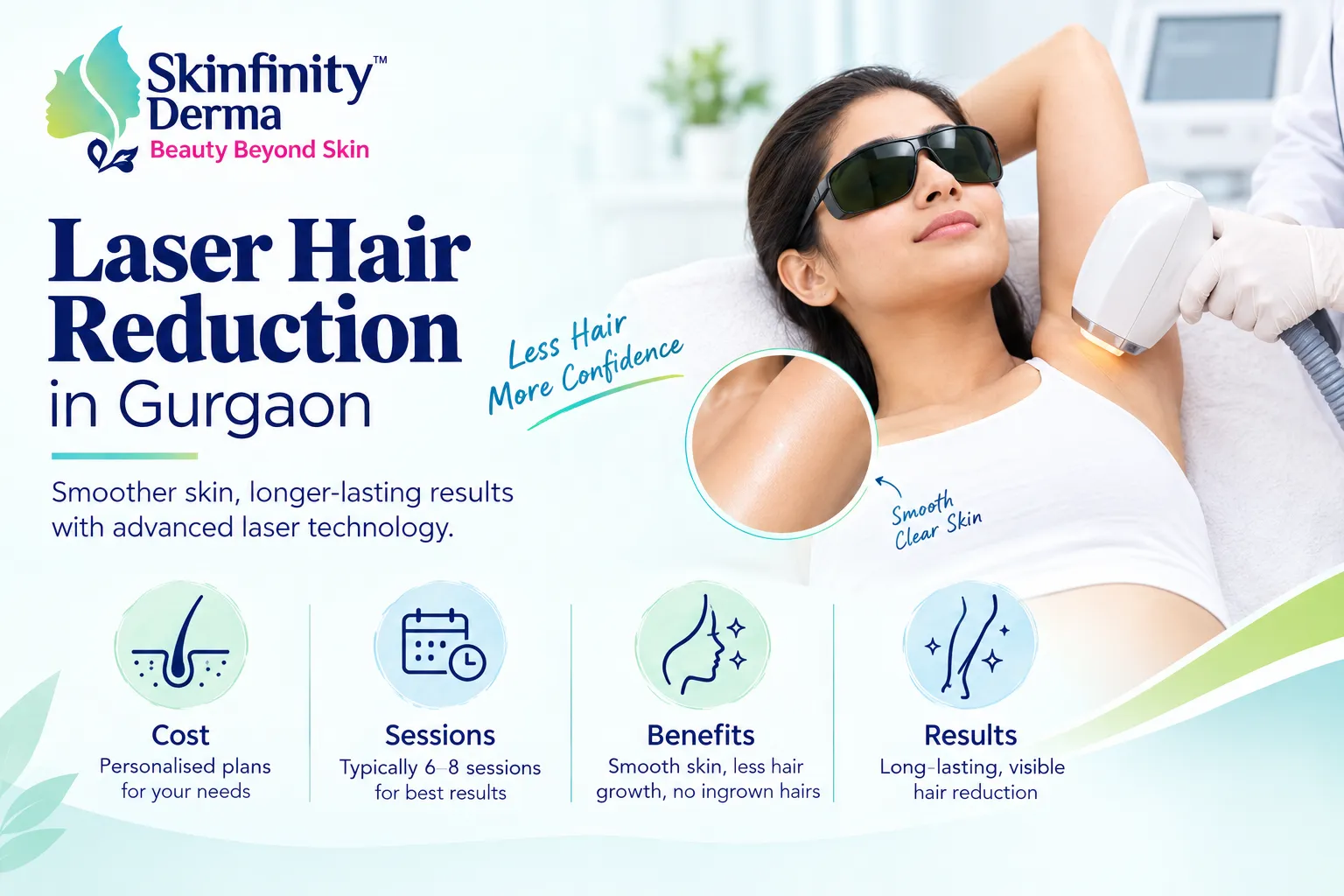
A plan may involve approximately six to eight initial appointments. Some people require additional sessions due to hormonal hair growth, dense hair or an incomplete response. Maintenance treatment may be advised later.
The recommended number depends on:
-
Treatment area
-
Hair density
-
Hair thickness
-
Hair colour
-
Skin tone
-
Growth cycle
-
Hormonal health
-
Previous hair-removal methods
-
Response to earlier sessions
-
Attendance at the recommended intervals
Facial areas may need more maintenance because hormonal influences can stimulate new growth. Underarm and leg hair may show a different response.
Sessions are usually spaced several weeks apart. Facial treatments may be scheduled closer together than body treatments because growth cycles vary by area.
What Results Can You Expect?
Early sessions may reduce regrowth speed and leave treated hairs finer. Patchy shedding can occur as different follicles respond.
Further reduction may become visible as the course progresses. The final outcome depends on how much suitable dark hair is present and how consistently sessions are completed.
Successful treatment may produce:
-
Reduced visible density
-
Longer intervals between shaving
-
Softer regrowth
-
Fewer coarse hairs
-
Smoother-looking treated skin
-
Less follicular irritation in suitable cases
Laser treatment is described more accurately as long-term hair reduction than permanent hair removal. Some hair may eventually return, although it is often finer and less noticeable. Hormonal changes can also encourage new growth.
Laser Hair Reduction Cost in Gurgaon
The cost of Laser Hair Reduction in Gurgaon depends on the treatment plan rather than one standard rate. A small facial area generally requires a different protocol from the legs or full body.
Factors influencing the complete cost include:
-
Size of the area
-
Number of areas treated
-
Expected session count
-
Hair density
-
Technology selected
-
Treatment duration
-
Practitioner expertise
-
Need for maintenance sessions
-
Whether the plan includes a package
Patients should request a complete quotation after their assessment. The clinic should explain which body areas are included and whether the quotation applies per session or to a treatment course.
A low advertised rate should not be the only selection criterion. Device quality, medical oversight and experience with Indian skin are important safety considerations.
What Happens During a Laser Hair Reduction Session?
The clinician first reviews recent tanning and current medicines. Previous reactions to laser treatment should also be discussed.
The area is cleaned before treatment. Hair may need trimming if it was not shaved according to the clinic’s instructions. Protective eyewear is worn by everyone inside the treatment room.
The practitioner delivers controlled pulses across the selected area. Patients may notice warmth or a brief snapping sensation. Cooling technology can improve comfort and protect the surface of the skin.
Treatment time depends on the area. The upper lip may take only a short time, whereas full legs require a longer appointment.
Temporary redness or mild follicular swelling can appear afterwards. These reactions often settle without prolonged recovery. Blistering, severe pain or increasing discolouration should be reported promptly.
What to Do Before Treatment
Correct preparation can improve safety and treatment consistency.
-
Avoid Root-Level Hair Removal
Do not wax, thread or pluck during the time suggested by the clinic. In order to get an effect, the laser requires pigment in the follicle.
-
Shave as Directed
The clinic may ask you to shave shortly before treatment. Follow its timing instructions because excessive surface hair can increase heat and discomfort.
-
Limit Sun Exposure
Do not intentionally tan prior to the appointment. Inform the practitioner if there has been any recent sunburn or change of skin colour.
-
Review Medicines and Skincare
Discuss information on prescription drugs and photosensitising products. The dermatologist might modify the preparation based on the area of treatment.
-
Arrive With Clean Skin
Unless the clinic advises otherwise, do not use deodorant, perfume, make-up or body oil. Some of these products may require removal prior to treatment.
What to Do After Treatment
Aftercare reduces irritation and protects the treated skin.
-
Apply any soothing product advised by the clinic.
-
Avoid rubbing or scratching the area.
-
Use broad-spectrum sunscreen on exposed skin.
-
Limit unnecessary sun exposure.
-
Avoid hot showers if the skin feels warm.
-
Pause strenuous exercise for the advised period.
-
Avoid saunas and steam rooms temporarily.
-
Do not wax or pluck between appointments.
-
Allow treated hairs to shed naturally.
-
Report blistering or persistent discomfort.
Patients should follow the instructions given for their specific skin. Facial treatment aftercare may differ from care for the underarms or legs.
Possible Side Effects
Mild redness and follicular swelling are common short-term reactions. A warm or sensitive feeling may also develop.
Less common complications include:
-
Temporary darkening
-
Temporary lightening
-
Blistering
-
Burns
-
Crusting
-
Prolonged irritation
-
Scarring
-
Paradoxical hair growth
The likelihood of complications can increase with inappropriate settings or recent tanning. Choosing a medically supervised Laser Hair Removal Clinic in Gurgaon can help patients receive proper assessment and complication management.
Who Should Seek Medical Assessment First?
Some patients need additional evaluation before beginning treatment. Medical guidance is especially important for:
-
Sudden facial hair growth
-
Irregular menstrual cycles
-
Suspected polycystic ovary syndrome
-
Active skin infection
-
Open wounds
-
Recurrent herpes near the treatment site
-
Recent sunburn
-
History of abnormal scarring
-
Current photosensitising medication
-
Unexplained changes in hair growth
Laser treatment can reduce suitable hair but does not correct an underlying hormonal disorder. Managing the medical cause may help support longer-lasting control.
Laser Hair Reduction at SKINFINITY Derma Gurgaon
At SKINFINITY Derma, we begin with a consultation because no two hair-growth patterns are identical. Our dermatologists assess the skin tone and hair characteristics before recommending a treatment plan.
-
Personalised Skin and Hair Assessment: We begin by examining your skin tone, hair thickness and growth pattern. We also discuss previous hair-removal methods, hormonal concerns and past skin reactions.
-
Technology Selected for Your Skin: We select the device and settings according to your skin and hair characteristics. Our careful approach helps protect Indian skin from unnecessary irritation and pigmentation.
-
Treatment Under Professional Guidance: Our team guides you through preparation, treatment and aftercare. We monitor your skin’s response and adjust later sessions where required.
-
Clear Session Planning: We explain how many sessions you may need and how appointments should be spaced. Your facial and body areas may follow different schedules.
-
Ongoing Review and Maintenance: We review your progress throughout the treatment course. Our dermatologists may recommend maintenance sessions if hormonal changes or new growth affect your results.
Book a consultation with our dermatologist in Gurgaon to receive a plan suited to your skin and hair pattern.
Which Is the Best Laser Hair Removal Clinic in Gurgaon?
The best clinic is one that assesses your skin before quoting a standard package. It should use appropriate technology and explain likely outcomes honestly.
Before booking, ask:
-
Who will assess my skin?
-
Which technology will be used?
-
Why is that device suitable for my skin tone?
-
Who will perform the procedure?
-
How will the settings be selected?
-
Is a test spot recommended?
-
What reactions should I expect?
-
Who manages complications?
-
Does the quotation cover all planned areas?
A responsible clinic will describe the procedure as hair reduction. It should not promise complete, permanent hair removal for every patient.
Conclusion
Laser hair reduction offers a longer-term approach to managing unwanted facial and body hair. Several sessions are required because hair follicles grow at different times.
Safe treatment depends on accurate skin assessment and appropriate technology. Proper preparation also affects the outcome. People with Indian skin should choose a clinic experienced in treating different skin tones.
Connect with SKINFINITY Derma for a personalised laser hair reduction consultation in Gurgaon.
Frequently Asked Questions
1. What Is the Cost of Laser Hair Reduction in Gurgaon?
The cost depends on the treatment area and number of sessions. Hair density and technology can also affect the complete quotation.
Ask the clinic whether its quotation is for one session or a full course. Confirm which areas and follow-up services are included.
2. How Many Sessions Are Required?
Many patients require around six to eight initial sessions. The final number depends on the treatment area and hair-growth cycle.
Facial or hormonally influenced hair may require further appointments. Maintenance sessions can also be advised after the initial course.
3. Is Laser Hair Reduction Permanent?
Laser treatment can provide long-term hair reduction, but it does not guarantee that every hair will disappear permanently.
Some regrowth may occur over time. Returning hair is often finer and less dense. Hormonal changes may lead to new growth.
4. Which Laser Is Best for Indian Skin?
There is no single laser suitable for every Indian skin tone. Long-pulsed Nd:YAG technology is frequently considered for deeper skin tones, while diode systems may suit a wider range when used correctly.
The safest choice depends on skin colour, hair thickness and recent tanning. A dermatologist should recommend the technology after examining the treatment area.

 Call Now
 WhatsApp