
Medically Reviewed by: Dr. Aanchal Bansal
MBBS, MD, DNB (Dermatology, Venereology, and Leprosy) | Skinfinity Derma Clinic
Read Time: 8 Minutes
Finding more hair on the pillow can be worrying. A widening part or receding hairline can create even greater concern. However, hair fall does not have one universal cause.
Some people develop temporary shedding after illness or emotional stress. Others experience progressive thinning because of genetics or hormonal sensitivity. Scalp inflammation can also damage the environment surrounding the follicles.
Effective hair fall treatment in Noida should begin with an accurate diagnosis. Random oils or supplements may delay suitable care when a medical condition is responsible.
A dermatologist can examine the shedding pattern and scalp condition. The treatment plan is then selected according to the diagnosed type of hair loss.
Understanding Hair Fall and Hair Loss
Hair fall and hair loss are often used interchangeably. However, they can describe different situations.
Hair naturally passes through a growth cycle. A strand grows during the anagen phase before entering a resting phase. It eventually sheds as the follicle prepares for another cycle.
Losing some hair daily is part of this process. The concern begins when shedding becomes excessive or visible density decreases.
Hair fall commonly refers to increased shedding from across the scalp. Hair loss may involve reduced density or distinct bald patches. It can also include progressive recession around the hairline.
Hair loss may be temporary or progressive. It may also be scarring or non-scarring.
Non-scarring hair loss leaves the follicle capable of producing hair. Scarring hair loss damages the follicle and may cause permanent loss.
Early assessment is particularly important when the scalp appears shiny or painful. Permanent follicle damage becomes harder to prevent after scarring progresses.
Common Causes of Hair Fall
Understanding the cause helps determine whether hair will regrow naturally or requires treatment.
1. Genetics
Pattern hair loss is strongly influenced by genetics. It can affect both men and women.
Men may notice recession around the temples or thinning at the crown. Women commonly develop a widening central part with reduced density.
Genetic hair loss usually progresses gradually. Early treatment may help preserve active follicles.
2. Telogen Effluvium
Telogen effluvium causes increased shedding from across the scalp. It often begins several weeks after a physical or emotional trigger.
Possible triggers include:
-
High fever
-
Major illness
-
Surgery
-
Rapid weight loss
-
Severe emotional stress
-
Childbirth
-
Restrictive dieting
-
Certain medicines
Telogen effluvium is often temporary. Hair growth may gradually recover after the trigger settles. Chronic telogen effluvium can continue for several months. A dermatologist should investigate ongoing shedding.
3. Nutritional Deficiencies
Low iron stores can contribute to diffuse hair shedding. Vitamin B12 or folate deficiency may also affect hair growth in selected patients.
Protein deficiency can develop after restrictive dieting. It may also occur when meals regularly lack suitable protein sources.
Supplements should not be taken without identifying a deficiency. Excessive supplementation can cause unwanted effects.
4. Thyroid Disorders
Both reduced and excessive thyroid activity can affect the hair cycle. An underactive thyroid may cause dry hair and increased hair loss. Thyroid-related shedding can occur alongside weight changes or unusual tiredness. Menstrual changes may also be present.
Blood tests can help identify thyroid dysfunction. Treatment should address the underlying hormonal condition.
5. Hormonal Changes
Hormonal changes can contribute to hair thinning in women. Polycystic ovary syndrome may cause scalp hair loss in susceptible patients.
Irregular periods or increased facial hair may offer additional clues. Acne can also occur alongside hormonal hair thinning.
Postpartum hormonal changes frequently cause temporary shedding. This usually begins a few months after delivery.
6. Alopecia Areata
Alopecia areata is an autoimmune form of hair loss. It commonly creates smooth round or oval bald patches.
The condition can affect scalp hair or the beard area. Eyebrows may also become involved.
Alopecia areata follows an unpredictable course. Some patches regrow naturally, while others require medical treatment.
7. Scalp Conditions
Dandruff does not always cause permanent hair loss. However, severe itching can increase breakage and inflammation.
Psoriasis or fungal infection can also affect the scalp. These conditions require targeted treatment rather than cosmetic hair products.
Painful bumps or crusting need prompt assessment. They may indicate infection or an inflammatory scalp disorder.
8. Tight Hairstyles
Tight braids and ponytails repeatedly pull on the follicles. Hair extensions can create similar tension.
This condition is called traction alopecia. Early-stage traction loss may improve after the pulling stops.
Long-term tension can cause permanent follicle damage. Receding edges should not be ignored.
9. Heat and Chemical Damage
Frequent straightening can weaken the hair shaft. Bleaching or repeated chemical treatments may increase breakage.
Breakage makes the hair appear thinner without affecting the follicle directly. It often creates strands of different lengths.
Hair-shaft damage requires gentler care. Medical treatment becomes necessary when breakage occurs alongside scalp hair loss.
10. Medicines and Medical Treatment
Certain medicines can disturb the hair-growth cycle. Chemotherapy can cause sudden shedding during the active growth phase.
Anticoagulants or selected hormonal medicines may also contribute. The timing of shedding can help identify the connection.
Never discontinue prescribed medicine without consulting the prescribing doctor.
11. Scarring Alopecia
Scarring alopecia destroys hair follicles through inflammation. It may cause redness or scalp discomfort.
The affected skin can become smooth and shiny. Hair regrowth may not be possible after permanent scarring develops.
Early dermatologist treatment aims to stop further damage. Cosmetic serums cannot treat scarring alopecia.
Types of Hair Loss Commonly Seen
Different types of hair loss create different patterns. Recognising the pattern helps guide further investigation.
1. Androgenetic Alopecia
Androgenetic alopecia is also called pattern hair loss. It is the most common form of progressive hair thinning.
Men may develop a receding hairline or crown thinning. Women often retain the frontal hairline while the central part becomes wider.
Pattern hair loss usually requires long-term management. Treatment benefits reduce after therapy is discontinued.
2. Telogen Effluvium
Telogen effluvium produces diffuse shedding without distinct bald patches. Patients often notice more hair during washing or combing.
The scalp usually appears normal. Diagnosis involves identifying a trigger and excluding other causes.
3. Alopecia Areata
Alopecia areata often produces sharply defined bald patches. Short broken hairs may appear around the edges.
Some patients develop nail changes. The condition can recur even after successful regrowth.
4. Traction Alopecia
Traction alopecia usually affects the frontal hairline or temples. Tight hairstyles create repeated pulling in these areas.
Removing the source of tension is essential. Advanced cases may not recover fully.
5. Anagen Effluvium
Anagen effluvium affects hairs during their active growth phase. It may begin rapidly after chemotherapy or another follicle-damaging exposure.
Shedding can become noticeable within days or weeks. Recovery depends on the underlying cause.
6. Tinea Capitis
Tinea capitis is a fungal scalp infection. It can cause scaly patches with broken hairs.
The condition requires oral antifungal medicine. Shampoos alone usually cannot clear the infection.
7. Scarring Alopecia
Scarring hair loss may produce permanent follicle destruction. Lichen planopilaris and frontal fibrosing alopecia are examples.
Prompt medical care may slow progression. Delayed treatment increases the risk of irreversible loss.
How Is Hair Fall Diagnosed?
A hair fall doctor in Noida begins with a detailed medical history. The consultation explores when shedding started and how it has changed.
The dermatologist may ask about:
-
Recent illness
-
Emotional stress
-
Weight-loss diets
-
Childbirth
-
Menstrual irregularity
-
Family history
-
Current medicines
-
Haircare practices
-
Previous treatments
-
Scalp symptoms
1. Scalp Examination
The dermatologist examines the pattern and severity of thinning. The scalp is checked for scaling or inflammation.
Hair-shaft breakage may also be visible. The doctor may examine the eyebrows or body hair when necessary.
2. Hair-Pull Test
A small group of hairs is gently pulled during this test. The number released can indicate active shedding.
The result must be interpreted with the clinical pattern. It does not identify every cause independently.
3. Trichoscopy
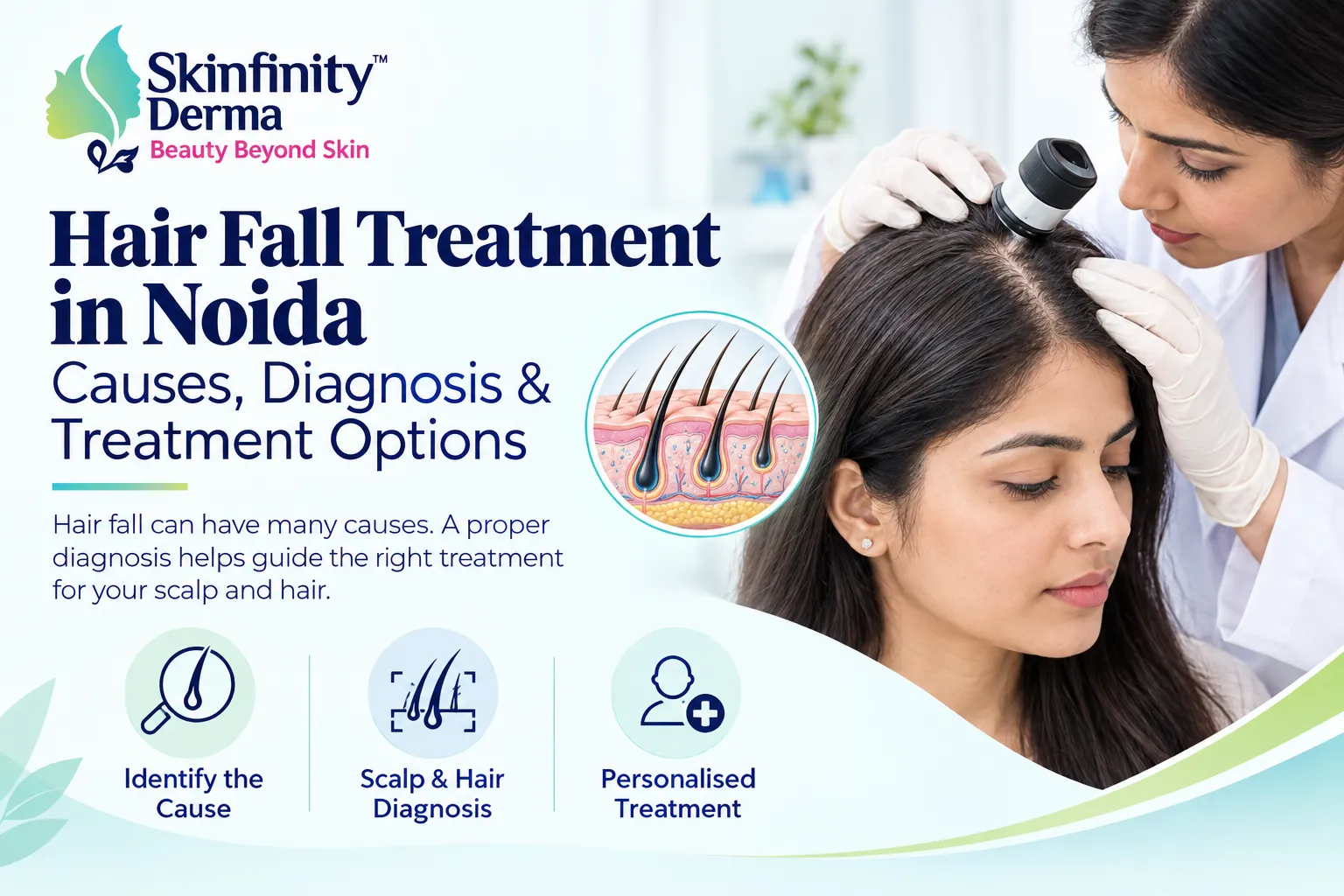
Trichoscopy uses a specialised magnifying device to examine the scalp. It can reveal differences in hair-shaft diameter or follicular openings.
The findings may help distinguish pattern hair loss from alopecia areata. They can also support the diagnosis of scarring conditions.
4. Blood Tests
Blood tests are recommended only when the history suggests a possible deficiency or hormonal concern.
Testing may include:
-
Complete blood count
-
Ferritin
-
Thyroid function
-
Vitamin B12
-
Folate
-
Vitamin D
-
Selected hormonal tests
Every patient does not need every test. The dermatologist selects investigations according to symptoms and examination findings.
5. Scalp Biopsy
A scalp biopsy is not required for most patients. It may be recommended when scarring alopecia is suspected.
A small skin sample is examined under a microscope. This can clarify the type of inflammation affecting the follicles.
Hair Fall Treatment Options in Noida
The best treatment depends on the diagnosed condition. A single serum cannot address every cause of hair loss.
1. Treating the Underlying Trigger
Temporary shedding often improves after the original trigger resolves. A confirmed nutritional deficiency should be corrected appropriately.
Thyroid dysfunction requires medical management. Scalp infection also needs condition-specific treatment.
Correcting the cause does not produce immediate regrowth. Hair follicles require time to return to the growth phase.
2. Topical Minoxidil
Topical minoxidil is commonly recommended for pattern hair loss. It may reduce shedding and support partial regrowth in suitable patients.
Temporary initial shedding can occur during early treatment. Scalp dryness or irritation may also develop.
Minoxidil requires consistent application. Benefits usually reduce after long-term treatment is stopped.
Clinical evidence supports minoxidil as a first-line option for androgenetic alopecia. However, it cannot restore every inactive follicle.
3. Oral Minoxidil
Low-dose oral minoxidil may be considered for selected patients. This use requires dermatologist supervision.
It can affect blood pressure and cause unwanted body hair. Fluid retention or changes in heart rate may also occur.
Patients should not begin oral minoxidil after reading an online dosage guide. Medical history and current medicines must be reviewed first.
4. Finasteride
Finasteride may be prescribed for suitable male patients with pattern hair loss. It reduces the hormonal pathway involved in follicle miniaturisation.
Possible side effects should be discussed before treatment. Pregnancy-related precautions are also essential because crushed tablets can pose risks.
Finasteride is not suitable for every patient. The dermatologist decides whether its potential benefits outweigh its risks.
5. Dutasteride
Dutasteride is a prescription medicine used for selected patients with androgenetic alopecia. It reduces dihydrotestosterone (DHT), a hormone involved in progressive follicle miniaturisation.
It may help slow hair thinning and support hair density in suitable patients. Its use for hair loss requires dermatologist supervision, and approval varies by country.
Possible side effects include sexual dysfunction and fertility-related concerns. Pregnancy-related precautions are essential. The dermatologist evaluates individual suitability before prescribing treatment.
6. Anti-Androgen Treatment
Selected women with hormonal hair loss may benefit from anti-androgen treatment. Spironolactone is one possible prescription medicine.
The doctor may review blood pressure and kidney function. Pregnancy prevention is also important during treatment.
Hormonal medicines should not be shared. They require follow-up and individual dosage selection.
7. Corticosteroid Treatment
Alopecia areata may be treated with topical or injected corticosteroids. The choice depends on the number and size of patches.
Treatment response varies between patients. Regrowth does not guarantee that the condition will never recur.
8. Treatment for Scalp Conditions
Anti-dandruff shampoos may help selected inflammatory scalp concerns. Fungal infections require prescription antifungal treatment.
Scalp psoriasis may need medicated lotions or other medical treatment. Random oils can sometimes worsen an inflamed scalp.
9. Platelet-Rich Plasma
PRP uses a concentrated portion of the patient’s blood. It is injected into selected thinning areas after processing.
PRP may support density in suitable pattern hair loss cases. Results vary according to follicle activity and treatment protocol.
It should be used as part of a diagnosis-based plan. PRP cannot correct thyroid disease or iron deficiency.
10. Growth Factor Concentrate
GFC treatment uses processed growth factors obtained from the patient’s blood. It is delivered into areas showing reduced density.
The treatment may be considered for selected non-scarring hair loss. Multiple sessions are usually required.
GFC does not create new follicles. It aims to support follicles that remain active.
11. Hair Mesotherapy
Hair mesotherapy involves superficial injections of selected formulations. Ingredients and treatment protocols vary between clinics.
Evidence remains less standardised than established medical treatments. Patients should understand exactly what will be injected.
Mesotherapy should not replace diagnosis. It cannot correct every nutritional or hormonal cause.
12. Low-Level Laser Therapy
Low-level laser devices may support pattern hair loss in selected patients. They usually require repeated use over several months.
Device quality and treatment schedules vary. A dermatologist can explain whether this approach fits the treatment plan.
13. Hair Transplantation
Hair transplantation redistributes follicles from a stable donor area. It may be considered for suitable patients with established pattern hair loss.
Active shedding should be assessed before surgery. The donor area must also provide sufficient healthy follicles.
A transplant does not stop continuing genetic hair loss. Medical maintenance may remain necessary afterwards.
14. Exosome Treatment
Exosome treatment is an emerging approach being studied for hair restoration. Exosomes contain tiny cell-derived particles involved in communication between cells.
Researchers are investigating their potential to support follicle activity and hair growth. However, clinical evidence remains limited, and treatment protocols are not standardised.
Exosome therapy is still considered experimental for hair loss. Its long-term safety and effectiveness require further research. Patients should discuss product safety, regulatory status and expected outcomes with a dermatologist.
15. Bicalutamide Mesotherapy
Bicalutamide mesotherapy involves delivering an anti-androgen medicine through small injections into the scalp. It is being studied for selected patients with androgenetic alopecia, particularly female pattern hair loss.
The treatment aims to reduce androgen activity around susceptible hair follicles. However, clinical evidence remains limited, and standardised protocols have not been established.
Bicalutamide mesotherapy is an off-label approach requiring careful medical assessment. Potential side effects and pregnancy-related precautions must be discussed before treatment.
16. Haircare Support
Gentle care reduces additional breakage during treatment. Avoid tight hairstyles and aggressive towel drying.
Heat styling should be limited when strands are fragile. A balanced diet should provide adequate protein.
Biotin supplements are not necessary for every patient. They are most useful when a genuine deficiency exists.
Hair Fall Treatment at SKINFINITY Derma, Noida
At Skinfinity Derma, every hair fall treatment begins with a dermatologist-led scalp assessment. Our doctors examine the pattern of thinning and review possible medical triggers. This helps distinguish temporary shedding from progressive or inflammatory hair loss.
The personalised treatment plan may include prescribed medication or topical therapy. Suitable patients may also be considered for PRP, growth factor therapy or hair mesotherapy. Additional options include scalp microneedling, QR678 therapy and hair transplantation. The recommended approach depends on the diagnosis and follicle activity.
Patients searching for a hair fall doctor in Noida can visit SKINFINITY Derma in Sector 36 near Logix Mall. Explore our hair treatments? or book a consultation for personalised hair loss treatment in Noida.
When Should You See a Dermatologist for Hair Fall?
Consult a dermatologist when hair fall continues for several weeks. Early care becomes particularly important when density is visibly decreasing.
Seek professional assessment if hair loss:
-
Begins suddenly
-
Produces bald patches
-
Causes a widening part
-
Affects the frontal hairline
-
Occurs with scalp pain
-
Develops with redness
-
Causes heavy scaling
-
Follows rapid weight loss
-
Appears with irregular periods
-
Occurs alongside facial hair growth
-
Begins after new medication
-
Leaves smooth or shiny areas
-
Affects the eyebrows
-
Causes significant emotional distress
A dermatologist in Noida for hair fall can distinguish temporary shedding from progressive loss. This reduces the risk of wasting time on unsuitable treatments.
Scarring hair loss requires particularly prompt care. Once a follicle becomes permanently scarred, regrowth may not occur.
What Is the Best Treatment for Hair Fall in Noida?
There is no single best treatment for every case of hair fall. The most effective option depends on the diagnosis. Pattern hair loss may respond to topical minoxidil or prescription treatment. Alopecia areata requires an immune-focused approach. Telogen effluvium improves after the trigger is addressed. Deficiency-related hair loss requires correction of the confirmed deficiency.
PRP or GFC may support selected patients. They should not replace appropriate medical treatment. The best hair fall treatment in Noida begins with a dermatologist-led assessment. Treatment should target the condition rather than only its visible symptoms.
Conclusion
Hair fall can develop after stress or illness. Genetics and medical conditions can also reduce density. The correct diagnosis determines whether treatment requires medicine, nutritional correction or a clinical procedure. Early dermatologist assessment is especially important for patchy or progressive hair loss. At SKINFINITY Derma, patients receive personalised hair fall treatment in Noida based on scalp findings and realistic treatment goals. Connect with us to learn more about suitable hair fall treatment options.
Frequently Asked Questions
1. What Causes Excessive Hair Fall?
Excessive shedding may follow illness or rapid weight loss. Nutritional deficiencies and thyroid disorders can also contribute.
Genetic hair loss usually develops more gradually. A dermatologist can identify the likely cause from the pattern and history.
2. When Should I See a Dermatologist for Hair Fall?
Consult a dermatologist when shedding continues or visible thinning develops. Sudden bald patches also require prompt assessment.
Scalp pain or redness should not be ignored. Early treatment can help protect follicles in inflammatory conditions.
3. How Is the Cause of Hair Fall Diagnosed?
Diagnosis involves a medical history and scalp examination. Trichoscopy may provide a closer view of the follicles.
Blood tests are ordered when deficiency or hormonal causes are suspected. A scalp biopsy is occasionally required.
4. Can Nutritional Deficiencies Cause Hair Fall?
Yes. Low iron stores can contribute to diffuse hair shedding. Vitamin B12 or folate deficiency may also affect selected patients.
Protein deficiency can occur after restrictive dieting. Supplements should only be taken when a genuine need is identified.
 Call Now
 WhatsApp