

Medically Reviewed by: Dr. Ipshita Johri
MBBS, DDV | Skinfinity Derma Clinic
Read Time: 8 Minutes
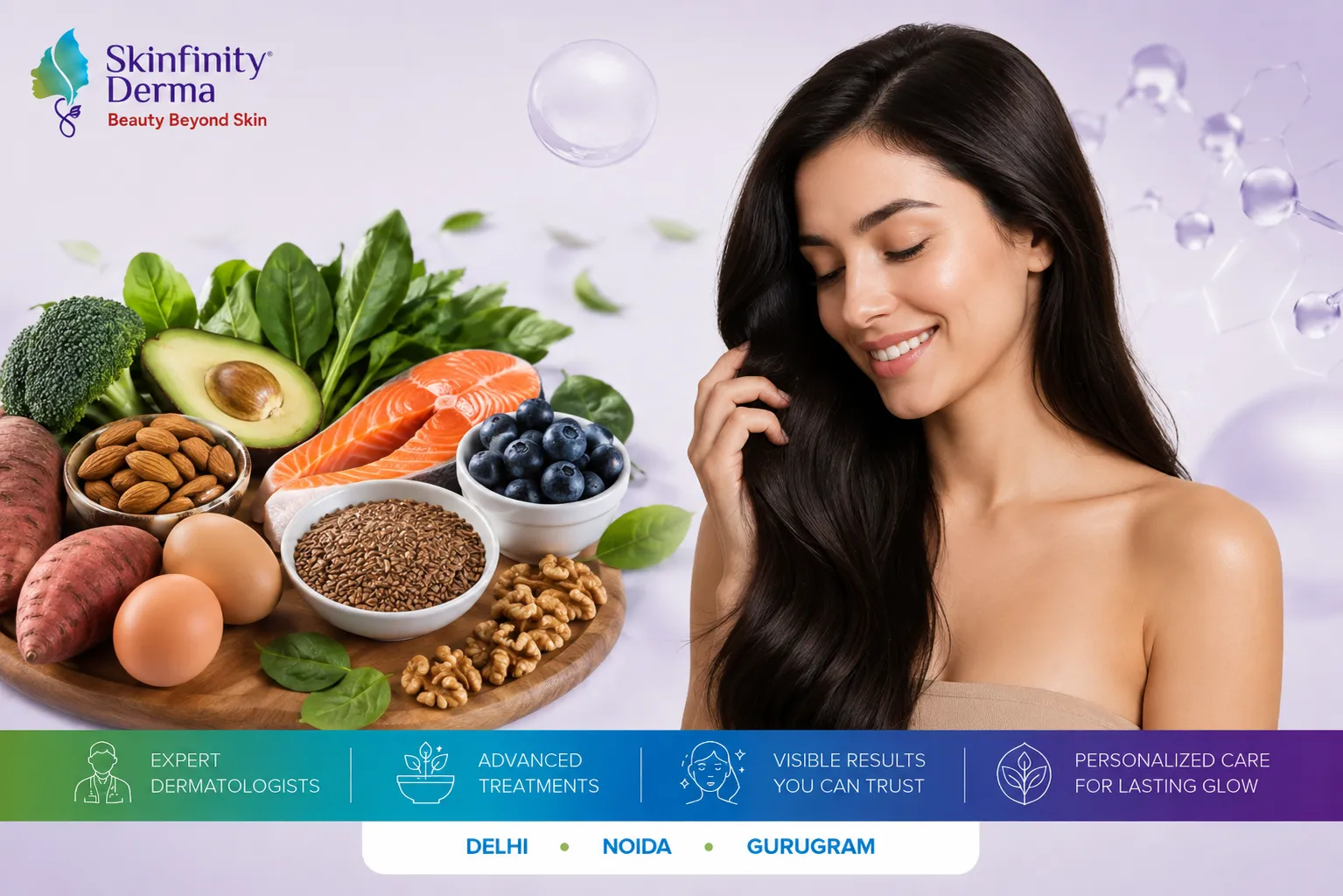
Healthy hair does not begin with one miracle ingredient. It begins with a balanced diet that supplies the protein, vitamins, minerals and healthy fats involved in normal hair production. Eggs, leafy greens, lentils, berries, nuts and seeds are among the best foods for healthy hair because they contribute nutrients such as protein, iron, zinc, biotin and vitamin C.
However, food is only one part of hair health. Genetics, hormones, thyroid disorders, stress, illness, medicines and scalp conditions can also cause hair loss. A good diet for hair growth can correct nutritional gaps and support healthy follicles. It cannot treat every type of hair loss on its own.
This guide explains how nutrition affects hair and lists 15 useful hair growth foods for vegetarian and non-vegetarian diets.
How Does Diet Affect Hair Growth?
Hair grows from follicles beneath the skin. Each follicle passes through a cycle of active growth, transition, rest and shedding. Hair is largely made from keratin which is a protein. The body also needs energy and micronutrients to form new cells and support the follicle.
A restrictive diet can disturb this process. The American Academy of Dermatology states that inadequate protein or iron and eating too few calories may contribute to hair loss. Low levels of biotin or zinc can also cause noticeable shedding. Restoring a confirmed deficiency may allow hair to regrow. However, taking more of a nutrient when levels are already normal does not necessarily improve growth.
Diet affects hair in several ways:
-
Protein supplies amino acids used to build keratin.
-
Iron supports haemoglobin which carries oxygen through the body.
-
Zinc participates in cell growth and tissue repair.
-
Vitamin C supports collagen formation and improves the absorption of plant-based iron.
-
Vitamins A and D support normal cell and follicle functions.
-
Vitamin B12 and folate help the body produce healthy red blood cells.
-
Healthy fats provide energy and help the body absorb fat-soluble vitamins.
Top 15 Foods That Support Hair Growth
The best food for hair growth is not a single item. A varied plate is more useful because different foods supply different nutrients. The following options can be combined across meals according to personal preferences and medical needs.
-
Eggs: A Good Source of Protein for Healthier Hair
Eggs are a complete source of protein and are rich in biotin, vitamin B12, selenium, and zinc. Protein is used to make keratin, and biotin is involved in the metabolism of fats, carbohydrates, and amino acids.
Thinning hair is rare and can be caused by biotin deficiency. It is important to cook eggs thoroughly to inactivate avidin in egg whites that can block the absorption of biotin if eaten regularly in large quantities.
Incorporate boiled eggs into breakfast or make an omelette stuffed with veggies. Those who are not consuming eggs can get their protein from dairy, soy foods, beans, and lentils.
2. Spinach and Other Leafy Greens for Hair Health
Leafy greens, such as spinach, amaranth leaves, kale, and other leafy greens, are a source of folate, vitamin C, and plant-based iron. Iron helps to produce red blood cells. Increased hair loss may be a symptom of iron deficiency, as can be pale, breathless, or tiredness.
Feeding animal-source iron is more readily absorbed than plant-source iron. Accompany greens with a source of vitamin C, like lemon, amla, tomatoes, or bell peppers. This easy treatment can increase iron absorption. Don’t think that using spinach alone can cure anemia. If confirmed, this may involve medical evaluation and treatment.
3. Fatty Fish for Omega-3 and Healthy Hair
Salmon, sardines, trout, and mackerel are good sources of quality protein and omega-3 fats. Fatty fish are also good sources of vitamin D and vitamin B12. These nutrients support general health and contribute to a balanced diet.
There is no evidence that omega-3-rich fish is an effective treatment for hair loss. However, it is an important source of protein and beneficial fats as part of a well-balanced diet. Avoid heavily fried fish and opt for grilled, baked, or lightly cooked fish. Chia seeds, flaxseeds, and walnuts provide a form of omega-3 fat known as ALA, which the body can convert into forms that support health.
4. Nuts and Seeds for Hair Growth
Nuts are an easy-to-grab source of nutrients that stimulate hair growth, such as almonds, walnuts, peanuts, pumpkin, sunflower, chia, and flax. The protein, zinc, vitamin E, biotin, and healthy fats are in the varieties they offer.
Serve as a snack or mix in oats, curd, and salads. Nuts and seeds are a concentrated source of energy. Because it is quite calorie-dense, it’s easier to add it in moderation without adding too many calories. Allergic individuals should steer clear of the particular nut or seed and opt for another source of the nutrient.
5. Sweet Potatoes for Vitamin A and Scalp Health
Sweet potatoes are rich in beta-carotene, which the body converts into vitamin A. This vitamin supports normal growth and helps maintain healthy skin and scalp.
Although vitamin A is essential, more is not necessarily better. Too much vitamin A from supplements can cause hair loss. Foods containing beta-carotene are safer sources of vitamin A than supplements because the body controls its conversion. Enjoy roasted sweet potatoes or add them to chaat, soups, and vegetable bowls.
6. Avocado: Superfood for Healthy Hair and Scalp
Avocado is a source of monounsaturated fat, vitamin E, folate, and a small amount of biotin. Good fats are essential for proper nutrition and in order to absorb vitamins A, D, E, and K.
Avocado can be used for toast, salads, or smoothies. It is healthy but not mandatory for healthy hair. Oils, seeds, and locally available oils can be used to get healthy fats at a more affordable price. It is more important to be consistent and have diet variety than to choose one of the high-priced foods.
7. Greek Yogurt and Other Protein-Rich Foods
Greek yogurt is a source of protein and vitamin B12. Milk, paneer, tofu, tempeh, soy chunks, chicken, and lean meat are also nutritious food options that are rich in protein.
Distribute protein throughout the day instead of at nighttime meals. Include yogurt in breakfast or lunch. Have tofu/paneer in a vegetable dish. If necessary, mix with curd or other protein source. Lactose-free dairy products and fortified soy products are options for anyone who is lactose intolerant.
8. Natural Food Sources of Antioxidants
Strawberries, blueberries, raspberries, and mulberries are a good source of vitamin C and plant compounds that have antioxidant activity. Vitamin C promotes the production of collagen and assists the body in absorbing non-heme iron present in plant foods.
It can be costly or seasonal in India to get your hands on berries. Other good sources of vitamin C are guava, amla, oranges, kiwi, and bell peppers. Serve fruit with breakfast or an iron-rich meal. Although fruit is nutritious, applying fruit juice directly to the scalp is unnecessary and may cause irritation.
9. Lentils and Beans for Iron and Protein
Lentils, chickpeas, kidney beans, black-eyed peas, and soybeans are particularly beneficial in a vegetarian diet for hair growth. They are a source of protein, iron, zinc, and folate.
Eat whole grains and vegetables with dal or beans to complete the meal. Add lemon, tomatoes, or other sources of vitamin C to aid in iron absorption. Properly cooking and soaking legumes can be beneficial for digestibility. Individuals who have been experiencing bloating can start with smaller amounts and increase gradually.
10. Amla for Hair Growth & Hair Health
Amla is a source of vitamin C and has a beneficial effect on the body’s absorption of iron from plants. It is also a source of antioxidant nutrients in the diet. Fresh amla, amla powder that is not sweetened, or lower in sugar can be added to food.
Amla is touted as a surefire solution to growing hair. There’s no concrete proof at the moment that amla is effective in treating medical hair loss. It is most useful in terms of vitamin C content as a fruit. Opt for forms with the least added sugar, as amla candies and juices may have high amounts of added sugar.
11. Carrots for Vitamin A and Hair Health
Carrots are another source of beta-carotene. They support normal vitamin A intake and add fibre and antioxidants to the diet. Eat them raw with meals or use them in soups, sabzi and mixed vegetable dishes.
Carrot juice is not more effective for hair growth than whole carrots. Whole vegetables usually provide more fibre and are easier to fit into a balanced diet. Keep portions varied and include vegetables of different colours rather than eating only carrots every day.
12. Foods Rich in Biotin for Hair Growth
Eggs, fish, meat, nuts, seeds and sweet potatoes contain biotin. Legumes and some whole grains also contribute to intake. Most people can obtain enough through a varied diet, and true deficiency is rare.
Biotin supplements are widely marketed for hair. They are unlikely to help when a person is not deficient. High-dose biotin may also interfere with certain laboratory tests, including some thyroid and heart-related tests. Ask a clinician before starting a supplement and always mention biotin use before a blood test.
13. Iron-Rich Foods to Help Reduce Hair Fall
Iron-rich foods include lean meat, seafood, beans, lentils, leafy greens, nuts and fortified cereals. Animal foods contain haem iron, which is generally absorbed more easily. Plant foods contain non-haem iron, which is absorbed better when eaten with vitamin C.
Iron is particularly important for people with heavy periods, pregnancy, restrictive diets or a history of anaemia. Do not self-prescribe iron tablets for hair fall. Excess iron can be harmful. A clinician can use blood tests and symptoms to determine whether supplementation is appropriate.
14. Vitamin D and Vitamin B12 Foods for Hair
Fatty fish and fortified foods are important dietary sources of vitamin D. Egg yolks and some dairy foods contain smaller amounts. Vitamin B12 naturally occurs in fish, eggs, milk, yogurt, cheese and other animal-derived foods. Fortified cereals, fortified nutritional yeast and fortified plant milks can help people following a vegan diet.
Food alone may not always correct low vitamin D or B12. This is particularly relevant for people with limited sun exposure, vegan diets or absorption problems. Testing and professional advice can identify whether treatment is needed.
15. Zinc-Rich Foods for Strong Hair
Zinc supports cell division, protein production and tissue repair. Good sources include meat, fish, eggs and dairy. Vegetarian sources include beans, nuts, seeds and whole grains, although zinc from these foods may be absorbed less efficiently because of phytates.
A diverse diet usually supplies zinc. Avoid high-dose zinc without medical advice because excess intake can cause nausea and interfere with copper status. Food-first choices include pumpkin seeds in breakfast, chickpeas at lunch or yogurt as a snack.
Foods to Avoid for Better Hair Health
No single food automatically causes hair fall in everyone. The larger concern is an eating pattern that crowds out protein and micronutrient-rich foods or creates extreme calorie restriction.
Limit the following:
-
Crash diets and very low-calorie plans that can trigger increased shedding.
-
Meals dominated by ultra-processed foods with little protein, fruit or vegetables.
-
Frequent sugary drinks and sweets that add calories without substantial nutrition.
-
Excess alcohol, which can displace nourishing food and affect overall health.
-
High-dose hair supplements taken without evidence of deficiency.
-
Excess vitamin A or selenium supplements which may contribute to hair loss.
There is usually no reason to remove gluten, dairy or another entire food group unless a qualified professional identifies an allergy, intolerance or medical need. Unnecessary restriction can create new nutrient gaps.
How to Create a Balanced Diet for Hair Growth
A sustainable diet for hair growth should provide enough food each day and include several nutrient groups. It does not need complicated recipes or expensive imported ingredients.
Use this simple structure:
-
Include a protein source at every main meal. Choose eggs, fish, chicken, yogurt, paneer, tofu, soy, dal or beans.
-
Eat a variety of vegetables. Include leafy greens several times per week and rotate colours.
-
Pair plant-based iron with vitamin C. Add lemon to dal or eat guava, amla or an orange with an iron-rich meal.
-
Add healthy fats in sensible portions. Use nuts, seeds, avocado or suitable cooking oils.
-
Choose whole grains and minimally processed carbohydrates for energy and fibre.
-
Avoid prolonged calorie restriction. Seek dietary support when pursuing substantial weight loss.
-
Drink enough fluids based on climate, activity and health needs.
A vegetarian day could include vegetable poha with peanuts and curd for breakfast. Lunch may contain rajma, rice, salad and lemon. A snack can include fruit with pumpkin seeds. Dinner may combine tofu or paneer with vegetables and roti. Individual protein and calorie needs vary according to body size, activity, age and medical conditions.
How We Support Your Hair Growth Journey
A balanced diet can support healthy hair, but persistent hair fall may require professional treatment. At Skinfinity Derma, we examine your scalp, medical history, and pattern of hair loss to identify the possible cause. Our personalized hair treatments? may include growth factor therapy, mesotherapy, scalp microneedling, QR678, exosome therapy, or other suitable options.
Our goal is to address the underlying concern and create a treatment plan based on your hair and scalp condition. Book a consultation with our experts to begin your personalized hair growth journey.
When Should You See a Dermatologist for Hair Fall?
Consult a dermatologist when hair loss is sudden, persistent or worsening. Medical advice is also important for bald patches, widening of the part, scalp pain, redness, scaling, scarring or loss of eyebrows and eyelashes. Seek assessment when shedding follows illness, childbirth, rapid weight loss or a new medicine.
A dermatologist can examine the pattern and scalp. Blood tests may be recommended to assess iron, thyroid function or specific vitamins when the history suggests a deficiency. Early diagnosis matters because some forms of hair loss respond better when treated promptly.
Food alone cannot resolve hereditary pattern hair loss, alopecia areata, scarring alopecia, hormonal disorders or an active scalp disease. A nourishing diet can support treatment but should not delay medical care.
Final Thoughts
The best foods for healthy hair are ordinary nutrient-rich foods eaten consistently. Build meals around adequate protein. Add iron-rich ingredients, colorful vegetables, vitamin C-rich fruit, and moderate amounts of nuts or seeds. This approach supports the body without relying on miracle foods or unnecessary supplements.
If hair fall remains excessive despite a balanced diet, the next step is an accurate diagnosis. A dermatologist can identify the cause and recommend suitable tests or treatment while nutrition continues to support overall hair health.
Book a consultation with Skinfinity Derma for personalized hair and scalp care.
FAQs
1. What is the best food for hair growth?
There is no one definitive food that is best for hair growth. The combination of eggs, fish, lentils, beans, leafy greens, yogurt, nuts, and seeds contributes to normal hair growth with their protein, iron, zinc, and vitamins. Offer a variety of foods over the week to satisfy a variety of nutritional requirements. Diet diversity is better than using one particular ingredient.
2. Which foods help reduce hair fall?
Foods that are high in protein and iron can be beneficial during shedding if it is due to poor nutrition or low iron levels. Eggs, lentils, beans, fish, leafy greens, and fortified foods are good options. Vitamin C-rich foods can also help to absorb plant-based iron. If hair loss continues, it is important to seek medical evaluation to determine the cause of the hair loss.
3. What should I eat daily for hair growth?
Add protein to each of the main meals and vegetables, fruit, whole grains, and healthy fats. Rotate the foods throughout the week to get a wider variety of nutrients. Eggs, yogurt, paneer, tofu, lentils, and beans are good sources of protein. Include nuts or seeds, in moderation, to boost healthy fats and minerals.
4. Which fruits are best for hair growth?
Vitamin C can be obtained from amla, guava, oranges, kiwi, and berries. This vitamin helps to produce collagen and enhance the absorption of iron from plant-based foods. These fruits also contain antioxidants which help promote well-being. Drink fruit rather than fruit drinks and avoid sweetened drinks.
5. Which vegetables are good for hair growth?
Good options include leafy greens, sweet potatoes, carrots, bell peppers, and broccoli. They are a source of iron, folate, beta-carotene, and vitamin C and are a way to get a variety of nutrients by eating vegetables of different colors. Combine with a source of vitamin C, such as lemon, for iron absorption with leafy greens.
6. Are eggs good for hair growth?
Eggs provide all of the protein, biotin, vitamin B12, selenium, and zinc. They help with nutrient levels but won’t fix all hair loss issues. Well-cooked eggs can be incorporated into a well-balanced breakfast or meal. Those who are not egg eaters can opt for dairy, tofu, soy, lentils, and beans.
7. Does eating nuts help hair growth?
Nuts are a source of protein, good fats, and minerals. They may help to maintain a healthy diet, but increasing the amount of nuts consumed will not necessarily accelerate growth or cure medical hair loss. Almonds, walnuts, and peanuts can be consumed as snacks or incorporated into meals. Use nuts in moderation since they are high in calories.
8. Which foods are rich in biotin for hair growth?
Biotin is found in eggs, fish, meat, nuts, seeds, and sweet potatoes. Deficiency is uncommon, and supplements should not be given on a regular basis unless prescribed by a health care provider. Other whole grains and legumes can also be a source of biotin for the day. Biotin can be obtained from a wide variety of foods, and most healthy individuals will obtain sufficient amounts in this way.
9. What foods are high in iron for healthy hair?
Heme iron is found in lean meat and seafood. Non-heme iron is found in lentils, beans, leafy greens, nuts, and fortified cereals. Lemon, amla, guava, tomatoes, and bell peppers can help with the absorption of iron when eaten with plant sources. If a deficiency is known, treatment may be necessary, as well as dietary changes.
10. Can a protein-rich diet help with hair growth?
Keratin production is supported by adequate protein intake; this may be helpful if protein intake has been inadequate in the past. Too much protein is not necessarily equated with quicker or thicker growth. Distribute protein throughout the day at breakfast, lunch, and dinner to maintain a regular protein intake. Select a variety of eggs, dairy, fish, meat, soy, lentils, and beans based on preference.
11. Which foods are rich in vitamin D and B12?
Fortified milk and plant milks can also be good sources of vitamin D, and fatty fish is a good source. Vitamin B12 can be found in eggs, dairy products, fish, and fortified foods. Inadequate intake of vitamin B12 from unfortified foods may be a challenge for those on a vegan diet. A health care provider can suggest testing or supplements if needed.
12. What foods should I avoid if I have hair fall?
Don’t crash diet and overindulge in ultra-processed foods. Avoid taking high doses of vitamins and minerals unless there is a deficiency. Limit foods and beverages that are high in sugar and/or calories but low in beneficial nutrients. Eat a well-balanced meal rather than eliminating entire food groups.
13. How long does it take to see hair improvement after changing your diet?
The changes should be noticeable in several months as hair grows slowly. The time frame will vary depending on the cause, the severity, and whether the deficiency has been addressed. It’s more important to have a consistent nutrition plan than a short-term diet. If shedding persists or increases, consult a professional.
14. Can food alone stop excessive hair fall?
No. Diet has a beneficial effect when poor intake or deficiency is a cause of shedding. Hair loss can be caused by excess hair fall due to various reasons, such as genetic, hormonal, autoimmune, medical, or scalp-related, and requires diagnosis and treatment. However, food can help promote healthy hair, but it is no substitute for proper medical treatment. It is important to be able to determine the cause before a treatment plan is decided upon.
15. When should I consult a dermatologist for hair loss?
If you experience sudden or irregular hair loss, ongoing hair loss, visible changes in your scalp, or gradual hair thinning, seek help. Consultation is also recommended when hair loss is a concern or is affecting one’s well-being. A dermatologist can look at the scalp and recommend appropriate tests. Early diagnosis can help to prevent some forms of hair loss from becoming more difficult to treat.
 Call Now
 WhatsApp