

Medically Reviewed by: Dr. Neha Dhankar
MBBS, MD (Dermatology, Venereology & Leprosy) | Skinfinity Derma Clinic
Read Time: 8 Minutes
A dark patch can appear after a pimple heals. Another may develop gradually after repeated sun exposure. Although these marks look similar, their causes and treatments can be different.
Pigmentation develops when certain areas produce more melanin than the surrounding skin. Hormonal changes may increase this activity. Inflammation from acne or an irritating skincare product can also leave visible discolouration.
Understanding the causes of pigmentation on face helps prevent unsuitable treatment. A strong peel may worsen sensitive skin, while a brightening serum cannot correct every medical condition.
This guide explains why pigmentation on face develops and how dermatologists diagnose it. It also covers suitable skincare and professional pigmentation treatment options.
What Is Facial Pigmentation?
Facial pigmentation refers to areas that appear darker than a person’s natural skin tone. These areas may look brown or bluish. Melanin is the natural pigment responsible for much of the skin’s colour. It is produced by cells called melanocytes.
Certain triggers can increase melanin production within selected areas. The pigment may remain within the epidermis or settle deeper inside the dermis. Epidermal pigmentation often looks brown and may respond faster to treatment. Deeper pigmentation can appear grey-brown or bluish. It usually requires a longer treatment period.
Facial pigmentation may appear as individual spots or larger patches. Its pattern can provide clues about the underlying cause. Not every dark area is harmless pigmentation. A changing mole or unusual patch requires a dermatologist assessment.
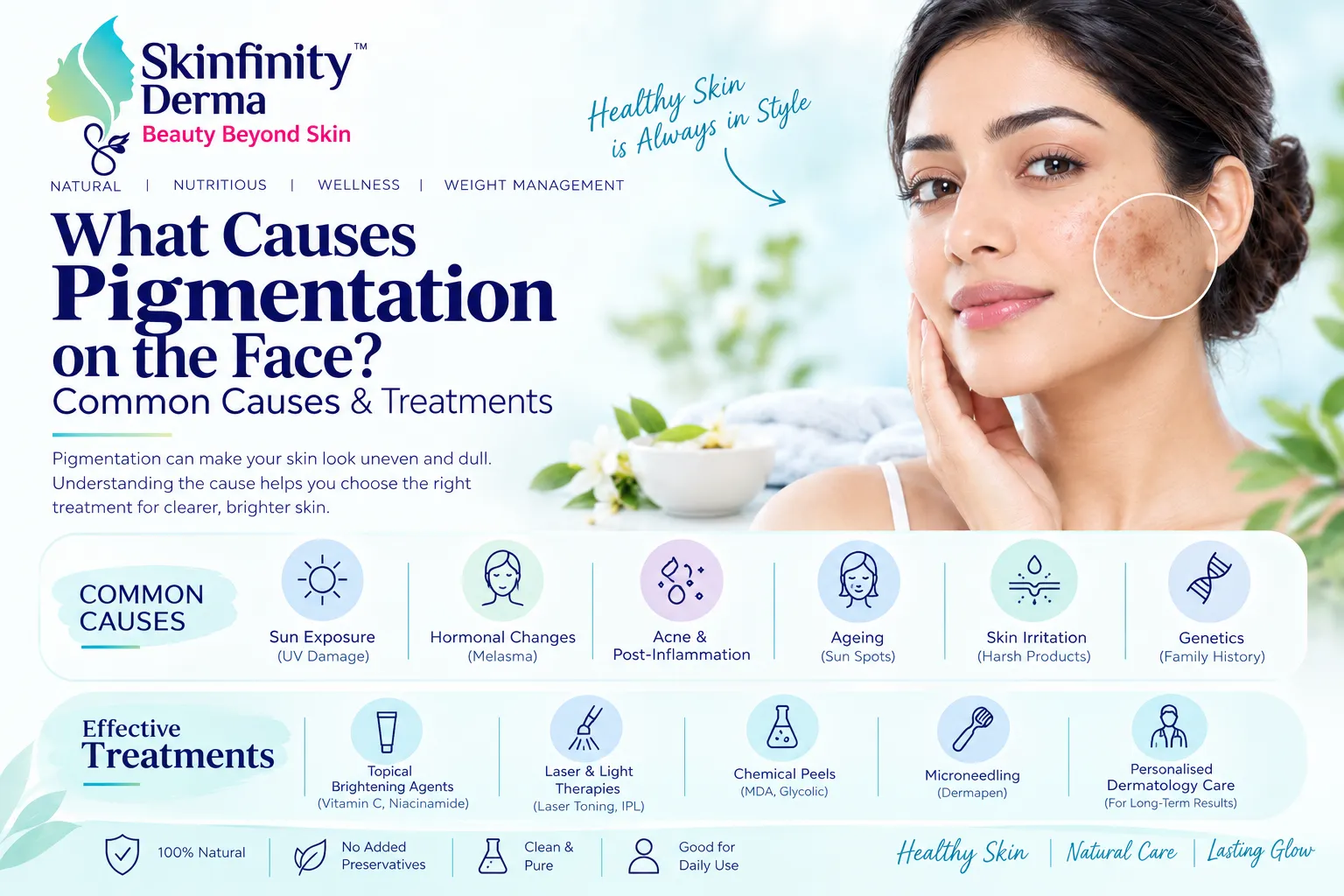
What Causes Pigmentation on the Face?
The causes of facial pigmentation can involve external exposure or skin inflammation. Some cases develop because of an underlying condition.
1. Sun Exposure
Ultraviolet radiation stimulates melanocytes to produce additional melanin. This response creates tanning and can darken existing marks.
Repeated exposure may cause sunspots over time. The cheeks and forehead are particularly vulnerable because they receive regular sunlight.
Visible light may also worsen certain pigmentation disorders. This effect is especially relevant for melasma and post-inflammatory hyperpigmentation.
2. Acne
Inflamed acne can leave flat brown marks after healing. This condition is known as post-inflammatory hyperpigmentation.
Dark marks are more likely after deep or repeatedly picked pimples. Picking adds inflammation and delays proper healing.
Post-acne pigmentation is different from an acne scar. A mark changes skin colour, while a scar changes the skin’s texture.
3. Hormonal Changes
Hormonal fluctuations can stimulate facial melanin production in susceptible people. This process commonly contributes to melasma.
Pregnancy may trigger new facial patches or darken existing ones. Hormonal contraception can also influence pigmentation.
Hormonal medicines should not be stopped without advice from the prescribing doctor.
4. Melasma
Melasma causes irregular brown or grey-brown facial patches. It frequently appears on both sides of the face.
Sunlight often makes melasma more prominent. Heat may also contribute to recurring pigmentation in certain patients.
Melasma frequently returns after improvement. Maintenance skincare and careful sun protection are therefore important.
5. Contact Dermatitis
Contact dermatitis can develop after the skin reacts to a product. Fragrance and hair dye are possible triggers.
Pigmentation may remain after redness becomes less visible. This reaction can be especially noticeable in deeply pigmented skin.
6. Medicines
Certain medicines can create brown or blue-grey facial pigmentation. The appearance depends on the medicine and treatment duration.
Drug-related pigmentation requires medical assessment. Patients should not discontinue prescribed medicine independently.
7. Friction
Repeated rubbing can gradually darken selected facial areas. This may happen around the mouth or under the eyes.
Frequent wiping and scratching can produce additional inflammation. Treating the reason for rubbing is necessary for improvement.
8. Medical Conditions
Darkening around the neck or face may occur with acanthosis nigricans. This condition can be associated with insulin resistance.
Certain endocrine disorders can also change skin pigmentation. Sudden or extensive darkening requires professional evaluation.
9. Nutritional Deficiencies
Selected nutritional deficiencies may affect the skin’s appearance. However, facial pigmentation should not automatically be blamed on vitamin levels.
A confirmed deficiency requires appropriate correction. Random supplements are unlikely to treat pigmentation and may cause unwanted effects.
10. Cosmetic Procedures
Aggressive facials can produce inflammation. Strong chemical peels or incorrect laser settings can also worsen pigmentation.
This reaction is called post-inflammatory hyperpigmentation. The risk is particularly important in Indian skin.
Common Types of Pigmentation on the Face
Different pigmentation disorders can have similar appearances. Correct identification helps determine the safest treatment.
1. Melasma
Melasma usually creates symmetrical patches across the cheeks or forehead. The upper lip may also be affected.
Its development can involve hormonal factors and light exposure. Recurrence is common without maintenance care.
2. Post-Inflammatory Hyperpigmentation
This pigmentation develops after inflammation or injury. Acne is a common trigger, although eczema can also leave marks.
The colour may range from light brown to grey. Deeper pigment usually takes longer to improve.
3. Sunspots
Sunspots are flat brown areas that develop after cumulative exposure. They commonly appear on facial areas that receive regular sunlight.
These marks should be assessed before cosmetic treatment. Some skin cancers can resemble harmless pigmentation.
4. Drug-Induced Pigmentation
Medicine-related pigmentation can appear brown or blue-grey. The distribution depends on the responsible drug.
Medical history is essential for diagnosis. The prescribing doctor should be involved in treatment decisions.
Where Can Facial Pigmentation Appear?
Pigmentation can develop across the entire face or remain limited to one area.
Common locations include:
-
Forehead
-
Cheeks
-
Upper lip
-
Chin
-
Nose
-
Temples
-
Under-eye area
-
Jawline
-
Area surrounding the mouth
-
Hairline
The location can provide useful diagnostic information. Symmetrical cheek pigmentation may suggest melasma.
Marks along the jawline may follow acne. Pigmentation around the hairline can develop after contact with hair colour.
Under-eye darkness may involve pigment or shadowing from facial structure. Thin skin and visible blood vessels can also affect its appearance. Every dark under-eye area therefore does not require a pigment-reducing treatment.
How Is Facial Pigmentation Diagnosed?
Diagnosis begins with a detailed examination. The dermatologist studies the colour and distribution of the patches.
The consultation may include questions about:
-
When the pigmentation began
-
Whether it changes with sun exposure
-
Previous acne or skin irritation
-
Current skincare products
-
Hormonal medicines
-
Recent cosmetic procedures
-
Family history
-
Associated itching or scaling
A dermatoscope may be used to examine pigment patterns more closely. This handheld instrument magnifies the skin without causing discomfort.
A Wood’s lamp may sometimes help estimate pigment depth. Its usefulness can vary according to the condition and skin tone. Blood tests are not required for every patient. They may be advised when symptoms suggest a nutritional or hormonal concern. A skin biopsy is rarely necessary. It may be considered when the diagnosis remains uncertain.
Treatment Options for Pigmentation on the Face
Effective pigmentation treatment begins by removing or controlling the trigger. Brightening products cannot work consistently while inflammation continues.
1. Daily Sunscreen
Sunscreen is central to almost every facial pigmentation plan. It helps prevent existing patches from becoming darker.
Use a broad-spectrum sunscreen with SPF 30 or higher. Apply it across the face and exposed neck.
Tinted sunscreen containing iron oxides may offer visible-light protection. This can benefit people with melasma or post-inflammatory pigmentation.
2. Azelaic Acid
Azelaic acid can help with acne and residual pigmentation. It may suit people experiencing active breakouts alongside dark marks.
Mild stinging can occur initially. The frequency should match individual skin tolerance.
3. Niacinamide
Niacinamide supports the skin barrier and may improve uneven-looking tone. It is available in moisturisers and leave-on serums.
A high concentration does not guarantee better results. Strong formulations can irritate sensitive skin.
4. Vitamin C
Vitamin C provides antioxidant support and may gradually improve visible dullness. Results depend on product stability.
It should be used alongside sunscreen. Persistent burning is a reason to discontinue the product.
5. Retinoids
Retinoids increase skin-cell turnover and can improve selected post-acne marks. They may also treat active comedonal acne.
Dryness can develop during the adjustment period. A dermatologist may recommend a gradual introduction.
Pregnancy precautions apply to retinoid use. Medical guidance should be followed carefully.
6. Hydroquinone
Hydroquinone reduces melanin production and may be prescribed for selected conditions. It is usually recommended for a defined period.
Unsupervised use can cause irritation or rebound pigmentation. Long-term misuse may produce difficult discolouration.
7. Tranexamic Acid
Topical tranexamic acid may be considered for selected melasma patients. Oral treatment requires a complete medical assessment.
Oral tranexamic acid can affect blood clotting. It should not be taken without dermatologist supervision.
8. Kojic Acid
Kojic acid is included in some pigment-control formulations. It works by reducing processes involved in melanin production.
Sensitive skin may become irritated. It should not be combined freely with several other active ingredients.
9. Chemical Peels
Superficial chemical peels can help selected epidermal pigmentation. Glycolic acid or salicylic acid may be used depending on the diagnosis.
Stronger peels increase the risk of inflammation. Deeper injury can lead to post-inflammatory pigmentation in Indian skin.
10. Microneedling
Microneedling creates controlled stimulation within the skin. It may support selected pigmentation treatment plans.
The procedure should not be performed over inflamed acne or active infection. Depth must be adjusted carefully for the treatment area.
11. Laser Treatment
Selected lasers can target specific pigment types. The dermatologist must consider skin tone and pigment depth.
Excessive heat may worsen melasma. Conservative parameters and test spots can reduce unnecessary risk.
Laser treatment should not be presented as a permanent cure. Maintenance skincare remains necessary after improvement.
How to Prevent Pigmentation From Getting Worse
1. Treat Acne Promptly
Active acne creates new inflammation and fresh marks. Early treatment can reduce the risk of pigmentation.
Avoid squeezing pimples. Picking also increases the possibility of permanent scarring.
2. Keep the Skincare Routine Gentle
Use a mild cleanser that does not leave the skin tight. Apply a suitable moisturiser after treatment products.
Avoid introducing several active ingredients together. This makes irritation harder to identify.
3. Stop Irritating Home Remedies
Lemon juice can damage the skin barrier. Toothpaste and baking soda are also unsuitable facial treatments.
Burning is not evidence that pigmentation treatment is working.
4. Reduce Friction
Avoid rubbing itchy or irritated skin. Repeated friction can stimulate pigmentation.
A dermatologist can identify the cause of persistent itching. Treating that cause prevents repeated injury.
When Should You See a Dermatologist for Facial Pigmentation?
Some post-acne marks can improve with sunscreen and suitable skincare. However, persistent pigmentation requires professional assessment. Consult a dermatologist when pigmentation:
-
Appears suddenly
-
Spreads rapidly
-
Becomes itchy
-
Develops scaling
-
Changes shape or colour
-
Begins after a new medicine
-
Worsens after a procedure
-
Includes a changing mole
-
Does not improve with regular care
-
Affects confidence significantly
What Are the Main Causes of Pigmentation on the Face?
The main face pigmentation causes include sun exposure and acne-related inflammation. Melasma is another frequent cause in adults.
Skin irritation can leave persistent discolouration. Hormonal changes may also stimulate melanin production. Some cases develop after medication use or cosmetic procedures. Medical conditions should be considered when pigmentation appears suddenly.
The pattern and colour help guide diagnosis. However, similar-looking conditions can require different treatments.
Facial Pigmentation Treatment at SKINFINITY Derma
At SKINFINITY Derma, treatment begins with a dermatologist-led assessment. Our doctors examine the pigment pattern and its possible triggers.
Active acne or dermatitis is treated before pigment-focused procedures. This approach helps prevent new marks from developing.
Depending on the diagnosis, treatment may include medical skincare or superficial chemical peels. Selected patients may benefit from microneedling or carefully planned laser treatment.
Patients can visit our clinic in Sector 36, Noida. Dermatologist-led pigmentation care is also available at our Sector 28 clinic in Gurgaon.
Book a consultation with SKINFINITY Derma for a personalised facial pigmentation assessment and suitable maintenance plan.
Conclusion
Facial pigmentation can develop after sun exposure or skin inflammation. Hormonal changes and unsuitable skincare may also contribute. Effective treatment begins with an accurate diagnosis because every dark patch is not the same. Daily sunscreen protects progress, while targeted skincare can gradually improve suitable concerns. Persistent or unusual pigmentation requires dermatologist assessment. A personalised plan reduces irritation and supports safer improvement, particularly for Indian skin.
Frequently Asked Questions
1. Why Does Pigmentation Occur on the Face?
Pigmentation occurs when selected areas produce more melanin than the surrounding skin. Sun exposure and inflammation are common triggers.
The underlying reason should guide treatment. Random brightening products may not address the actual condition.
2. Can Sun Exposure Cause Facial Pigmentation?
Yes. Ultraviolet radiation stimulates melanin production and can darken existing marks.
Repeated exposure may also contribute to sunspots. Daily sunscreen helps reduce further darkening.
3. Can Hormones Cause Pigmentation on the Face?
Yes. Hormonal changes can contribute to melasma in susceptible individuals.
Pregnancy and hormonal contraception may influence facial patches. Prescribed hormonal medicine should not be stopped independently.
4. Why Do Acne Marks Leave Pigmentation?
Inflamed acne stimulates melanin production during healing. This can leave a flat brown or grey mark.
Picking increases inflammation and makes pigmentation more likely. Early acne treatment can reduce new marks.
5. What Causes Pigmentation Around the Mouth?
Pigmentation around the mouth may develop after irritation or repeated friction. Lip licking can also contribute.
Contact dermatitis and melasma are other possibilities. Persistent perioral pigmentation requires dermatologist assessment.
6. Is Facial Pigmentation Permanent?
Some superficial pigmentation fades gradually. Deeper marks can remain visible for a longer period.
Melasma may recur after improvement. Consistent sunscreen and maintenance treatment help preserve results.
7. How Can Pigmentation on the Face Be Treated?
Treatment may include sunscreen and targeted topical products. Chemical peels or selected device-based procedures may also be considered.
The right option depends on pigment depth and skin sensitivity. Diagnosis should come before treatment.
8. Can Sunscreen Help Prevent Facial Pigmentation?
Yes. Sunscreen reduces further stimulation from ultraviolet radiation. It also supports the results of pigment treatment.
Tinted sunscreen may offer additional visible-light protection. Consistent daily application is essential.
9. When Should I See a Dermatologist for Facial Pigmentation?
Seek medical advice when pigmentation spreads or changes unexpectedly. Itching and scaling also require assessment.
A dermatologist should review pigmentation that persists despite regular sunscreen and appropriate skincare.

 Call Now
 WhatsApp