
Medically Reviewed by: Dr. Aanchal Bansal
MBBS, MD, DNB (Dermatology, Venereology, and Leprosy) | Skinfinity Derma Clinic
Read Time: 8 Minutes
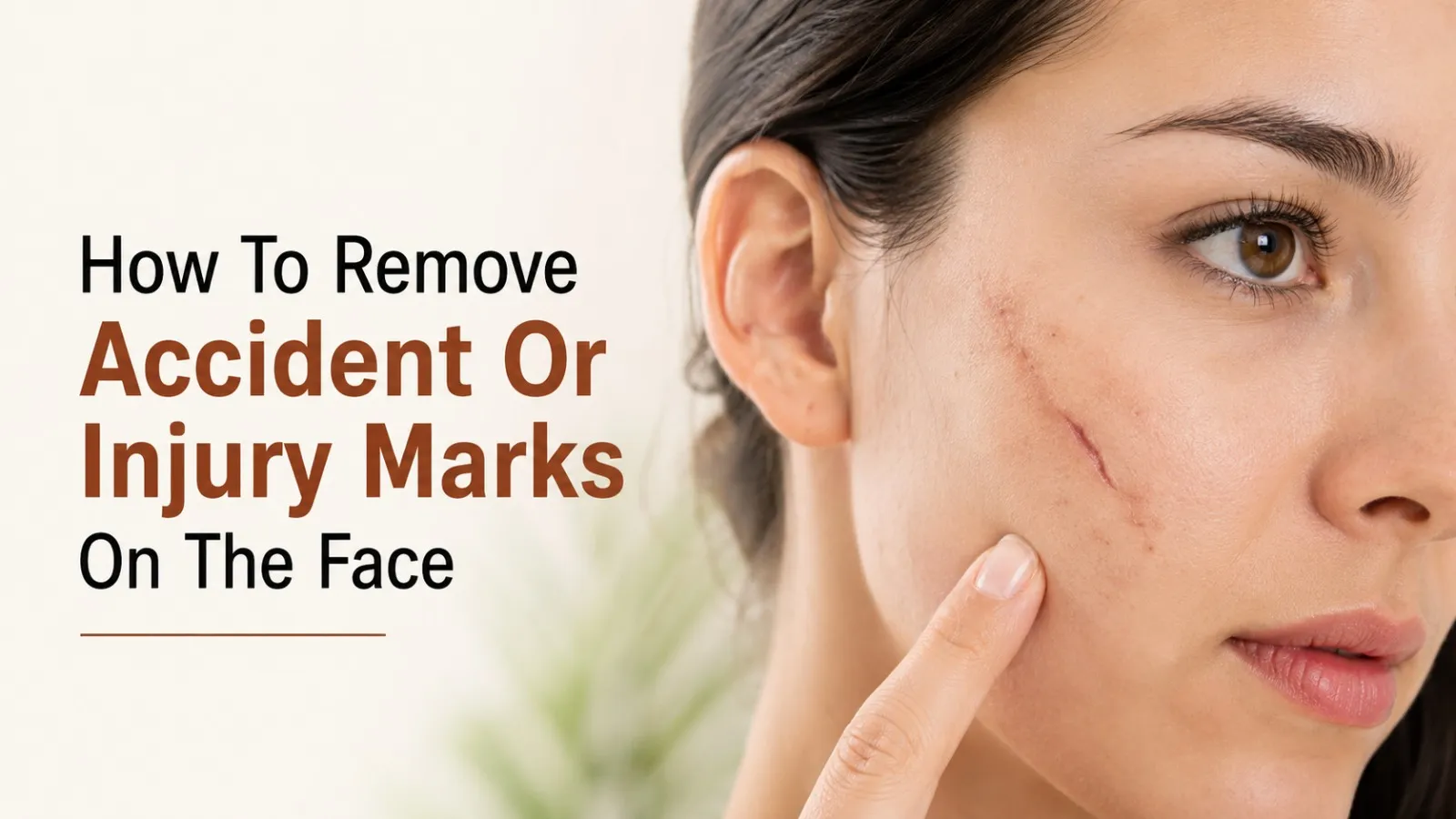
How To Remove Accident Or Injury Marks On The Face
If you get hurt or injured to the face, you're not only in pain, you may have a scar that lasts a long time and impacts your confidence and self-image. Facial injury marks are amongst the most distressing skin concerns of the times – whether from a road accident, a deep cut from a fall, a burn mark or a bruise that just won't go away.
The good news? There has been a lot of progress made in modern dermatology. As the Best Dermatologist Clinic in Gurgaon, Skinfinity Derma uses state-of-the-art technology and customised skin care to restore clear, healthy skin. In this comprehensive guide, we explain everything you need to know about accident and injury marks on the face – what causes them and how they develop – as well as the best treatments to get rid of them.
Understanding Facial Scars: How Do They Form?
When the skin suffers trauma — be it a cut, burn, abrasion, or surgical incision — the body launches its natural repair mechanism. It produces new collagen fibres to close the wound and protect underlying tissue. This process, while essential for survival, often leaves behind a scar: a visible mark that differs in texture, colour, and thickness from the surrounding skin.
Several factors determine how a scar ultimately looks and behaves, including:
• The depth and severity of the original wound
• Your genetic predisposition to scarring
• Your age and overall skin health
• Nutrition, immune function, and infection risk
• Whether appropriate wound care was administered immediately after the injury
Understanding the type of scar you have is the first and most crucial step toward effective treatment. Our expert dermatologists at our Skin Clinic in Gurgaon carefully evaluate each patient's scar profile before recommending a personalised treatment plan.
Types of Accident & Injury Scars on the Face
1. Hypertrophic Scars
Hypertrophic scars are raised, thickened, red or purplish in colour. They develop when excess collagen is formed in the body as a result of the healing process but confined to the limits of the initial wound site. Hypertrophic scars are a common occurrence following road rash, burns or deep cuts but sometimes can develop into keloids without treatment. Laser therapy, silicone gel sheets and steroid injections are treatment options.
2. Atrophic Scars
Atrophic scars appear sunken or pitted beneath the surrounding skin surface. They are usually caused by a deficiency of collagen in the body's healing process, which is typically the result of deep facial lacerations, such as those from chicken pox and acne. They may not be noticeable for several months and seldom fade away without professional help. The best treatment options for atrophic scars include microneedling, laser resurfacing and dermal fillers.
3. Keloid Scars
Keloids are thick scars that continue to expand beyond the limits of the original wound. They are usually rubber-like, dome-shaped and may be tender or itchy. Some skin types (darker skin) are more prone to keloid formation. The most difficult scars to treat are keloids, which will take more than just laser therapy to improve and are usually treated with a combination of surgical removal, laser therapy and steroid injections.
4. Contracture Scars
Generally, contracture scars are developed after burn injuries. During healing, the skin pulls inwards on other tissues. This may be noticeable on the face, affecting natural movement and expressions. The treatment involves dermabrasion, chemical peels and laser resurfacing to make the skin soft and loose.
Professional Treatments Available at Skinfinity Derma
When it comes to removing accident or injury marks on the face, self-treatment can only go so far. Medically-supervised procedures deliver far superior and longer-lasting results. Here is what our team at the Best Dermatologist Clinic in Gurgaon recommends:
Laser Therapy
Laser scar treatment is one of the most versatile and effective weapons in dermatology today. It does this by providing targeted light energy that destroys damaged scar tissue and encourages the body's own healing collagen. Our dermatologists may employ ablative lasers, which can remove the top layer of skin, or non-ablative lasers, which can work under the skin without harming the surface skin. For deep marks on the face, fractional CO2 laser and Nd:YAG laser are very effective. There is usually a marked improvement after 3-5 sessions.
Microneedling (Collagen Induction Therapy)
Microneedling involves using a device with ultra-fine needles to make controlled micro-injuries to the surface of the skin. This activates the body's wound healing process and increases the production of collagen and elastin. This will create a gradual and natural appearance of the scar texture, depth and discolouration. Microneedling is very effective at treating atrophic scars and post-traumatic scars and is suitable for all skin types. With PRP (Platelet-Rich Plasma) therapy results are greatly improved.
Chemical Peels
Chemical peels are treatments in which an acid solution is applied to the skin to peel away the damaged outer layer revealing the smoother, fresher skin underneath. Medium depth and deep peels (such as based on trichloroacetic acid or glycolic acid) work well on surface level accident marks, discolouration and shallow scars. Peels are tailored to each patient's skin type and skin concern at our Skin Clinic, Gurgaon, so as to keep risk to a minimum and get the best of benefits.
Dermal Fillers
Dermal fillers can immediately volume up deep, depressed scars (like road rash or deep lacerations). The sunken area is then filled with an “filler” such as HA in a form that can be injected, to raise the area to the same level as the surrounding skin. Fillers are not permanent (6-18 months), but are extremely effective to look better with almost no downtime.
Subcision
Subcision is a minor in-clinic surgical procedure used to treat tethered or "stuck" scars. The scar is separated from the skin and a special needle is inserted under the scar to separate the fibrous bands that cause the skin to fall away, freeing up the scar and permitting new collagen to fill the space. Subcision is frequently used in conjunction with microneedling or fillers to achieve better results. It is especially helpful for deep accident scars that have stuck to deeper layers of skin.
Dermabrasion
Dermabrasion is a resurfacing technique that employs a rotating instrument to sand the skin's surface and eliminate irregularities and the visibility of scars. Ideal for raised scarring and minor marks. The recovery phase may leave your skin red and peeling for a short time, but the results are remarkable and long-lasting — skin that's smoother and even-toned.
Steroid Injections
Corticosteroid injections are a first-line treatment for hypertrophic and keloid scars. They work by reducing inflammation, flattening the scar, and breaking down excess collagen deposits. A series of injections over several weeks or months is usually required, and the treatment is often combined with laser therapy for optimal results. Our dermatologists carefully monitor dosage and frequency to prevent skin thinning or other side effects.
Supportive Home Remedies: A Helpful Addition, Not a Substitute
While professional treatments yield the most significant results, certain home remedies can support the healing process and help lighten mild surface marks. Here are a few dermatologist-approved options:
• Aloe Vera Gel: A natural anti-inflammatory with wound-healing properties. Apply fresh aloe vera gel twice daily over the scar area to soothe redness and promote skin regeneration.
• Honey: Raw honey contains antibacterial compounds and antioxidants that encourage skin repair. A thin layer applied daily can help reduce discolouration over time.
• Coconut Oil: Rich in fatty acids that penetrate the skin barrier, coconut oil can moisturise the scar and support the regeneration of skin cells. Best applied before bedtime.
• Vitamin E Oil: A potent antioxidant known for reducing inflammation and strengthening skin tissue. Regular application over fresh or old scars may improve their appearance gradually.
• Sunscreen (SPF 30+): Possibly the most important step. UV exposure darkens scars significantly. Applying a broad-spectrum sunscreen over the scar every day prevents hyperpigmentation and helps the mark fade faster.
Note: These remedies work best on superficial marks and mild discolouration. For deep, raised, or long-standing scars, professional intervention at a trusted Skin Clinic in Gurgaon is strongly recommended.
When Should You See a Dermatologist?
Many people delay seeking treatment, hoping scars will simply disappear on their own. While minor bruising often resolves in 2–4 weeks, deeper scars rarely fade completely without professional care. You should consult a dermatologist if:
• The scar has been visible for more than 3–6 months without noticeable fading
• The scar is raised, itchy, or growing beyond the wound boundary
• The scar is sunken, pitted, or creating textural irregularity
• The mark is significantly darker or lighter than surrounding skin
• The appearance of the scar is affecting your confidence or daily life
Early intervention always yields better outcomes. The sooner a scar is treated, the greater the chance of achieving near-complete resolution. As the Best Dermatologist Clinic in Gurgaon, Skinfinity Derma offers comprehensive scar consultations, advanced diagnostics, and evidence-based treatments tailored to your unique skin needs.
Why Choose Skinfinity Derma for Scar Treatment in Gurgaon?
When it comes to treating something as visible and personal as a facial scar, you deserve nothing but the best. At Skinfinity Derma, we pride ourselves on being more than just a Skin Clinic in Gurgaon — we are your partners in skin health and confidence.
• Expert Dermatologists: Our board-certified dermatologists have years of specialised experience in treating all types of facial scars and post-injury marks.
• Advanced Technology: We use FDA-approved devices and treatment protocols, including the latest laser systems, microneedling platforms, and injectable solutions.
• Personalised Approach: No two scars are identical. Our treatment plans are customised based on scar type, skin tone, patient history, and personal goals.
• Safe & Comfortable Environment: Our state-of-the-art clinic is designed for your comfort, with a warm and professional team guiding you every step of the way.
• Transparent Consultations: We believe in honest, informed conversations. Before any procedure, you will receive a thorough explanation of the treatment, expected outcomes, recovery, and costs.
Final Thoughts
Accident and injury scars on the face can be deeply distressing but not something that you have to live with for life. But with proper treatments from a professional and a good skin care routine, you can definitely see a difference and even a complete cure in many cases.
No matter how many years your scar dates from, how deep or how superficial, our experts at Skinfinity Derma — The Best Dermatologist Clinic in Gurgaon — are here to assist you. Schedule an appointment now and start your journey towards glowing, confident skin.
Frequently Asked Questions (FAQs)
Q1. Are facial accident marks permanent?
Not necessarily. Although some scars have a more permanent nature, especially deep scars and keloids, far more scars can be significantly diminished and even removed today thanks to modern dermaceutical treatments. It is common to have surface bruises that heal within 2-4 weeks, and deeper bruises will need professional treatment for several months. Early intervention is always the best approach.
Q2. How long does it take to see results from scar treatment?
The results are dependent upon the treatment and scar type. Laser therapy and microneedling will give you more noticeable results after 3-5 treatments over 4-6 months, while dermal fillers provide instant results. Complete collagen remodelling may take up to a year after treatment.
Q3. Can old scars be treated effectively?
Yes. The newer the scar, the faster it will respond to the treatment, but older scars can be treated very effectively as well. Some of the more advanced procedures such as laser therapy, subcision, microneedling and chemical peels can do wonders for older scars. Ask our professionals at Skinfinity Derma to do a customized evaluation.
Q4. Does Vitamin E help fade scars?
Vitamin E is a potent anti-oxidant that can help improve your skin's healing processes by helping to fight inflammation and improve the strength of skin cells. May be helpful over time in reducing the appearance of light discolouration but not for deeper or darker scars.
Q5. How do I choose the right treatment for my scar?
Treatment will vary based on skin tone, type of scar, depth of the scar and individual health. That's why it's crucial to have a professional consultation. At Skinfinity Derma, Best Dermatologist Clinic in Gurgaon, our dermatologists will evaluate your skin in detail and recommend a treatment regime that is best suited for your problem so as to achieve the best possible results.
Skinfinity Derma | Best Dermatologist Clinic in Gurgaon | Skin Clinic in Gurgaon
Helping you achieve your healthiest, most confident skin.

 Call Now
 WhatsApp